LOADING...

Category "HVAC"

7Oct

Best HVAC Solutions for Warehouses & Factories

by Priyanka Gupta

Running a warehouse or factory in India’s climate isn’t easy. High ceilings, process heat, fluctuating occupancy, and seasonal humidity all make indoor comfort and energy efficiency a real challenge. Facility managers often face two big questions:

  1. How do I keep my workers comfortable without spending a fortune on energy?
  2. How do I protect sensitive products and processes with the right temperature and humidity control?

That’s where industrial HVAC solutions come in. From HVLS fans for destratification to AHUs for precise climate control, choosing the right setup depends on your building type, budget, and local climate, like Indore’s hot, semi-humid conditions.

Common HVAC Solutions for Industrial Spaces

SolutionBest ForMain BenefitTypical Equipment
High-volume low-speed fans (HVLS)Large, high ceilings; general comfortEnergy-efficient air mixing; improved worker comfortHVLS fans; controls
Evaporative cooling / Indirect evaporativeDry or semi-humid climates; low-cost coolingVery low operating cost; effective large-scale coolingPad media, blowers, indirect exchangers
Air handling units (AHU) with ducted supplyConditioned storage, clean rooms, and officesPrecise temperature/humidity and filtrationAHU, filters, coils, ductwork, VFDs
Rooftop packaged units (RTUs) / packaged DXRooftop packaged units (RTUs) / packaged DXSimple installation; modularRTUs, condensing units
VRF/VRV systemsOffices, control roomsZoned control; high COPOutdoor units, indoor FCUs
Spot/process coolingEquipment or process zonesLocalized control; reduces full-building loadLocalized control reduces full-building load
Mechanical ventilation with heat/energy recovery (MVHR/ERV/HRV)Buildings needing fresh air + energy recoveryIndoor air quality with reduced energy lossERV/HRV units, filters, controls

How to Choose the Right HVAC System

Define your requirements: Calculate cooling load from products, equipment, and people. Decide tolerances for temperature, humidity, and IAQ.

1. Match solutions by priority

A. For precise climate control & filtration → AHU with ducts or VRF + AHU.
B. For worker comfort in large halls → HVLS fans + ventilation + spot cooling.
C. For the lowest energy cost in dry climates → Evaporative or indirect evaporative systems.

2. Optimize the building envelope: Improve roof insulation, seal openings, and add air curtains at loading bays.

3. Balance OPEX and CAPEX

A. Evaporative cooling and HVLS → low operating costs.
B. AHU/VRF → higher upfront investment but essential for sensitive storage or clean zones.

4. Think compliance & sustainability: Use low-GWP refrigerants, solar rooftops, and equipment that meets ISHRAE/ASHRAE guidelines.

Recommended HVAC Setups for Typical Industrial Scenarios

Large, high-ceiling warehouse

1. HVLS fans for destratification & comfort
2. RTUs or ductless splits for offices/shipping areas
3. Smart controls with CO2/temperature sensors

Distribution center with cold/temperature-sensitive storage

1. AHU with chilled water or packaged DX
2. Air curtains + insulated dock shelters
3. VFDs on pumps/fans for efficiency

Manufacturing plant with clean/process zones

1. Dedicated AHUs with MERV/HEPA filtration
2. Separate process chillers for equipment
3. Heat recovery from exhaust/process lines

Dry climate, low-budget option

1.Direct/indirect evaporative coolers
2. HVLS fans + night purge ventilation

Energy, Controls & Sustainability Tips

– Use building automation for scheduling, demand control ventilation, and motor VFDs.
– Recover heat from compressors/exhaust to preheat makeup air.
– Monitor energy KPIs remotely for predictive maintenance.
– Leverage solar rooftops to offset peak HVAC loads.

Maintenance & Vendor Selection

1. Commissioning: Verify design, airflow balance, and thermal performance before handover.
2. Maintenance: Regular checks for filters, belts, refrigerants, water treatment (evap systems), and fan bearings.
3. Vendor Criteria: Look for proven industrial experience, local service support, and lifecycle cost analysis (CAPEX + OPEX).

Read Benefits of Regular Maintenance of HVAC Equipment

Frequently Asked Questions (FAQs)

1. What is the best HVAC system for a warehouse in hot climates like Indore?

For comfort and energy savings, HVLS fans + evaporative cooling are best. For sensitive products, an AHU or VRF system is more suitable.

2. Are evaporative coolers effective for factories?

Yes, in dry or semi-humid climates. They offer large cooling capacity at a fraction of the cost of traditional air conditioning.

3. How can I reduce HVAC energy bills in a factory?

Focus on evaporative coolers, insulation, HVLS fans, VFDs on motors, and renewable power like solar rooftops.

The best HVAC solution for your warehouse or factory depends on your process requirements, building type, and local climate. Whether you need simple comfort cooling or precise cleanroom conditions, the right mix of HVLS fans, evaporative systems, Air Handling Units, or VRFs can balance comfort, energy efficiency, and long-term reliability.

Looking for a tailored HVAC system in Indore or anywhere in India? Degree Day Pvt. Ltd. specializes in energy-efficient industrial cooling.
Recent Post

Get in Touch

Please share your details below and we’ll get back to you soon.

6Oct

Benefits of Regular Maintenance of HVAC Equipment

by Priyanka Gupta
1 comments

Your HVAC equipment plays a vital role in maintaining comfort and air quality in your home or business. It regulates temperature, ensures proper ventilation, and filters the air you breathe. However, like any other complex system, HVAC systems require regular care and attention to operate efficiently. That’s where HVAC maintenance comes into play. Regular servicing can prolong the life of your equipment, optimize performance, and prevent costly breakdowns.

At Degree Day Pvt. Ltd., we understand how essential it is to keep your system running smoothly. In this blog, we will explore the benefits of regular HVAC service and why it’s crucial to the efficiency, health, and longevity of your system.

1. Improved Energy Efficiency

One of the most immediate benefits of regular HVAC maintenance is the improvement in energy efficiency. Over time, dust, dirt, and other debris can accumulate in your system, making it harder for your HVAC equipment to operate effectively. When parts such as filters, grills, and ducts are clogged, your system has to work harder to regulate temperature and airflow, thus using more energy in the process.
By scheduling regular HVAC service with Degree Day, you can ensure that all components of your system are clean and functioning optimally. This leads to less strain on your HVAC equipment, reducing energy consumption and lowering your utility bills. With a well-maintained system, you’ll enjoy consistent comfort while also reducing your carbon footprint.

2. Prolonged Equipment Lifespan

HVAC systems are a significant investment, so it’s important to protect them for the long term. Regular maintenance can significantly extend the lifespan of your Greencon HVAC equipment. When parts are inspected and replaced as needed, wear and tear are minimized. Early detection of issues can prevent small problems from turning into costly repairs or system failure.

Greencon service department inspects key components of all their equipment, checks for any leaks or malfunctions, and addresses them before they cause extensive damage. By investing in regular servicing, you can help your Greencon equipment last longer, saving you money in the long run.

3. Fewer Breakdowns and Repairs

No one wants to deal with an unexpected breakdown, especially during extreme weather conditions when your Air Cooling system is under the most stress. Regular machine maintenance helps to minimize the likelihood of these frustrating and inconvenient issues. By proactively inspecting and cleaning the system, Greencon technicians can identify potential problems early and fix them before they turn into costly, time-consuming repairs.

Regular service can also help identify worn-out or faulty parts that may cause the system to fail. By replacing these parts before breakdown, it reduces the chances of sudden inconvenience. Greencon enables fewer repairs, fewer service calls, and a more reliable HVAC system, allowing you to enjoy consistent thermal comfort year-round.

4. Better Indoor Air Quality

Greencon HVAC system doesn’t just control temperature; it also plays a critical role in your indoor air quality. The air filters in your system trap dust, pollen, suspended dirt, and other allergens, ensuring the air you breathe is clean and fresh. However, over time, these filters can become clogged and ineffective if not replaced regularly. This can lead to poor indoor air quality, which may aggravate allergies, asthma, and other respiratory issues. Greencon machines have an in-built de-dusting feature wherein the air cooling machine, when switched off, runs in an exhaust mode for a few seconds. This enables the de-dusting of filters and considerably increases their life.

5. Preventing Sick Building Syndrome (SBS)

Poorly maintained HVAC systems can contribute to a condition known as Sick Building Syndrome (SBS), a situation where occupants of a building experience health issues that appear to be linked to time spent indoors, without a specific illness being identified.

Common symptoms of Sick Building Syndrome include:

  • Headaches and dizziness
  • Eye, nose, or throat irritation
  • Fatigue and difficulty concentrating
  • Dry skin and respiratory discomfort

One of the primary causes of SBS is inadequate ventilation, dirty filters, trapped dust, microbial growth, and improper air circulation—all of which are directly related to HVAC system health.

Regular HVAC maintenance plays a crucial role in preventing Sick Building Syndrome. Greencon HVAC systems, when serviced on time, ensure:

  • Continuous supply of fresh, filtered air
  • Proper exhaust of stale air and pollutants
  • Clean filters through the built-in de-dusting functionality
  • Balanced airflow and temperature control

By maintaining your HVAC system regularly, you not only improve comfort but also create a healthier indoor environment, especially in offices, hospitals, schools, hotels, and commercial buildings where occupants spend long hours indoors.

6. Consistent Comfort and Temperature Control

An HVAC system that isn’t regularly maintained may struggle to maintain consistent temperatures, leading to hot or cold spots in your home or business. Inconsistent temperature regulation can be frustrating, especially during peak summer conditions.

Greencon team has regular service schedules fixed with all clients for the timely service of HVAC equipment installed by us. Our technicians ensure that the system is functioning correctly and that temperature control is as required.

7. Greencon Air coolers offer an annual Warranty and AMC

Many HVAC manufacturers offer warranties for their equipment, but these warranties often come with stipulations, such as the requirement for regular maintenance. Failing to follow the manufacturer’s recommended maintenance schedule may void your warranty, leaving you responsible for repair or replacement costs.

By scheduling routine maintenance of our machines, we ensure that your warranty remains valid. Greencon service technicians are professionally trained, thus making them familiar with the specific maintenance needs of air cooling systems. Hence, they perform all necessary tasks to comply with the warranty terms.

8. Enhanced System Performance

Over time, your HVAC equipment may experience reduced performance due to dirty filters, worn-out parts, voltage fluctuations, or other maintenance issues. These performance issues can lead to inefficient heating and cooling, inconsistent airflow, and higher energy costs.

Regular HVAC system service can help restore your machine’s performance to its original condition. With timely maintenance, the system will be able to deliver optimal airflow, maintain consistent temperature levels, and operate at peak efficiency, ultimately enhancing your comfort and reducing your energy bills.

9. Cost Savings in the Long Run for HVAC Maintenance

While it may seem like an extra expense, regular HVAC maintenance can actually save you money in the long term. By preventing major breakdowns, reducing energy consumption, and extending the life of your Greencon HVAC equipment, you’ll reduce the need for expensive repairs or premature replacements. Additionally, regular service helps your system run more efficiently, lowering utility costs.

Think of HVAC maintenance as an investment—by spending a small amount upfront for regular service, you can avoid larger, more costly expenses down the road. Regular maintenance ensures your system continues to perform optimally, thus providing savings, efficiency, and peace of mind. By partnering with Degree Day Pvt. Ltd., you ensure that your HVAC system runs efficiently and reliably, keeping your environment comfortable all year long.

Regular HVAC equipment service is essential for maximizing the efficiency, lifespan, and overall performance of your evaporative cooling systems. From reducing energy consumption to improving indoor air quality and preventing costly breakdowns, the benefits of routine maintenance are clear. A well-maintained Greencon HVAC system operates more efficiently, costs less to run, and provides consistent comfort for your home or business.

At Degree Day Private Limited, we specialize in expert HVAC Design Consultancy, Product manufacturing, and after-sales service tailored to your specific needs. Contact us today to schedule your next service and keep your Greencon system running smoothly.

Frequently Asked Questions (FAQ)

Q1: How often should I schedule HVAC maintenance for my Greencon HVAC system?

A: It’s best to service your Greencon HVAC system at least three times a year, ideally before the summer and winter seasons. Regular maintenance helps optimize efficiency, ensures consistent comfort, and prevents unexpected breakdowns.

Q2: Does regular HVAC maintenance reduce energy bills?

A: Yes. A well-maintained HVAC system uses less energy because filters, ducts, and components stay clean. This lowers the strain on your equipment, reduces power consumption, and can significantly cut down your monthly electricity bills.

Q3: What happens if I skip regular HVAC servicing?

A: Skipping routine servicing can cause clogged filters, poor airflow, reduced indoor air quality, frequent breakdowns, and even void your equipment warranty. Regular HVAC maintenance protects your comfort, extends equipment life, and saves you money in the long run.

Q4: Can poor HVAC maintenance cause Sick Building Syndrome?

A: Yes. Inadequate HVAC maintenance can lead to poor ventilation, dust buildup, and contaminated air circulation, which are key contributors to Sick Building Syndrome. Regular servicing helps maintain healthy indoor air quality and reduces health risks.

Recent Blogs:

Get in Touch

Please share your details below and we’ll get back to you soon.

26Sep

Types of HVAC Ducts and Their Applications

by Priyanka Gupta

In industrial HVAC systems, ducts serve as the lifelines that distribute conditioned air throughout spaces such as factories, warehouses, plants, and commercial complexes. Choosing the right duct type is not just about airflow; it impacts maintenance costs and overall project performance.

According to industry studies, improper duct selection and installation can increase energy costs by up to 30% in large facilities. That’s why industrial engineers and HVAC contractors place significant emphasis on duct type, size, and installation method when planning HVAC systems.

Don’t want to read? 😅 message us — we’ll help you choose the right duct for your project! – Click Now

Why Duct Selection Matters in Industrial HVAC Projects

The correct duct type ensures:

  1. Energy Efficiency: Minimizing air leakage reduces power consumption.
  2. Airflow Performance: Maintains consistent airflow across long distances.
  3. Durability: Withstanding pressure variations and environmental conditions.
  4. Ease of Maintenance: Lower downtime and better long-term reliability.
  5. Compliance: Meeting SMACNA and international ducting standards.

Types of HVAC Ducts in Industrial Applications

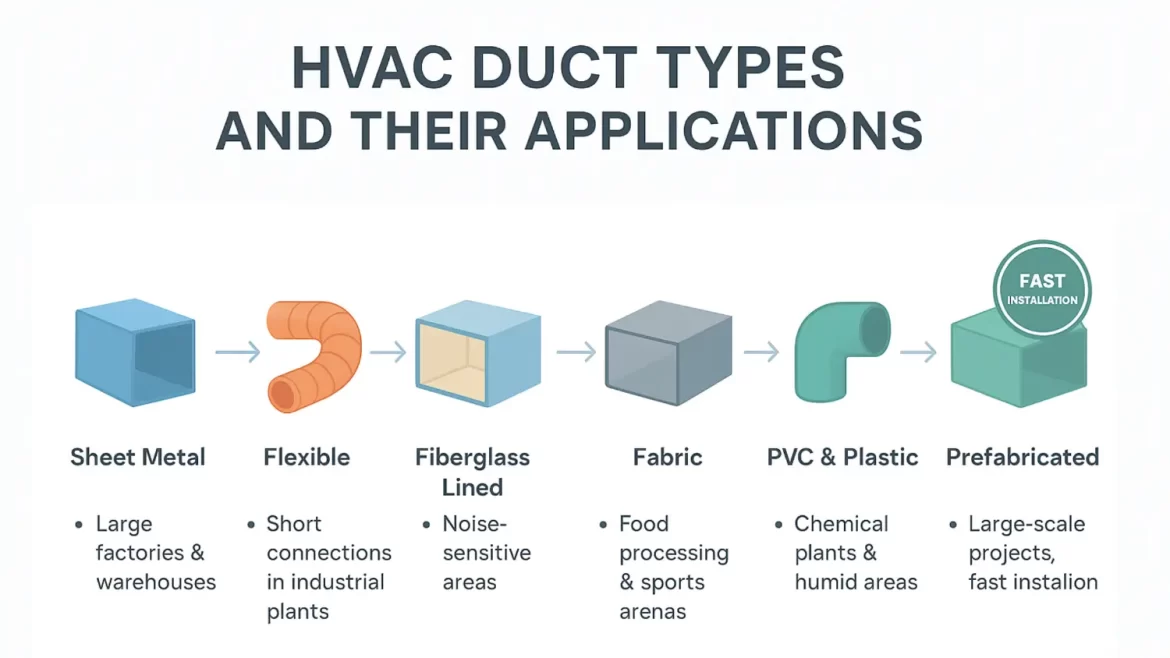
1. Sheet Metal Ducts

Material: Galvanized steel or aluminum.
Advantages:

  1. High durability and resistance to mold growth
  2. Smooth interior for better airflow

Applications: Factories, power plants, and large warehouses

2. Flexible Ducts

Material: Wire coil with a plastic or foil covering.
Advantages:

  1. Easy to install in tight spaces
  2. Cost-effective for short runs

Limitations & Applications: Not suitable for high-pressure systems. Connecting air outlets to main ducts in industrial facilities

3. Fiberglass Lined Ducts

Advantages:

  1. Built-in insulation reduces noise
  2. Improves thermal control

Applications: Industrial offices, laboratories, and noise-sensitive environments

4. Fabric Ducts (Textile Ducting)

Material: Permeable or non-permeable textile.
Advantages:

  1. Even air distribution
  2. Lightweight and corrosion-resistant

Applications: Food processing plants, sports arenas, large open halls

5. PVC & Plastic Ducts

Advantages:

  1. Excellent corrosion resistance
  2. Lightweight and moisture-resistant

Applications: Chemical plants, marine facilities, and humid environments

6. Prefabricated Ducts – The Modern Industrial Choice

Prefabricated ducts are manufactured in a controlled environment off-site and delivered ready for installation. This method ensures precision, faster project timelines, and reduced wastage.

Key Benefits:

  1. Consistent quality with strict dimensional accuracy
  2. Faster installation with minimal on-site fabrication
  3. Reduced labor costs and project delays
  4. Better sealing and reduced air leakage

7. Stainless Steel Ducts: Offers excellent corrosion resistance and can handle higher temperatures, making it suitable for Kitchen exhaust applications.

Greencon’s Prefabricated Ducting Solution

With over 26 years of expertise in HVAC ducting, Greencon offers a state-of-the-art prefabricated duct manufacturing setup that meets international standards.

Why Greencon Prefabricated Ducts Stand Out:

  1. Precision Engineering: Seamless integration into HVAC and ventilation systems.
  2. Efficiency: Engineered for maximum airflow and energy savings.
  3. Versatility: Ideal for industrial facilities, basement ventilation, and large-scale commercial projects.
  4. Technical Compliance: Designed in accordance with SMACNA – HVAC Duct Construction Standards and ISHRAE Duct Standard 2026.

Technical Excellence – Flange Class & Duct Gauge Selection

Greencon selects flange class and duct gauge based on duct size and static pressure for optimal performance.

Example: 701–750 mm ducts:

  • At 1″ w.g. static pressure → TDC Flange, 26 gauge
  • At 4″ w.g. static pressure → TDC Flange, 24 gauge

(Your engineers handle these selections to ensure system efficiency and durability.)

Choosing the Right Duct Type for Your Industrial Project

When selecting a duct type, consider:

  1. Airflow Requirements – high-volume vs. low-volume systems
  2. Static Pressure Class – for pressure handling capacity
  3. Material Compatibility – for corrosion or moisture resistance

+ Installation Timeline – prefab ducts for faster projects
+ Budget Constraints – balancing cost with long-term performance

Common Installation Mistakes to Avoid in Duct Installation

– Using undersized ducts that restrict airflow
– Failing to seal joints properly, causing leakage
– Sharp bends that reduce air velocity and efficiency

Quick Comparison Table – HVAC Duct Types

The right duct choice can dramatically improve energy efficiency, airflow, and overall HVAC performance in industrial projects.

Duct TypeDurabilityInstallation SpeedBest ForLimitations
Sheet MetalHighMediumFactories, warehousesHeavier, more labor-intensive
FlexibleLow-MedHighShort connectionsNot for high-pressure systems
Fiber glass-linedMediumMediumNoise-sensitive environmentsCan trap dust if damaged
Fiber glass-linedMediumHighFood processing, sports arenasLimited pressure handling
PVC & PlasticMediumMediumChemical plants, humid spacesNot for very high temperatures
Prefabricated (Greencon)HighVery HighLarge industrial projects, fast-track installationsRequires transport logistics

With 25 years of expertise, Greencon’s Prefabricated Ducting Solutions deliver unmatched speed, precision, and compliance with international standards — making them the preferred choice for modern industrial applications.

As Central India’s largest prefabricated duct manufacturer, we offer a comprehensive range of rectangular, spiral, and round ducts in GI, MS, SS, and aluminium — ensuring the right solution for every project requirement.

Still confused about which duct material is right for your project? 🤔

Recent Post –

Get in Touch

Please share your details below and we’ll get back to you soon.

25Sep

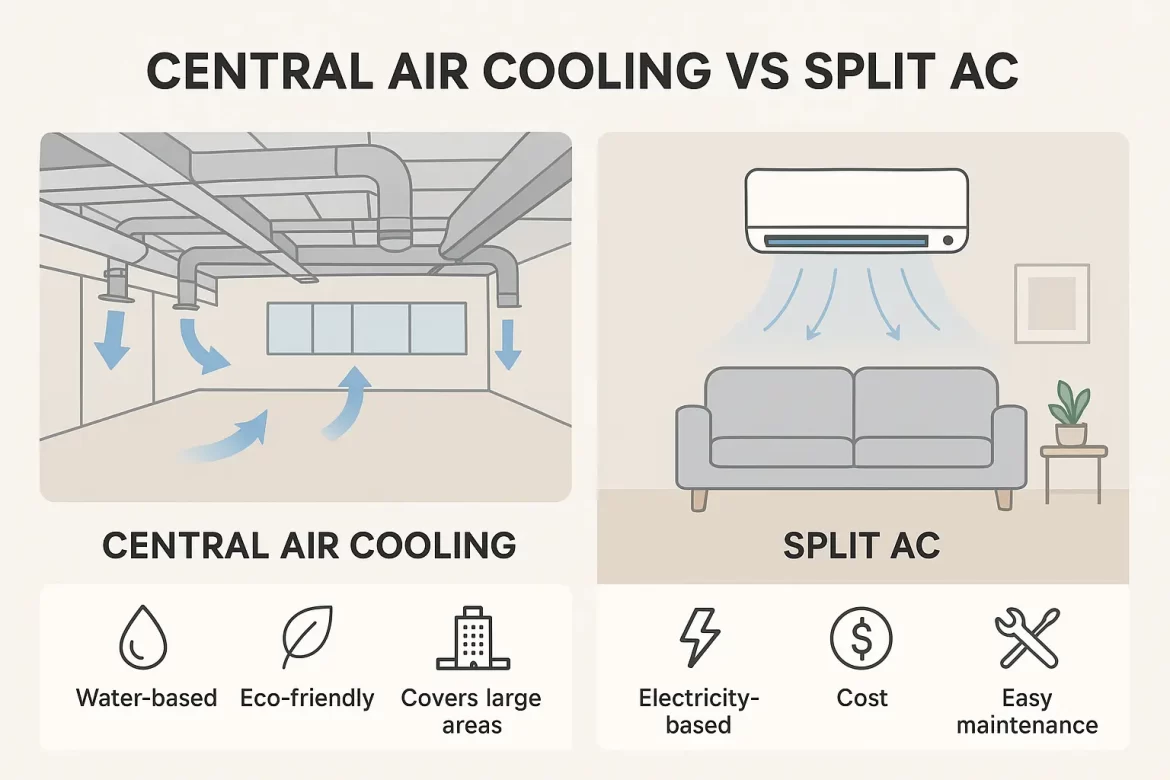
Central Air Cooling vs Split AC

by Priyanka Gupta

Central Air Cooling vs Split AC: Choosing the Right System for Large Buildings in India

If you are planning the cooling system for a large building in India, whether it is a school, factory, shopping mall, or office complex, the choice between central air cooling and Split AC is a significant one. Both systems aim to keep indoor spaces comfortable, but they differ in terms of performance, cost, and suitability for Indian climates.

Let’s break it down so you can make a smart, informed decision.

1. Coverage Area

Central Air Cooling is built for scale. It is ideal for large, open layouts like manufacturing units, auditoriums, educational campuses, and multi-storey buildings. One system can cool thousands of square feet.

Split ACs are better suited for smaller, enclosed spaces, such as cabins, classrooms, or individual offices. For a large building, you need dozens of units. In open-plan buildings, Central Air Cooling is the clear winner. For segmented layouts, Split ACs might be more practical.

2. Energy Efficiency & Running Costs

Central Air Cooling uses evaporative cooling, a technology that consumes up to 80% less electricity than conventional ACs. It is especially effective in hot and dry regions like Madhya Pradesh, Rajasthan, and parts of Delhi NCR.

Split ACs rely on compressor-based refrigeration, which is power-intensive. The more units you install, the higher your electricity bills. If you are looking to cut long-term energy costs, Central Air Cooling is far more economical.

3. Installation & Infrastructure

Central Air Cooling requires ducting, a water supply, and planning during construction or major renovation. Once installed, it integrates neatly into the building’s design.

Split ACs are easier to install individually. But in large buildings, installing 20–50+ units can clutter walls and exteriors with outdoor units not ideal for aesthetics or maintenance.

4. Air Quality & Comfort

Central Air Cooling continuously brings in fresh, filtered, and humidified air, great for maintaining healthy indoor environments, especially in dusty or dry regions.

Split ACs recirculate the same indoor air. Over time, this can lead to dryness and stale air, which is not ideal for comfort or health. For better air quality and comfort, Central Air Cooling takes the lead.

5. Maintenance

Central Air Cooling offers centralized maintenance, duct cleaning, water checks, and periodic servicing.

Split ACs require individual upkeep. Each unit needs filter cleaning, coil checks, and gas refills. In large buildings, this becomes a costly and time-consuming task.

6. Cost Consideration

Central Air Cooling involves a higher upfront investment, but its low electricity consumption and centralized maintenance make it cost-effective over time.

Split ACs may seem cheaper initially, but when scaled up, the combined cost of multiple units and high energy use adds up quickly.

7. Climate Suitability

Central Air Cooling works best in hot and dry climates, perfect for much of central and northern India.

Split ACs perform well in all climates, including humid coastal areas like Mumbai, Chennai, and Kolkata.

Quick Comparison Table

FactorCentral Air CoolingSplit AC
Coverage AreaLarge open spaces, multi-floor layoutsSmall rooms, cabins
Energy Use60–80% less powerHigh, especially with many units
Air QualityFresh, filtered, humidified airRecirculated, dry air
InstallationDucting & planned setupEasy, but messy in bulk
Operating CostVery low long-termHigh recurring bills
MaintenanceCentralizedIndividual per unit
Climate SuitabilityHot & dry regionsAll climates
AestheticsClean design, hidden ductsOutdoor units clutter the walls

Frequently Asked Questions:

1. Is Central Air Cooling cheaper than Split AC in the long run?

Yes. It consumes significantly less electricity, making it more cost-effective for large buildings over time, especially in dry regions.

2. Which system is better for large buildings in India?

For open layouts in hot, dry areas like Indore, Jaipur, or Nagpur, Central Air Cooling is ideal. For smaller rooms or humid regions, Split ACs are more suitable.

3. Does Central Air Cooling provide fresh air?

Absolutely. It pulls in fresh outdoor air, filters it, and adds humidity—unlike Split ACs, which just recirculate indoor air.

4. What is the downside of using Split ACs in large buildings?

High electricity bills and maintenance. Each unit needs separate servicing, and the outdoor units can clutter your building’s exterior.

5. Does Degree Day offer Central Air Cooling solutions in India?

Yes! Degree Day specializes in designing and delivering customized Central Air Cooling systems for commercial, industrial, and institutional buildings across India.

Choosing the right cooling system is not just about comfort; it is about saving energy, reducing costs, and improving indoor air quality. At Degree Day Pvt. Ltd., we design Central Air Cooling systems tailored for Indian conditions and large-scale applications. Whether you are planning a new project or upgrading an existing setup, our team can help you find the most efficient, sustainable, and cost-effective solution. Contact us today to explore how Degree Day can transform your building into a cooler, cleaner, and more energy-smart space.

Latest Posts

Get in Touch

Please share your details below and we’ll get back to you soon.

6Sep

HVAC Contractors in Pune

by Priyanka Gupta

If you are searching for trusted HVAC contractors in Pune, you have come to the right place. Pune’s growing commercial, industrial, and residential projects demand reliable, energy-efficient, and cost-effective HVAC systems. From central air cooling to pre-fabricated ducts and medical-grade air purification, finding the right partner makes all the difference.

Why Businesses in Pune Need Professional HVAC Contractors

Scorching hot summers, humid monsoons, and mild winters characterize Pune’s climate. In such conditions, having a reliable HVAC system is not just a luxury but a necessity. Offices, shopping complexes, factories, and healthcare institutions all depend on professional HVAC contractors to design and maintain systems that ensure:

1. Year-round comfort – keeping spaces cool in summer, warm in winter, and well-ventilated all year.
2. Energy efficiency – reducing electricity bills while maintaining performance.
3. Improved indoor air quality – essential for employee health, patient safety, and customer comfort.
4. System reliability – professional installation and regular maintenance extend system life and reduce breakdowns.

A trusted HVAC partner like Degree Day helps Pune businesses achieve operational comfort while saving energy and costs.

Our HVAC Services in Pune, Maharashtra

As a leading HVAC contractor in Pune, Degree Day provides end-to-end solutions tailored for different industries and facility sizes. Our services include:

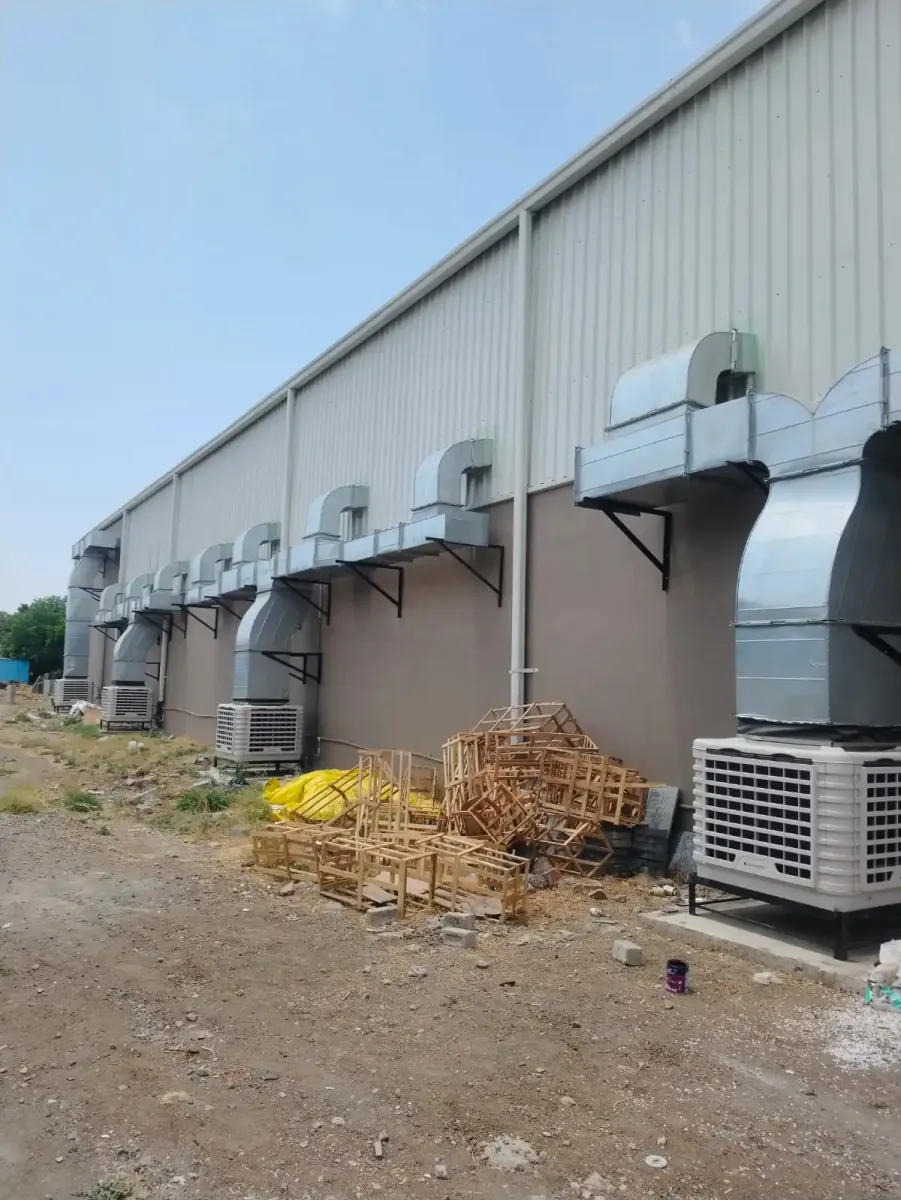
1. Central Air Cooling Systems: Pune’s hot summers demand large-scale cooling solutions. Our central air cooling systems are designed for maximum efficiency, offering lower energy consumption compared to traditional air conditioning. Ideal for factories, warehouses, and commercial spaces, these systems create a comfortable environment without excessive power usage.

2. Prefabricated Ducting Solutions: We specialize in prefabricated ductwork, which ensures faster installation, superior finish, and long-lasting durability. This approach minimizes downtime during setup and improves airflow efficiency—making it perfect for industrial projects, malls, and IT parks in Pune.

3. Medical-Grade Air Purifiers – HEPairé: In today’s world, clean indoor air is critical. Our HEPairé air purifiers combine HEPA filtration, UVGI (ultraviolet germicidal irradiation), and EC fans to eliminate harmful pollutants, viruses, and bacteria. Designed for hospitals, clinics, and critical healthcare spaces, these systems comply with CDC, ASHRAE, and ISHRAE guidelines.

4. Evaporative Coolers: Evaporative cooling is one of the most sustainable and cost-effective solutions for Pune’s dry summer climate. By using the natural process of water evaporation, our industrial and commercial evaporative coolers provide fresh, cool air with minimal power consumption, perfect for workshops, warehouses, and semi-open spaces.

5. Designer Bladeless Fans: For clients seeking modern comfort with aesthetics, our bladeless fans provide silent, uniform airflow and sleek design. Perfect for offices, retail showrooms, homes, and premium spaces, they combine style with efficiency.

Why Choose Degree Day as Your HVAC Contractor in Pune?

When it comes to HVAC contractors in Pune, Maharashtra, we stand out because of our commitment to quality, innovation, and customer satisfaction. Here’s why businesses trust us:

1. Proven Track Record – Multiple successful HVAC projects delivered across Pune.
2. Certified Company – ISO 9001:2015 certified for quality and reliability.
3. Energy Efficiency Focus – All our solutions are designed to save electricity and reduce carbon footprint.
4. Wide Industry Coverage – From malls and hospitals to industrial facilities, we serve diverse sectors.
5. Transparent Pricing – No hidden charges; we provide clear, competitive pricing.
6. End-to-End Service – From design and installation to maintenance and AMC, we cover it all.

Industries We Serve in Pune

We understand that different industries have different HVAC requirements. Our solutions are tailored for:

Shopping Malls & Retail – Centralized cooling for large footfall areas.
Hospitals & Healthcare – Medical-grade air quality with advanced filtration systems.
Pharma Cleanrooms & Labs – Controlled environments for sensitive operations.
Educational Institutes & Auditoriums – Quiet and efficient climate control for large gatherings.
Industrial Facilities & Factories – Robust HVAC systems designed for heavy-duty operations.
Warehouses & Logistics Hubs – Energy-efficient cooling for large spaces and stored goods.
IT Parks & Offices – Comfortable and healthy work environments for employees.

By delivering specialized solutions for each sector, we ensure maximum efficiency, comfort, and compliance.

Completed HVAC Projects in Pune

Our work in Pune speaks for itself. Over the years, we have successfully executed HVAC projects across:

1. Marriage Hall: See Case Study Video Here
2. Factory: See Case Study Video Here
3. Ice Cream Parlor: See Case Study Video Here
4. Canteens: See Images

Read our Latest Blogs on HVAC Systems, Air Cooling, Air Purification & Ventilation, HVAC Air Ducts

🔹 Air Purification & Indoor Air Quality

HEPA Filters Explained: What They Are & How They Work in Air Purifiers
Effective Ways to Improve Indoor Air Quality Using Air Purifiers
PM2.5 vs PM10: What They Mean & Why They Matter for Indoor Air Quality
Air Purification vs Ventilation: What’s the Real Difference?
Best Air Purifier for Delhi in 2025: Buying Guide
HEPA Filters for Clean Rooms: Standards, Grades & Applications
Laminar Air Flow Systems Explained: Working & Applications


🔹 Evaporative Cooling & Alternative Cooling

Evaporative Cooling Systems: Working, Benefits & Applications
Evaporative Cooling vs Air Conditioning: Which Is Better?
Is Evaporative Cooling Eco-Friendly?
Common Myths About Evaporative Cooling Systems
Direct vs Indirect Evaporative Cooling
Evaporative Cooling: India’s Answer to Beating the Heat
Why Desert Coolers Fail in Large Spaces
Top 3 Commercial & Industrial Air Coolers


🔹 HVAC Basics, Design & Trends

How HVAC Systems Work in Commercial Buildings
What Is CFM in HVAC & Why It Matters
Top HVAC Trends in 2025
Top 10 HVAC Design Mistakes
How to Choose the Right HVAC Solution for the Indian Climate
Which HVAC System Suits Your Industry?
Why HVAC Systems Are the Backbone of Industrial Infrastructure


🔹 HVAC Ducting & Materials

Types of HVAC Ducts & Their Applications
How to Choose the Right HVAC Duct Material
Prefabricated vs Handmade HVAC Ducts
GI vs Stainless Steel HVAC Ducts
Stainless Steel vs Mild Steel HVAC Ducts


🔹 Commercial, Industrial & Turnkey HVAC

Best HVAC Solutions for Warehouses & Factories
Central Air Cooling vs Split AC
HVAC EPC Services: From Concept to Commissioning
What Is an HVAC Turnkey Solution?
Why Regular HVAC Maintenance Is Critical


🔹 Sustainability, Policy & Advanced Topics

Understanding Decarbonisation & Why It Matters
How Mist Cooling Systems Reduce Heat in Open Areas
What Is a Bladeless Fan & How It Works

With every project, we ensure on-time delivery, superior engineering, and long-term reliability.

Degree-Day-Recent-Installation-Handicraft-store-in-indore-E-Series-Commercial-Air-Cooler

Image 1 of 5

Get in Touch

Please share your details below and we’ll get back to you soon.

Frequently Asked Questions (FAQs)

Q1. Why should I hire a professional HVAC contractor in Pune?

Pune’s climate requires HVAC systems that can handle extreme summer heat, humidity, and varying occupancy loads. A professional contractor like Degree Day Pvt. Ltd. ensures proper system design, energy efficiency, correct installation, and long-term reliability, saving you money and downtime.

2. What types of HVAC services do you provide in Pune?

We provide complete HVAC solutions in Pune, including:
1. Central air cooling systems
2. Evaporative air cooling solutions
3. Prefabricated ducting
4. Medical-grade air purification (HEPairé)
5. Industrial and commercial HVAC installation
6. Maintenance and AMC services

3. Which HVAC solution is best for large commercial or industrial spaces?

For factories, warehouses, malls, and large halls, central air cooling and evaporative cooling systems are the most energy-efficient and cost-effective solutions. Our team evaluates your space, heat load, and usage pattern before recommending the right system.

4. Are evaporative coolers suitable for Pune’s climate?

Yes. Pune’s relatively dry summer climate makes evaporative cooling highly effective. These systems consume significantly less power than traditional air conditioning while supplying fresh air—ideal for industrial sheds, workshops, and semi-open areas.

5. Do you provide HVAC solutions for hospitals and healthcare facilities?

Absolutely. We offer medical-grade HVAC and air purification systems designed for hospitals, clinics, ICUs, OTs, and labs. Our HEPairé systems follow CDC, ASHRAE, and ISHRAE guidelines to ensure clean, safe indoor air.

6. What are prefabricated ducts, and why are they better?

Prefabricated ducts are factory-made ducting systems that offer:
1. Faster installation
2. Better airflow efficiency
3. Neat and professional finish
4. Long-term durability

They are ideal for IT parks, malls, factories, and large commercial buildings in Pune.

7. How energy-efficient are your HVAC solutions?

Energy efficiency is our core focus. All our systems are designed to reduce electricity consumption while delivering high performance. Many of our clients experience 30–60% energy savings compared to conventional HVAC systems.

8. Do you handle HVAC projects from design to execution?

Yes. We provide end-to-end HVAC solutions, including site survey, system design, manufacturing, installation, testing, commissioning, and post-installation support.

9. Which industries do you serve in Pune?

We serve a wide range of industries, including:

1. Shopping malls & retail stores
2. Hospitals & healthcare
3. Pharmaceutical cleanrooms
4. Educational institutions
5. Factories & industrial units
6. Warehouses & logistics hubs
7. IT parks & corporate offices

10. Is Degree Day an ISO-certified HVAC company?

Yes. Degree Day Pvt. Ltd. is ISO 9001:2015 certified, ensuring quality standards, process reliability, and customer satisfaction across all HVAC projects.

11. How can I get a cost estimate or consultation for my HVAC project?

You can book a free consultation by contacting us through the website or clicking the “Message Us” button. Our HVAC experts will assess your requirements and provide a transparent, customized quotation.