LOADING...

Category "evaporative cooler"

28Apr

HVAC system for data centers in India

by Priyanka Gupta

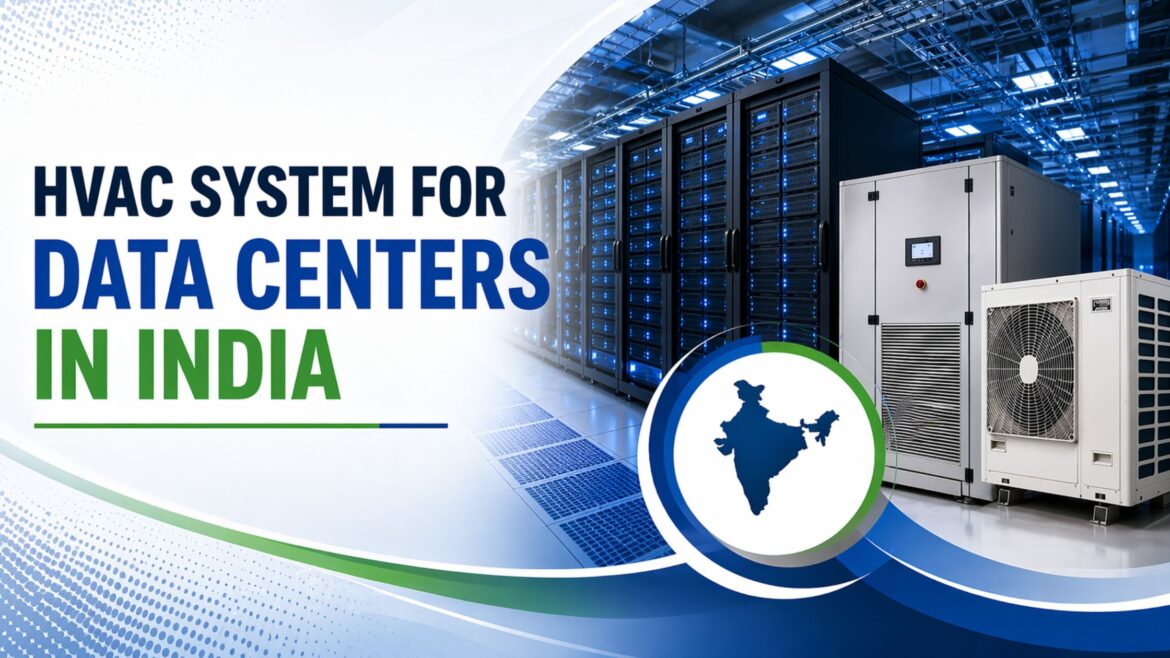
With India rapidly expanding its digital infrastructure, data centers have become the backbone of modern business operations. From cloud computing to AI workloads, these facilities generate extreme heat loads and require highly specialized HVAC systems.

Unlike commercial buildings, data centers demand precision cooling, 24×7 reliability, and energy efficiency, especially in India’s challenging climate conditions.

Why HVAC is Critical for Data Centers

In a data center, HVAC is not just about comfort—it’s about uptime and performance.

Improper cooling can lead to:

  • Server overheating
  • System failures
  • Data loss
  • Increased operational costs

According to ASHRAE, maintaining optimal environmental conditions is essential for reliable data center operations.

1. Temperature Requirements

In Indian conditions, where ambient temperatures can be extremely high, maintaining a stable internal environment becomes even more critical. Even slight temperature fluctuations can lead to thermal stress on servers, reducing efficiency and increasing the risk of unexpected failures. This is why modern data centers rely on precision cooling systems rather than conventional HVAC solutions.

Data centers typically generate 5–30 kW of heat per rack, making precision cooling essential.

2. Humidity Control

In India, especially in coastal and monsoon-prone regions, humidity levels can fluctuate significantly. Without proper control, excess moisture can damage sensitive electronic components, while dry conditions can lead to electrostatic discharge. Advanced HVAC systems with built-in humidification and dehumidification ensure consistent environmental stability.

Maintaining balanced humidity ensures safe and stable operations.

3. 24×7 Continuous Operation

Since there is no “off time” in data centers, HVAC systems must be designed for uninterrupted performance. This includes redundancy planning, predictive maintenance, and real-time monitoring. A well-designed system ensures that even during maintenance or failure of one unit, backup systems instantly take over without affecting operations.

Even a short cooling failure can result in critical downtime.

4. High Sensible Heat Load

Unlike commercial spaces where both temperature and humidity loads vary, data centers primarily deal with constant heat generated by IT equipment. This makes it essential to use systems specifically engineered for high sensible heat ratios, ensuring efficient heat removal without unnecessary energy consumption.

5. Airflow Management (Key to Efficiency)

Poor airflow management can waste a significant portion of cooling energy. By implementing structured airflow strategies like containment systems, data centers can ensure that cool air reaches servers effectively while hot air is efficiently removed, leading to better performance and lower operational costs.

6. Cooling Technologies Used in India

The choice of cooling technology depends on factors like data center size, load density, and location. In India, chilled water systems are widely preferred for large facilities due to their efficiency, while smaller setups may rely on DX-based CRAC units. Emerging technologies like liquid cooling are becoming popular for AI-driven, high-density environments.

7. Redundancy & Reliability Standards

Redundancy is a core design principle in data center HVAC systems. By incorporating additional capacity beyond actual demand, facilities can handle unexpected failures without downtime. This approach is especially important in mission-critical applications such as banking, healthcare, and cloud services.

8. Air Filtration & Cleanliness

In Indian environments where dust levels can be high, effective air filtration becomes even more important. Accumulated dust can block airflow, reduce heat dissipation, and damage internal components, making high-efficiency filtration systems a necessity rather than an option.

9. Energy Efficiency & PUE Optimization

With rising energy costs in India, improving efficiency is a top priority for data center operators. Lowering PUE (Power Usage Effectiveness) not only reduces electricity bills but also supports sustainability goals. Advanced automation and smart controls play a key role in achieving optimal energy performance.

10. Challenges in Indian Conditions

India presents unique challenges for data center cooling, from extreme heat to water scarcity in certain regions. Designing HVAC systems that can adapt to these conditions while maintaining efficiency and reliability is critical for long-term performance and sustainability.

Designing HVAC systems for data centers in India requires a precision-driven approach. From temperature and humidity control to airflow optimization and redundancy, every factor plays a critical role in ensuring uptime and efficiency.

Key Takeaways:

– Precision cooling is essential
– 24×7 reliability is non-negotiable
– Airflow design impacts efficiency
– Energy optimization reduces costs

Looking for Data Center Cooling Solutions?

If you’re planning or upgrading a data center, choosing the right HVAC partner is critical.

At Greencon (Degree Day Pvt. Ltd.), we specialize in:

1. Precision industrial and commercial air cooling solutions
2. Energy-efficient HVAC systems (Air Washers Manufacturer, Air Handling Units, Ventilation Solution, Clean Room Solution)
3. Custom pre-fabricated duct solution (Rectangular, Round, Oval, and Spiral Ducts Manufacturer) & airflow design

👉 Contact us today to build a future-ready, high-performance data center.
    Get in Touch

    Please share your details below and we’ll get back to you soon.

    19Mar

    Cooling Solutions for the Textile Industry

    by Priyanka Gupta

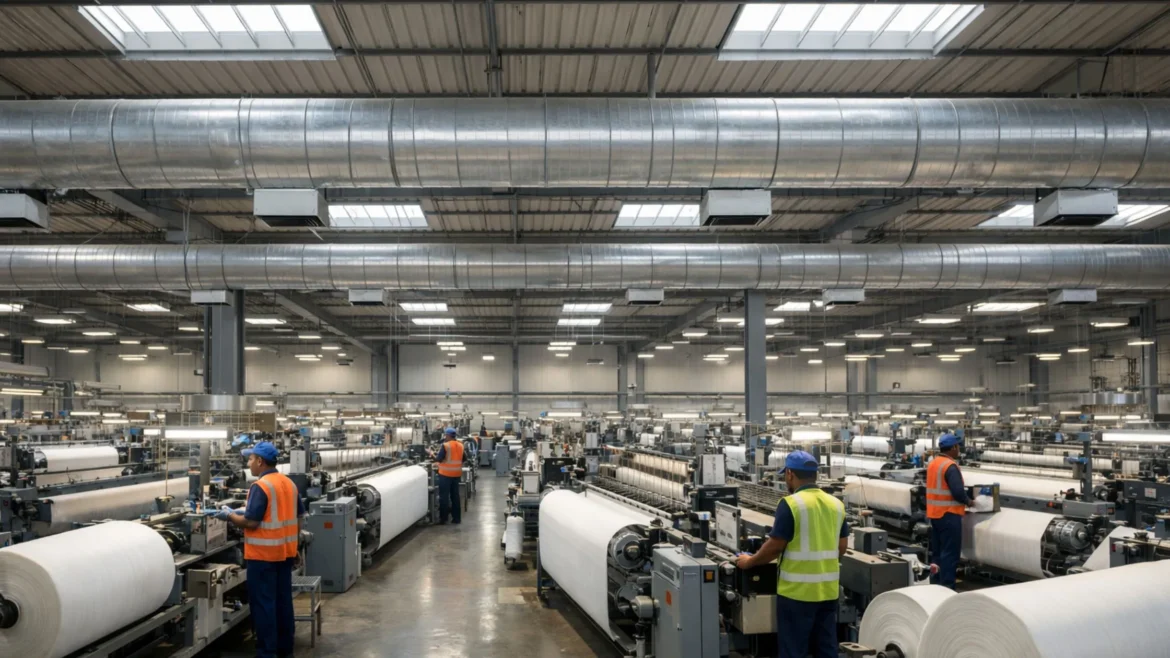
    The best cooling solution for the textile industry in India depends on factors such as plant size, machine heat load, humidity requirements, and energy costs. However, most modern textile mills prefer evaporative cooling with proper ventilation and humidity control because it is energy-efficient, cost-effective, and suitable for large factory spaces.

    Below are the most effective cooling solutions used in textile factories.

    1. Industrial Evaporative Air Cooling (Most Popular)

    This is the most widely used cooling system in textile factories because textile plants are large and require fresh air circulation.

    How it works: Hot outside air passes through water-soaked cooling pads, which cool the air before it enters the factory through ducts.

    Benefits

    ➠ Reduces temperature by 5–12°C in large facilities
    ➠ Up to 80% lower energy consumption compared to conventional AC
    ➠ Provides 100% fresh air ventilation
    ➠ Helps maintain humidity levels important for yarn quality
    ➠ Ideal for spinning, weaving, and garment units

    Best for

    ➠ Spinning mills
    ➠ Weaving units
    ➠ Garment manufacturing floors
    ➠ Large textile production halls

    2. Indirect-Direct Evaporative Cooling (IDEC)

    A more advanced version of evaporative cooling is used in modern textile plants.

    Key advantages

    ➠ 40–50% energy savings vs traditional cooling systems
    ➠ Cool air without excessive humidity
    ➠ More stable temperature control

    Best for

    ➠ Automated textile plants
    ➠ Sensitive yarn processing environments
    ➠ High-efficiency factories

    3. Humidification + Cooling Systems

    Textile production requires controlled humidity, not just cooling.

    Why humidity matters

    Correct humidity:

    ➠ Reduces yarn breakage
    ➠ Prevents static electricity
    ➠ Improves weaving efficiency

    Typical systems:

    Air washer systems
    ➠ Humidification plants
    ➠ Mist cooling systems

    4. Industrial Mist Cooling Systems

    Used in specific zones, such as dyeing or high-heat areas.

    Benefits

    ➠ Reduces heat near machines
    ➠ Controls dust and lint
    ➠ Improves worker comfort and productivity

    5. Central HVAC

    Traditional chilled-water HVAC is rarely used for full textile factories because:

    ➠ Very high energy consumption
    ➠ Expensive installation and maintenance
    ➠ Better suited for cleanrooms or small textile labs

    Recommended Cooling Setup for a Textile Factory

    Most efficient configuration: Industrial Evaporative Coolers + Ducting + Exhaust Ventilation

    Typical system design:

    ✱ Roof-mounted air coolers
    Prefabricated duct network
    ✱ Fresh air supply
    Exhaust fans for hot air removal

    This setup:

    ✱ Maintains 28–32°C working temperature
    ✱ Improves worker productivity
    ✱ Reduces electricity costs.

    FAQ – Textile Industry Cooling Solutions

    1. What is the best cooling solution for textile factories in India?

    The most effective cooling solution for textile factories is industrial evaporative air cooling combined with proper ventilation and humidity control. This system is energy-efficient, provides fresh air circulation, and works well in large textile production areas such as spinning, weaving, and garment manufacturing units.

    2. Why is evaporative cooling preferred in textile mills?

    Evaporative cooling is preferred because it:
    ✧ Consumes up to 80% less energy than traditional air conditioning
    ✧ Provides 100% fresh air ventilation
    ✧ Works efficiently in large open factory spaces
    ✧ Helps maintain optimal humidity levels for yarn quality

    3. What temperature should be maintained inside a textile factory?

    Most textile factories aim to maintain a working temperature between 28°C and 32°C. This range helps improve worker comfort while maintaining stable yarn and fabric production conditions.

    4. What airflow capacity is required for textile factory cooling?

    Textile factories typically use industrial air coolers with airflow ranging from 10,000 to 40,000 CFM, depending on the size of the production hall and the heat generated by machines.

    5. What is the difference between direct evaporative cooling and IDEC cooling?

    Direct evaporative cooling cools air by passing it through water-soaked cooling pads, while Indirect-Direct Evaporative Cooling (IDEC) first cools air indirectly before adding evaporative cooling. IDEC systems provide better temperature control and lower humidity levels.

    6. Can mist cooling systems be used in textile plants?

    Yes, mist cooling systems can be used in specific zones of textile factories, especially near high-heat machines or dyeing sections. They help reduce localized heat and improve worker comfort.

    Get a Free Cooling Solution Consultation

      Get in Touch

      Please share your details below and we’ll get back to you soon.

      13Jan

      How to choose the right HVAC solution for Indian climate

      by Priyanka Gupta

      Choosing the right HVAC solution depends on several factors – location, building size, climate zone, usage patterns, budget, and long-term energy goals. In this blog, we break down the most common HVAC systems used in India, their performance in tropical conditions, energy costs, and maintenance needs, helping you make a smarter, climate-appropriate decision.

      Understanding India’s Climate Challenges for HVAC Design

      India has multiple climate zones: hot-dry, hot-humid, composite, coastal, and temperate, and each one affects HVAC performance differently. Seasonal extremes are common: scorching summers, humid monsoons, and mild to cold winters in some regions.

      In tropical climates, HVAC systems must handle:

      – Sensible heat (reducing temperature)
      – Latent heat (removing moisture)

      This dual demand makes HVAC design more complex. In fact, cooling systems in tropical regions can consume up to 56% of a building’s total energy, compared to 30–40% in temperate climates.

      Seasonal variation also plays a big role:

      – May–June: Cooling demand peaks at nearly 90–95% of system capacity.
      – July–August (Monsoon): Humidity control becomes more important than temperature reduction. Overcooling during this period can actually worsen indoor humidity if not managed correctly.

      This is why climate-responsive HVAC design is critical.

      Common Cooling Systems Used in India (and How They Perform)

      1. Window Air Conditioners

      Best suited for small rooms and low-budget setups, window ACs are simple but inefficient in humid conditions. They struggle during monsoons and offer limited humidity control.

      2. Split ACs (Non-Inverter & Inverter)

      Non-inverter models consume more power and perform adequately, but inverter split ACs are far better suited for Indian climates. Their variable-speed compressors adjust cooling based on load, offering:

      – Better humidity control
      – 20–30% energy savings
      – Longer compressor life

      They are ideal for long-term residential and small commercial use.

      3. Central Evaporative Cooling

      Evaporative cooling is a smart, energy-efficient solution, especially for hot and dry climates. It works by naturally cooling the air, making spaces feel comfortable without the heavy power consumption of traditional air conditioning. Since the system adds moisture to the air, it’s best suited for dry weather and is usually paired with a backup option during the monsoon months.

      One of its biggest advantages is efficiency; it uses up to 80% less electricity than conventional AC systems. For best performance, it is recommended for areas of 500 sq. ft. or more, making it ideal for spacious homes, offices, and commercial environments.

      4. VRF / VRV Systems

      These multi-zone systems offer excellent energy efficiency, precise temperature control, and superior humidity management. They are widely used in offices, hospitals, hotels, and large commercial buildings where occupancy varies throughout the day.

      5. Solar-Powered Air Conditioning

      Solar-integrated ACs significantly reduce grid electricity usage and operational costs. While the initial investment is high, they deliver excellent long-term returns in regions with high solar exposure.

      Choosing the Right System by Space Type and Climate

      Residential Use

      ● Single rooms: Inverter split ACs or window ACs
      ● Apartments: Inverter split ACs or hybrid evaporative + split systems
      ● Villas: VRF systems or hybrid solutions for mixed-use zones

      Commercial & Institutional Buildings

      ● IT Parks & Offices: Central evaporative cooling with split AC backup
      ● Hotels & Hospitals: VRF systems with heat recovery
      ● Factories & Data Centers: Water-cooled chilled water systems

      Each application requires a customized approach based on usage, occupancy, and load patterns.

      Maintenance Needs in Tropical and Monsoon Conditions

      Tropical climates demand more frequent and careful HVAC maintenance.

      Monsoon-Specific Care (July–September)

      ● Clean filters every 2 weeks
      ● Ensure drain lines are clear to prevent water buildup
      ● Protect outdoor units from moisture and corrosion
      ● Install surge protection during thunderstorms

      Annual Preventive Maintenance

      ● Servicing before peak summer and before monsoon
      ● Refrigerant leak checks
      ● Coil cleaning and airflow balancing
      ● Thermostat calibration

      Regular maintenance (₹1,000–1,500 annually) can extend system life by 20–30% and prevent costly breakdowns.

      Cost vs Efficiency: When Does It Make Sense to Upgrade?

      1. Window Air Conditioners – Cost vs Efficiency

      Window ACs are often the go-to choice when budget is the main concern. They’re affordable, easy to install, and work well for smaller rooms or occasional use. That said, they aren’t the most energy-efficient option. Over time, electricity bills can add up—especially if the unit runs for long hours every day. So while a window AC makes sense for short-term or limited use, it may not be the best pick if you’re looking for long-term savings.

      2. Split ACs (Non-Inverter & Inverter) – Cost vs Efficiency

      Non-inverter split ACs come with a lower price tag, but their frequent start-stop operation leads to higher power consumption. Inverter split ACs, on the other hand, cost more initially but are far easier on your electricity bills.

      3. Central Evaporative Cooling – Cost vs Efficiency

      Central evaporative cooling strikes an excellent balance between upfront cost and long-term efficiency. These systems are remarkably economical to run, consuming up to 80–93% less electricity than conventional air conditioning, especially in hot and dry climates. They are best suited for larger spaces, typically 500 sq. ft. and above, where energy consumption can otherwise become a major expense.

      To put things into perspective, consider a 1000 sq. ft. area cooled using a 10,000 CFM system. A traditional AC would consume around 8 kWh, whereas Greencon’s E-Series evaporative cooler uses just about 1.1 kWh for the same space. That’s a massive reduction in power usage without compromising comfort.

      While a backup system may be required during monsoon months due to higher humidity, the overall savings, both financial and environmental, make central evaporative cooling a truly cost-effective and sustainable choice for large spaces.

      4. VRF / VRV Systems – Cost vs Efficiency

      VRF and VRV systems do require a higher upfront investment, but they truly deliver when it comes to efficiency and control. By adjusting cooling output based on real-time demand, they avoid unnecessary power consumption. This makes them ideal for commercial buildings, hotels, and large offices where occupancy keeps changing. Over time, lower energy bills, minimal maintenance, and a long service life help these systems justify their initial cost.

      5. Solar-Powered Air Conditioning – Cost vs Efficiency

      Solar ACs sit at the premium end in terms of upfront cost, but their long-term payoff can be impressive. For those planning to stay in the same property for 15 years or more, solar cooling starts to make strong financial sense. With government subsidies and net metering, electricity costs can drop dramatically, sometimes nearly to zero. In the long run, solar ACs not only recover their cost but also offer protection against rising power tariffs.

      Key Recommendations for Indian Homes & Businesses

      1. Commercial & Institutional Buildings, IT Parks & Offices: Central Air Conditioning or Central evaporative cooling as backup
      2. Hotels & Hospitals: VRF systems with heat recovery or Chilled Water System
      3. Factories & Data Centers: Water-cooled chilled water system/VRF

      How Degree Day Helps You Choose the Right HVAC Solution

      Selecting the right HVAC system is not just about equipment; it’s about design, execution, and long-term performance. This is where Degree Day Pvt. Ltd. plays a key role.

      With over 26 years of experience, Degree Day specializes in:

      ● Climate-responsive HVAC design
      ● Energy-efficient cooling solutions
      ● Evaporative cooling systems
      Pre-fabricated ducting and air distribution
      Turnkey HVAC project execution

      By combining technical expertise with real-world Indian climate understanding, Degree Day helps residential, commercial, and industrial clients achieve lower energy costs, better comfort, and long-term reliability.

      There is no one-size-fits-all HVAC solution for India’s tropical climate. The best choice balances initial investment, operating costs, humidity control, and maintenance.

      Ultimately, correct system sizing, professional installation, and regular maintenance matter just as much as the technology itself. A well-designed HVAC system is an investment that pays back every year through comfort, efficiency, and durability.

      Frequently Asked Questions

      1: What is the best HVAC system for Indian climate conditions?

      The best HVAC system for the Indian climate depends on the region and application. In hot-dry regions, central evaporative cooling is highly energy-efficient. In hot-humid and coastal areas, inverter split ACs or VRF systems perform better due to superior humidity control. For large commercial buildings, VRF or chilled water systems offer optimal efficiency, scalability, and long-term savings.

      2: Why is humidity control important in HVAC systems for India?

      India’s tropical climate demands management of both sensible heat (temperature) and latent heat (humidity). During monsoon months, excessive cooling without proper dehumidification can increase indoor discomfort, cause condensation, and promote mold growth. HVAC systems with variable capacity control, proper ventilation, and moisture management ensure healthier and more comfortable indoor environments.

      3: Is evaporative cooling suitable for all Indian climates?

      Evaporative cooling is best suited for hot and dry climates, where it delivers up to 80–93% energy savings compared to conventional air conditioning. However, in high-humidity or monsoon conditions, its effectiveness reduces. For year-round comfort, evaporative systems are often combined with backup split ACs or hybrid HVAC solutions.

      4: How do inverter ACs save energy in Indian homes and offices?

      Inverter ACs use variable-speed compressors that adjust cooling output based on real-time demand. This reduces frequent start-stop cycles, resulting in 20–30% lower electricity consumption, improved humidity control, quieter operation, and longer equipment life. They are ideal for Indian households and offices with long daily usage hours.

      5: How often should HVAC systems be serviced in tropical and monsoon climates?

      In tropical regions like India, HVAC systems require preventive maintenance at least twice a year, before peak summer and before monsoon. During monsoon months, filters should be cleaned every 2 weeks, drain lines checked regularly, and outdoor units protected from moisture. Regular servicing can extend system life by 20–30% and significantly reduce breakdown costs.

      30Dec

      Direct vs Indirect Evaporative Cooling

      by Priyanka Gupta

      With rising temperatures, soaring electricity costs, and increasing pressure to reduce carbon footprints, businesses and homeowners are actively seeking energy-efficient cooling alternatives to traditional air conditioning. One of the most sustainable and cost-effective solutions is evaporative cooling, especially suited to the Indian climate.

      However, not all evaporative cooling systems work the same way. The two most common technologies are:

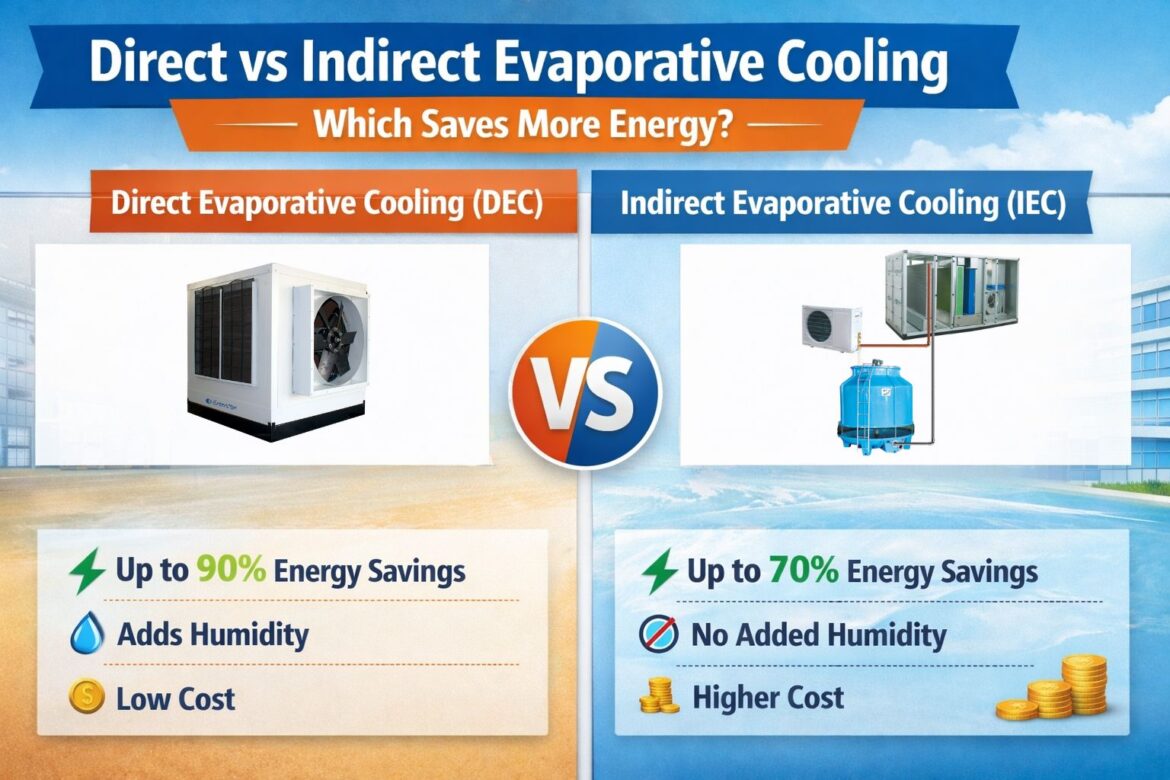
      ➧ Direct Evaporative Cooling (DEC)
      ➧ Indirect Evaporative Cooling (IEC)

      Both use the natural process of water evaporation to cool air, but they differ in energy consumption, comfort level, humidity control, and application.

      What Is Direct Evaporative Cooling (DEC)?

      Direct Evaporative Cooling cools air by passing hot outdoor air through water-soaked cooling pads. As water evaporates, it absorbs heat from the air, reducing the temperature before the air enters the space.

      How Direct Evaporative Cooling Works

      ● Hot outdoor air is drawn into the unit
      ● Air passes through wet cooling pads
      ● Evaporation reduces air temperature
      ● Cool, fresh air is supplied directly indoors

      Key Benefits of Direct Evaporative Cooling

      ● Extremely low electricity consumption
      ● Supplies 100% fresh outdoor air
      ● Highly effective in hot and dry climates
      ● Simple design with low maintenance
      ● Lower capital cost than air conditioning systems

      Energy Savings with DEC

      Direct evaporative cooling can reduce electricity consumption by up to 80–90% compared to conventional air conditioning systems.

      👉 Related reading: Is Evaporative Cooling Eco-Friendly?

      What Is Indirect Evaporative Cooling (IEC)?

      Indirect Evaporative Cooling cools air without adding moisture. It uses a heat exchanger, where evaporation occurs in a separate air stream that cools the supply air indirectly.

      How Indirect Evaporative Cooling Works

      ● Outdoor air is cooled through evaporation in a secondary channel
      ● Heat is transferred via a heat exchanger
      ● Supply air temperature drops without absorbing moisture
      ● Cool, dry air is delivered indoors

      Key Benefits of Indirect Evaporative Cooling

      ● No increase in indoor humidity
      ● Higher comfort in mixed or humid climates
      ● Ideal for temperature-sensitive environments
      ● Can be integrated with hybrid HVAC systems

      Energy Savings with IEC

      Indirect evaporative cooling systems typically reduce energy consumption by 60–70% compared to traditional air conditioning.

      👉 Related reading:
      How HVAC Systems Work in Commercial Buildings

      ParameterDirect Evaporative CoolingIndirect Evaporative Cooling
      Energy savings⭐⭐⭐⭐⭐ (Highest)⭐⭐⭐⭐
      Humidity controlAdds humidityNo added humidity
      Initial investmentLowerHigher
      Climate suitabilityHot & dry regionsMixed & humid climates
      Fresh air100% fresh air100% fresh air
      Comfort levelModerateHigh

      Which Evaporative Cooling System Saves More Energy?

      If maximum energy savings is the only criterion, Direct Evaporative Cooling is the clear winner. Its minimal power consumption and high airflow make it ideal for large, open spaces.

      However, in applications where humidity control and thermal comfort are equally important, Indirect Evaporative Cooling provides a better balance between efficiency and comfort.

      When Should You Choose Direct Evaporative Cooling?

      Choose DEC if you need:

      ● Maximum electricity savings
      ● High fresh-air ventilation
      ● Cooling for open or semi-open areas
      ● Industrial or commercial cooling for large spaces
      ● Lower upfront cost

      Best suited for: Warehouses, factories, workshops, farms, logistics centers, commercial areas, villas, and rooftops

      👉 Learn more: Best HVAC Solutions for Warehouses & Factories & Evaporative Cooling Systems

      When Should You Choose Indirect Evaporative Cooling?

      Choose IEC if you need:

      ● Cooling without increasing humidity
      ● Higher comfort for enclosed spaces
      ● Energy-efficient alternative to air conditioning
      ● Temperature-controlled environments

      Best suited for: Offices, IT parks, malls, data centers, hospitals, laboratories, clean rooms

      👉 Useful links: Clean Room HVAC Solutions

      Hybrid Cooling Systems: The Most Energy-Efficient Approach

      Modern HVAC systems increasingly combine Indirect + Direct Evaporative Cooling or Evaporative Cooling + Air Conditioning.

      Why Hybrid Cooling Works

      ➠ Reduces AC load by 40–60%
      ➠ Improves comfort and humidity control
      ➠ Enhances overall system efficiency
      ➠ Ideal for large commercial and industrial facilities

      Why Choose Degree Day Pvt. Ltd.?

      With 26 years of HVAC expertise, Degree Day Pvt. Ltd. designs and delivers custom evaporative and hybrid cooling solutions tailored to Indian climate conditions.

      We offer:

      ➤ End-to-end HVAC EPC services
      ➤ Energy-efficient evaporative cooling systems
      ➤ HVAC design, installation & maintenance
      ➤ Proven experience across industrial & commercial projects
      Air Purifiers and Designer Bladeless Fans

      FAQs Related to Direct vs Indirect Evaporative Cooling

      1. Which evaporative cooling system saves the most energy?

      Direct Evaporative Cooling saves the most energy, offering up to 90% power savings compared to air conditioning.

      2. Does evaporative cooling work in humid climates?

      Indirect evaporative cooling and hybrid systems work better in humid or mixed climates.

      3. Is evaporative cooling suitable for factories and warehouses?

      Yes, direct evaporative cooling is ideal for large industrial spaces with high ventilation requirements.

      4. Can evaporative cooling replace air conditioning?

      In many applications, yes. In others, a hybrid system delivers the best performance.

      5. Does Degree Day provide customized HVAC solutions?

      Absolutely. Degree Day offers tailor-made HVAC designs based on climate, space, and energy goals.
      Direct Evaporative Cooling → Maximum energy savings
      ✔ Indirect Evaporative Cooling → Better comfort & humidity control
      Hybrid Systems → Best overall efficiency

      Need expert guidance? Send an enquiry to Degree Day

      12Dec

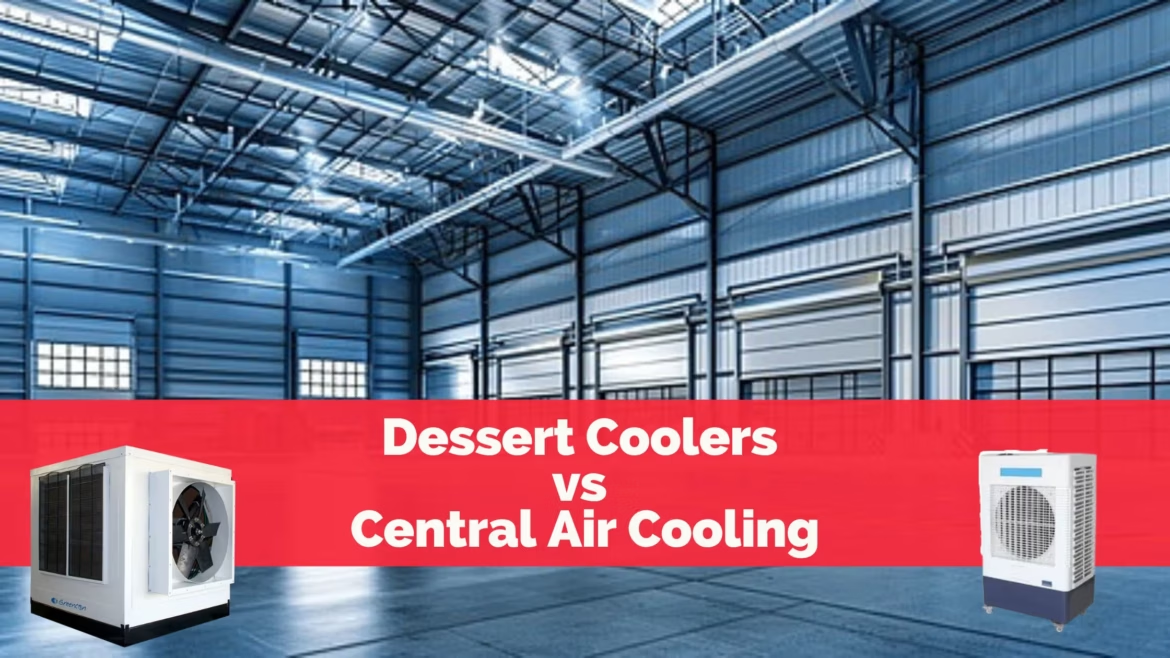
      Why Desert Coolers Fail in Big Spaces and How Central Air Cooling Solves This

      by Priyanka Gupta

      Cooling large commercial and industrial spaces is a challenge. Many businesses initially try to use multiple desert coolers, thinking it will reduce cost. However, they soon encounter issues such as uneven cooling, rising humidity, high maintenance, and poor comfort.

      Desert coolers are great for small rooms, but they are not designed for large, open, high-heat-load environments. This is where Central Air Cooling becomes the smart, efficient, and long-term solution.

      What is a Desert Cooler?

      A desert cooler is a portable air-cooling device that cools air through water evaporation. A desert cooler is a type of evaporative cooler. All desert coolers are evaporative coolers, but not all evaporative coolers are desert coolers.

      It is commonly used in hot, dry regions because it provides low-cost cooling with minimal electricity.

      How a Desert Cooler Works
      1. Hot outdoor air is pulled into the cooler using a fan.
      2. The air passes through wet cooling pads (wood wool or honeycomb).
      3. Water evaporates and cools the air.
      4. The fan pushes this cool, moist air into the room.

      AdvantagesLimitations
      Affordable operationNoisy Operation
      Fresh outdoor airManual Water Refill Required
      Eco-friendly (no refrigerants)Aesthetically not Pleasing

      Centralised coolers overcome the limitations of desert coolers by providing silent cooling, automatic water refill, drain cycle options, and a sleek, integrated design that enhances the overall aesthetics of any space.

      Difference Between a Dessert Cooler and an Evaporative Cooler

      FeatureDesert CoolerEvaporative Cooler (General)
      CategoryA type of evaporative coolerBroad technology
      Coverage AreaSmall roomsSmall to very large spaces
      CFM2,000–6,0002,000–60,000+
      UsageResidentialResidential + commercial + industrial
      HumidityHighControlled or high, depending on the system
      Cooling MethodBasic evaporationBasic or advanced engineered systems
      ExamplePlastic/metal room coolersCentral air cooling, ducted coolers, industrial coolers

      The Problem With Desert Coolers in Big Spaces and the Right Cooling System

      1. Desert Coolers Can’t Handle Large Coverage Areas

      A desert cooler works well only within a limited range. When placed in a big hall, factory, or warehouse:

      1. The air flow reduces after a few meters
      2. Cooling doesn’t reach all corners
      3. Hot and cold patches appear everywhere

      In short, desert coolers cool only the area directly in front of them, not the entire building.

      How Central Air Cooling Fixes This

      In Central Air Cooling, high-capacity blowers and strategically designed ducts are used to supply cool, fresh air evenly throughout the space. No pockets of heat. No dead zones. Just uniform, consistent cooling everywhere.

      2. Too Many Coolers = Too Much Humidity

      When you install multiple coolers in one space, all of them release moisture. This leads to:

      1. Sticky, uncomfortable air
      2. Increased humidity
      3. Reduced cooling performance
      4. Dampness around equipment or products

      Workers feel tired, sweating increases, and productivity drops.

      How Central Air Cooling Fixes This

      Central systems balance humidity using controlled evaporation and continuous fresh air intake. They maintain the ideal comfort level of cooler air, but without over-humidification.

      3. High Maintenance Burden

      Each desert cooler has its own Motor, Pump, Water system, Pads, and Wiring. When you need 10–20 coolers for a large area, maintenance becomes a full-time job. Breakdowns are frequent, and electricity consumption increases with every added unit.

      How Central Air Cooling Fixes This

      Instead of many small coolers, you have one central cooling plant with ducts. This means:

      1. Fewer moving parts
      2. Lower breakdowns
      3. Easy, centralized servicing
      4. Better long-term reliability

      4. Poor Indoor Air Quality (IAQ)

      Desert coolers often recirculate indoor air or pull in dusty outdoor air without proper filtration. In industrial environments, this becomes a serious issue, affecting:

      1. Worker health
      2. Product quality
      3. Machine efficiency

      How Central Air Cooling Fixes This

      Central systems bring in 100% fresh filtered air, improving IAQ significantly. You get:

      1. Cleaner air
      2. Better ventilation
      3. Reduced odors
      4. Healthier work environment

      5. Unable to Handle Industrial Heat Load

      Large spaces produce heat from Machinery, Processes, Lighting, and Manpower; a desert cooler cannot remove or dilute this heat effectively. It cools only the immediate spot and struggles in high-temperature conditions.

      How Central Air Cooling Fixes This

      Centralized systems use large evaporative cooling modules with 85–90% efficiency. They are specifically designed for:

      1. High heat load
      2. Long working hours
      3. Harsh industrial conditions
      4. Large airflow requirements

      This gives powerful, consistent cooling even during peak summer.

      Why Central Air Cooling Is the Smarter Choice

      ✔ Uniform cooling across large spaces
      ✔ Controlled humidity and better comfort
      ✔ Lower electricity consumption compared to AC
      ✔ Reduced maintenance
      ✔ Improved indoor air quality
      ✔ Perfect for factories, warehouses, workshops, and commercial spaces

      Central Air Cooling combines the simplicity of evaporative cooling with the scale and efficiency of centralized HVAC engineering. Desert coolers are affordable and effective for small rooms, but they fail when it comes to cooling large industrial or commercial spaces. Humidity rises, maintenance becomes chaotic, and cooling stays uneven.

      Central Air Cooling, on the other hand, provides:

      1. Uniform cooling
      2. Fresh air
      3. Low operating cost
      4. Reliable performance
      5. Long-term savings

      If you want to cool a big space efficiently and economically, Central Air Cooling is the solution that truly works.

      How Degree Day Delivers a Complete Central Air Cooling Solution

      To make Central Air Cooling truly effective, you need the right engineering, the right equipment, and the right air distribution system. Degree Day provides all three. We offer fully integrated Central Air Cooling systems along with high-quality prefabricated ducts that ensure smooth, uniform airflow across large spaces. Our solutions are designed to handle industrial heat loads, improve IAQ, reduce energy consumption, and deliver consistent cooling with minimal maintenance.

      With Degree Day’s expertise, businesses get a reliable, efficient, and long-term cooling system that works perfectly for factories, warehouses, workshops, and large commercial buildings.

      Recent Blogs

      Get in Touch

      Please share your details below and we’ll get back to you soon.