LOADING...

Category "HVAC"

26Feb

Laminar Air Flow

by Priyanka Gupta

In industrial and commercial HVAC design, the airflow strategy has a direct impact on indoor air quality (IAQ), contamination control, and operational efficiency.

Two primary air distribution methods dominate modern HVAC systems:

✔ Laminar Air Flow HVAC systems
✔ Turbulent Flow HVAC systems

Understanding the difference between laminar v/s turbulent airflow in HVAC is critical when designing cleanrooms, hospitals, pharmaceutical plants, and manufacturing units.

What is Laminar Air Flow?

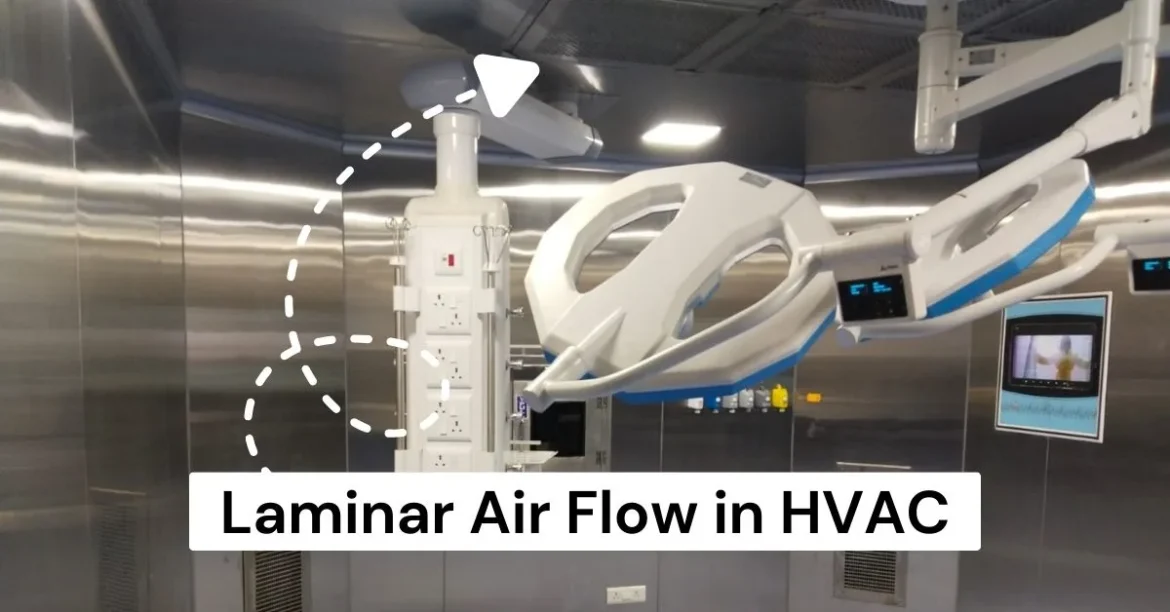
Laminar Air Flow (LAF) in HVAC refers to a unidirectional airflow system where air moves in parallel layers at a uniform velocity with minimal turbulence.

A laminar airflow HVAC system is specifically designed to:

✔ Control airborne contamination
✔ Maintain sterile environments
✔ Reduce particle accumulation
✔ Achieve ISO cleanroom classifications

How Laminar Airflow HVAC Works

✔ Air passes through HEPA filters or ULPA filters
✔ Filtered air flows vertically (or horizontally) in a single direction
✔ Constant velocity is maintained across the clean zone
✔ Contaminants are continuously pushed out of the critical area

If you want a deeper understanding of HEPA filtration, read our detailed blog on HEPA Filters: What they are and How they work in air purifiers

Applications of Laminar Air Flow HVAC Systems

Laminar airflow systems are used in:

➱ Cleanrooms
➱ Pharmaceutical manufacturing
➱ Operation theatres
➱ Biotechnology labs
➱ Electronics production units

You can explore our Cleanroom HVAC expertise here: Clean Room Solution

Our Recent Hospitals HVAC Projects

With extensive experience in delivering Laminar Air Flow HVAC systems for pharmaceutical environments, we have completed projects for reputed organizations including Sancheti Hospital, Gokuldas Hospital Pvt. Ltd., Greater Kailash Hospital, Narayana Hospital, M.Y. Hospital Indore, Arpit Arien Hospital, Tejankar Health Care & Medical Institute, Bombay Hospital Indore, CHL Hospital, Bhandari Hospital, Carrier Hospital, SAIMS Medical College, Dhanvantari Hospital, Khemka Hospital, Jamdar Hospital, Anand Hospital, Unique Hospital, Suyash Hospital, MVS Hospital, Mahamritunjay Hospital, Rajdadiji Hospital, Rajshree Hospital (Apollo Hospital), Synergy Hospital.

Our expertise in cleanroom HVAC design, HEPA filtration integration, pressure control systems, and contamination-free airflow solutions ensures regulatory compliance and high-performance air management across pharmaceutical manufacturing facilities.

What is Turbulent Flow in HVAC?

A Turbulent Flow HVAC system distributes air in multiple directions, allowing air to mix freely within the room.

Unlike laminar airflow, turbulent airflow HVAC systems rely on:

✔ Air dilution
✔ Mixing ventilation
✔ Standard filtration
✔ Balanced air changes per hour (ACH)

This method is commonly used in:

✔ Commercial buildings
✔ Warehouses
✔ Factories
✔ Shopping malls
✔ Offices

To understand HVAC fundamentals in commercial buildings, read: How Does an HVAC System Work in Commercial Buildings

Laminar Air Flow vs Turbulent Flow HVAC: Detailed Comparison

ParameterLaminar Air Flow HVACTurbulent Flow HVAC
Air PatternUnidirectional airflowMixed airflow
Contamination ControlVery HighModerate
FiltrationHEPA / ULPA mandatoryStandard + optional HEPA
Energy ConsumptionHigherModerate
CostHigher installation costCost-effective
Suitable ForCleanrooms, OT, PharmaOffices, factories

Laminar vs Turbulent Airflow: Key Technical Differences

1. Air Distribution Philosophy

✔ Laminar Air Flow HVAC → Sweeping strategy
✔ Turbulent Flow HVAC → Dilution strategy

Laminar airflow removes contaminants by pushing them away, while turbulent airflow reduces concentration through mixing.

2. Indoor Air Quality (IAQ) Impact

Laminar airflow systems provide:

✔ Predictable particle control
✔ Controlled airflow velocity
✔ Reduced infection risk

Turbulent systems provide:

✔ Thermal comfort
✔ General air circulation
✔ Cost-efficient ventilation

To understand more about indoor air quality improvement, read: Air Purification v/s Ventilation

3. Energy & Cost Comparison

Laminar airflow HVAC systems:

✔ Require higher air changes per hour (ACH)
✔ Consume more energy
✔ Need precision engineering

Turbulent airflow systems:

✔ Lower initial investment
✔ Easier retrofitting
✔ Suitable for large industrial spaces

For energy-saving strategies, read: Energy Saving Tips for Commercial HVAC Systems.

When Should You Choose Laminar Air Flow v/s Turbulent Flow HVAC?

Choose a turbulent airflow HVAC if:Choose turbulent airflow HVAC if:
You require ISO-classified cleanroomsComfort cooling is the primary goal
Sterility is non-negotiableBudget optimization is important
Pharmaceutical or biotech production is involvedContamination risk is moderate
Hospital infection control is criticalWarehouses or factories require #ventilation

Cleanroom HVAC Design Considerations

Laminar airflow design requires:

✔ Uniform velocity distribution
✔ Proper diffuser grid design
✔ Return air wall placement
✔ Pressure differential management

To avoid design mistakes, read: Top 10 HVAC Design Mistakes

Laminar vs. Turbulent Flow in HVAC – Which is Better?

There is no universal “better” system. The right choice depends on:

✔ Application type
✔ Contamination risk level
✔ Regulatory compliance
✔ Energy budget
✔ Long-term operational goals

If contamination control is mission-critical → Laminar Air Flow HVAC
If comfort and cost-efficiency are priorities → Turbulent Flow HVAC

A professionally engineered HVAC airflow design ensures not just cooling, but controlled, intelligent air management.

For customized HVAC solutions, explore our complete product range: Greencon Products

Frequently Asked Questions (FAQs)

1. What is the difference between laminar air flow and turbulent flow in HVAC?

Laminar Air Flow HVAC systems use unidirectional airflow to push contaminants away from critical zones, making them ideal for cleanrooms and pharmaceutical units. Turbulent Flow HVAC systems mix air within the room to dilute contaminants and are commonly used in commercial and industrial buildings.

2. Where is a laminar air flow HVAC system used?

Laminar airflow HVAC systems are primarily used in pharmaceutical manufacturing, cleanrooms, hospitals, laboratories, and biotechnology facilities where contamination control is critical. Degree Day designs and executes customized laminar airflow solutions for regulated industries.

3. Does a laminar air flow HVAC consume more energy?

Yes, laminar airflow systems typically consume more energy because they require higher air changes per hour (ACH) and continuous HEPA filtration. However, in critical environments, the benefits of contamination control outweigh the energy costs.

4. How does Degree Day design cleanroom HVAC systems?

Degree Day follows a systematic approach, including airflow calculation, HEPA filter integration, pressure differential management, duct design optimization, and on-site validation to ensure compliance with pharmaceutical and industrial standards.

5. How do I choose between laminar and turbulent airflow for my facility?

The right choice depends on contamination risk, regulatory requirements, industry type, and budget. For sterile and high-precision manufacturing, laminar airflow HVAC is recommended. For comfort cooling and general ventilation, turbulent airflow systems are suitable. Degree Day provides consultation to help industries select the most efficient and compliant HVAC solution.

Get in Touch

Please share your details below and we’ll get back to you soon.

17Feb

Sick Building Syndrome

by Priyanka Gupta

What is Sick Building Syndrome (SBS)?

Sick Building Syndrome (SBS) refers to a condition where building occupants experience health and comfort issues linked to time spent inside a building, without a clearly identifiable illness. Symptoms typically improve once the person leaves the building, indicating that the indoor environment is the root cause.

With increasing time spent indoors — in offices, factories, warehouses, and commercial spaces — maintaining proper Indoor Air Quality (IAQ) has become critical.

Read How Does HVAC System Work in Commercial Building, Industrial and Warehouses

At Degree Day, we understand that a building should enhance productivity. We help you choose the right HVAC solution to improve efficiency without compromising on health.

Common Symptoms of Sick Building Syndrome

Sick Building Syndrome symptoms may include:

❖ Frequent headaches
❖ Eye, nose, and throat irritation
❖ Dry cough
❖ Skin irritation
❖ Dizziness or nausea
❖ Fatigue
❖ Difficulty concentrating
❖ Unusual sensitivity to odors

If multiple employees experience similar symptoms within the same facility, it may indicate poor ventilation or indoor air quality issues.

Major Causes of Sick Building Syndrome

1. Poor Ventilation

Insufficient fresh air circulation is one of the primary Sick Building Syndrome causes. Modern buildings are often tightly sealed for energy efficiency, which restricts airflow and traps pollutants indoors. Read more about Air Purification v/s Ventilation

2. Indoor Air Pollutants

Common indoor pollutants include:

❖ Volatile Organic Compounds (VOCs) from paints and furniture
❖ Chemical fumes from cleaning agents
❖ Dust and particulate matter
❖ Emissions from machinery or office equipment

3. Biological Contaminants

❖ Mold and fungi
❖ Bacteria
❖ Pollen
❖ Dust mites

These contaminants thrive in poorly maintained HVAC systems or areas with excessive moisture.

4. Improper Humidity Levels

❖ Low humidity → dryness and irritation
❖ High humidity → mold growth and microbial contamination

Maintaining humidity between 40%–60% is ideal for comfort and health.

5. Poor HVAC Design or Maintenance

Clogged filters, dirty ducts, water stagnation, and improper air balancing significantly contribute to SBS.

How Degree Day Solves Sick Building Syndrome

As a trusted HVAC solutions provider, Degree Day delivers complete turnkey climate control and ventilation solutions designed to eliminate Sick Building Syndrome risks.

✔ Customized Ventilation Design: We design systems that ensure optimal fresh air exchange based on building size, occupancy, and operational needs.

✔ Industrial & Commercial HVAC Solutions: From factories to corporate offices, our systems regulate airflow, temperature, and humidity efficiently.

✔ Evaporative Cooling Systems: For large industrial spaces, energy-efficient air cooling solutions improve ventilation while maintaining cost-effectiveness.

✔ Proper Air Distribution & Balancing: Uniform airflow prevents stagnant zones where pollutants accumulate.

✔ Preventive Maintenance & Servicing: Regular system inspection ensures long-term indoor air quality and performance.

Why Indoor Air Quality Matters for Businesses

Ignoring Sick Building Syndrome can lead to:

❖ Reduced employee productivity
❖ Increased absenteeism
❖ Worker discomfort
❖ Higher operational inefficiencies
❖ Potential compliance and safety risks

Investing in proper HVAC design and ventilation is not an expense, it’s a productivity strategy.

Industrial Spaces & SBS: A Hidden Challenge

Factories and warehouses are particularly vulnerable to Sick Building Syndrome due to:

Heat-generating machinery

✔ High worker density
✔ Limited natural ventilation
✔ Dust and airborne particles

This is why HVAC systems is backbone of Industrial Infrastructure

Degree Day specializes in designing high-airflow, industrial-grade cooling and ventilation systems that improve air quality while maintaining energy efficiency.

Sick Building Syndrome is a serious indoor air quality issue that directly affects health, comfort, and business performance.

With expert HVAC planning, efficient ventilation systems, and regular maintenance, SBS can be effectively prevented.

Degree Day remains committed to delivering smart, energy-efficient, and performance-driven HVAC solutions that create healthier and more productive indoor environments.

Frequently Asked Questions (FAQs)

1. What is the main cause of Sick Building Syndrome?

The primary cause of Sick Building Syndrome is poor ventilation, which allows indoor pollutants, biological contaminants, and humidity imbalance to accumulate inside the building.

2. How can HVAC systems reduce Sick Building Syndrome?

Properly designed HVAC systems improve fresh air circulation, control humidity, filter pollutants, and maintain uniform airflow — significantly reducing SBS risks.

3. What humidity level helps prevent Sick Building Syndrome?

Maintaining indoor humidity between 40% and 60% helps reduce microbial growth and prevents dryness-related irritation.

4. Is Sick Building Syndrome common in factories?

Yes. Industrial spaces often face higher risks due to machinery heat, dust, limited ventilation, and large enclosed areas.

5. How can Degree Day help improve indoor air quality?

Degree Day provides customized HVAC design, industrial ventilation systems, evaporative cooling solutions, and preventive maintenance services to ensure optimal indoor air quality and occupant comfort.

Get in Touch

Please share your details below and we’ll get back to you soon.

4Feb

Can Air Purifiers Replace Ventilation? (Complete Guide on CO₂ & Fresh Air)

by Priyanka Gupta

No, air purifiers cannot replace ventilation.
Air purifiers remove particles like dust, allergens, and microbes, but they do not remove carbon dioxide (CO₂) or bring in fresh oxygen. Proper ventilation is essential to maintain healthy indoor air quality.

Indoor air quality has become a serious concern in recent years as people spend more time indoors at homes, offices, schools, and commercial spaces. Pollutants like dust, allergens, smoke, odors, and even microscopic particles can build up inside, affecting comfort, health, and overall well-being.

In the middle of this growing awareness, many people assume that ventilation and air purification mean the same thing. After all, both are linked to “cleaner air,” right? Not exactly.

While both ventilation and air purification help improve indoor air quality, they work in completely different ways and solve different parts of the problem. Understanding this difference is the first step toward creating a healthier indoor environment.

What is Ventilation?

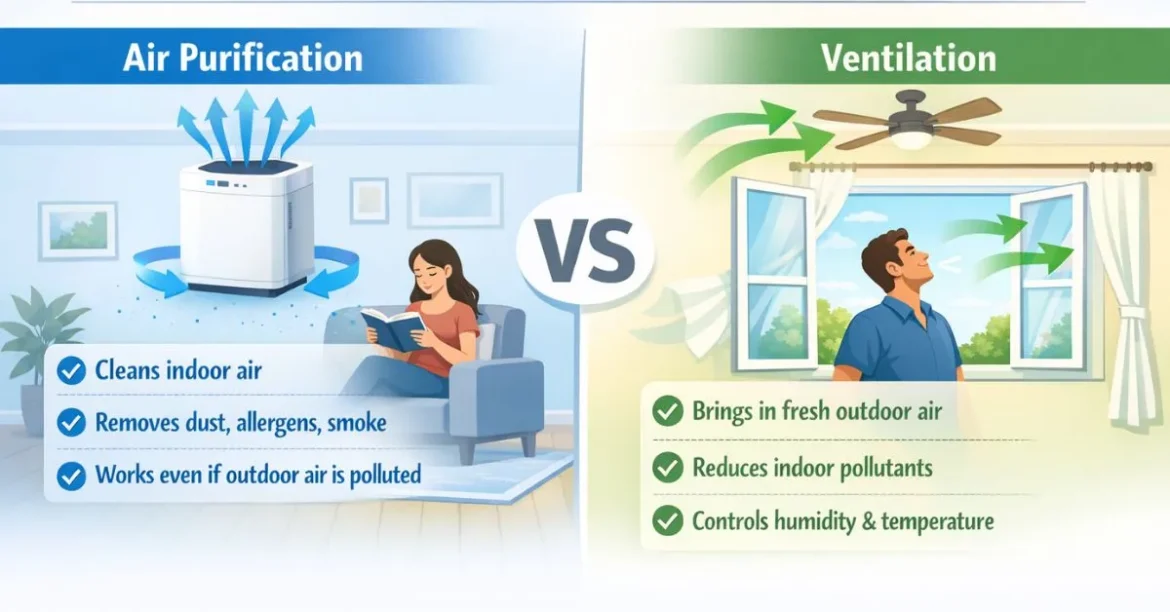
Ventilation is the process of bringing fresh outdoor air into a building while pushing out stale indoor air. Its main role is to keep the indoor environment feeling fresh and breathable by constantly replacing used air with new air.

Proper ventilation also plays an important role in controlling carbon dioxide (CO₂) levels, which can rise in crowded or closed spaces and cause discomfort, tiredness, and poor concentration. In addition, it helps remove lingering odors and excess humidity, reducing the chances of dampness, mold growth, and that heavy, stuffy feeling many people experience in poorly ventilated rooms.

We recently completed a basement ventilation project using axial fans, jet fans, CO sensors, and lift pressurization fans to maintain safe CO levels. Check out the full case study here: Instagram Link

Types of Ventilation:

1. Natural ventilation (windows, vents): Uses openings like windows and vents to allow fresh outdoor air to flow in and stale air to flow out naturally.

2. Mechanical ventilation (exhaust fans, fresh air systems, AHUs with fresh air): Uses powered systems and fans to actively bring in fresh air and remove indoor air in a controlled way.

3. Balanced ventilation systems: Supply and exhaust fans work together to bring in fresh air and remove stale air in equal amounts for stable airflow.

Best For:

➤ Improving oxygen levels: Ventilation brings a steady supply of fresh outdoor air inside, helping maintain comfortable and healthy oxygen levels.

➤ Reducing stuffiness and indoor pollutant buildup: Regular air exchange removes stale air, lingering odors, and trapped indoor pollutants before they can build up.

What is Air Purification?

Air purification is the process of cleaning the air inside a space by removing harmful contaminants, without necessarily bringing in fresh outdoor air. Instead of exchanging air, purification systems focus on treating the air that is already indoors.

Our HEPairé air purifiers are designed for this exact purpose. Equipped with certified H14 HEPA filters paired with G4 pre-filters, efficient UV lights, and ultra-low noise EC fans, HEPairé units remove airborne pollutants while consuming minimal power. Available in models AURA, PURA, and ASTRIA, they cater to residential, commercial, institutional, and hospital applications, ensuring clean, safe, and comfortable indoor air for spaces of all sizes.

This is especially useful in areas where outdoor air quality is poor or where additional filtration is needed. By continuously circulating and cleaning indoor air, HEPairé purifiers help make the air safer to breathe and more comfortable for occupants.

What Air Purifiers Remove:

1. Dust and fine particles (PM2.5, PM10): Air purifiers capture tiny airborne particles that can enter the lungs and affect breathing.

2. Allergens (pollen, pet dander): They help reduce allergy triggers by filtering out common airborne allergens.

3. Bacteria and some viruses: Certain advanced filters and technologies can trap or deactivate harmful microorganisms in the air.

4. Smoke and odors (with carbon filters): Activated carbon filters absorb smoke, fumes, and unpleasant smells from indoor air.

Common Air Purification Technologies:

1. HEPA filters: High-efficiency filters that trap extremely fine airborne particles, including dust, allergens, and microscopic pollutants.

2. Activated carbon filters: Special filters that absorb gases, chemicals, smoke, and unpleasant odors from the air.

3. UV-C systems: Use ultraviolet light to help neutralize bacteria, viruses, and other microorganisms as air passes through.

4. Ionizers (with caution): Release charged ions to make particles settle out of the air, but should be used carefully due to possible ozone generation.

Best For:

➤ Best for areas with polluted outdoor air: Air purifiers clean the air indoors without relying on outside air, making them useful where outdoor pollution levels are high.

➤ Reducing airborne particles and microbes: They help lower the concentration of fine particles, allergens, and certain microorganisms circulating in indoor air.

Key Differences Between Ventilation and Air Purification

FeatureVentilationAir Purification
Brings in fresh airYesNo
Removes indoor stale airYesNo
Filters tiny particlesNot alwaysYes
Controls CO₂ levelsYesNo
Works when outdoor air is pollutedCan bring pollution inYes (if filtered)

Do Air Purifiers Remove CO₂ or Replace Ventilation?

Short answer: No. Air purifiers do not remove carbon dioxide (CO₂) and cannot replace ventilation.

Air purifiers are designed to remove particles, allergens, microbes, smoke, and odors. However, CO₂ is a gas, and standard HEPA or carbon filters do not remove CO₂ effectively.

When people occupy a room, CO₂ builds up naturally through breathing. Without proper ventilation:

➥ Oxygen levels drop
➥ CO₂ levels rise
➥ The room feels stuffy and uncomfortable

This is why air purifiers without ventilation can still result in poor indoor air quality, even if particle levels are low.

Why Ventilation Alone is Not Enough

1. Outdoor air isn’t always clean: Fresh air can carry dust, vehicle emissions, smoke, and other pollutants indoors.

2. Limited filtration of fine particles: Basic ventilation systems may not effectively remove very small particles like PM2.5.

3. Allergens can enter easily: Pollen and other outdoor allergens can be brought inside through ventilation.

4. Air quality depends on location: Buildings in urban or industrial areas may introduce more pollution than fresh air.

5. No direct air cleaning function: Ventilation mainly dilutes contaminants rather than actively removing microscopic pollutants.

Why Air Purification Alone is Not Enough

1. Doesn’t control CO₂ levels: Air purifiers clean the air but do not bring in fresh oxygen, so carbon dioxide can still build up in occupied spaces.

2. No humidity management: They do not remove excess moisture, which can lead to dampness, discomfort, or mold growth.

3. Air may still feel stale: Without fresh air circulation, indoor spaces can feel stuffy even if particles are being filtered.

4. Limited odor removal from sources: While some purifiers reduce smells, they don’t eliminate the root causes, like poor ventilation or trapped air.

5. No air exchange: Purifiers recirculate indoor air rather than replacing old air with fresh outdoor air.

The Ideal Solution: Combining Ventilation and Air Purification

When it comes to indoor air quality, the best approach is not choosing one over the other; it’s using both ventilation and air purification together.

Simply put: Healthy indoor air = Fresh air + Clean air

Ventilation brings fresh outdoor air inside and pushes stale air out. Air purification cleans the air by removing dust, allergens, and other harmful particles. When combined, they create a healthier and more comfortable indoor environment.

At Degree Day, we understand that ventilation and air purification work best together. As experts in designing smart HVAC solutions, we help you find the right balance based on your building type, occupancy, and outdoor air quality, ensuring safer, healthier, and truly comfortable indoor spaces.

Best Indoor Air Quality Solution: Purification + Ventilation

The most effective way to improve indoor air quality is by combining air purification with proper ventilation. While air purifiers clean and filter the air, ventilation ensures a continuous supply of fresh air and effective removal of CO₂ and indoor pollutants.

Explore Our Ventilation and Air Purification Solutions

Discover how Degree Day’s advanced ventilation systems and air purification solutions can help you create healthier indoor environments for residential, commercial, and industrial spaces.

Ventilation SystemAir Purifiers

Frequently Asked Questions (FAQ)

Q1. Are air purifiers a substitute for ventilation?

No. Air purifiers clean indoor air but do not bring in fresh air or remove CO₂. Ventilation is essential for oxygen replacement.

Q2. Do air purifiers introduce fresh air or oxygen?

No. Air purifiers only recirculate and filter indoor air. Fresh air can only be introduced through ventilation systems.

Q3. Do air purifiers make rooms less stuffy?

They can reduce odors and particles, but without ventilation, rooms may still feel stuffy due to CO₂ buildup.

Q4. Air purifier vs exhaust fan: which is better?

They serve different purposes. Exhaust fans remove stale air, while air purifiers clean indoor air. The best results come from using both together.

Get in Touch

Please share your details below and we’ll get back to you soon.

At Degree Day Pvt. Ltd., we design integrated ventilation + air purification solutions that control CO₂, particles, and comfort, especially for offices, basements, hospitals, and commercial buildings.

29Jan

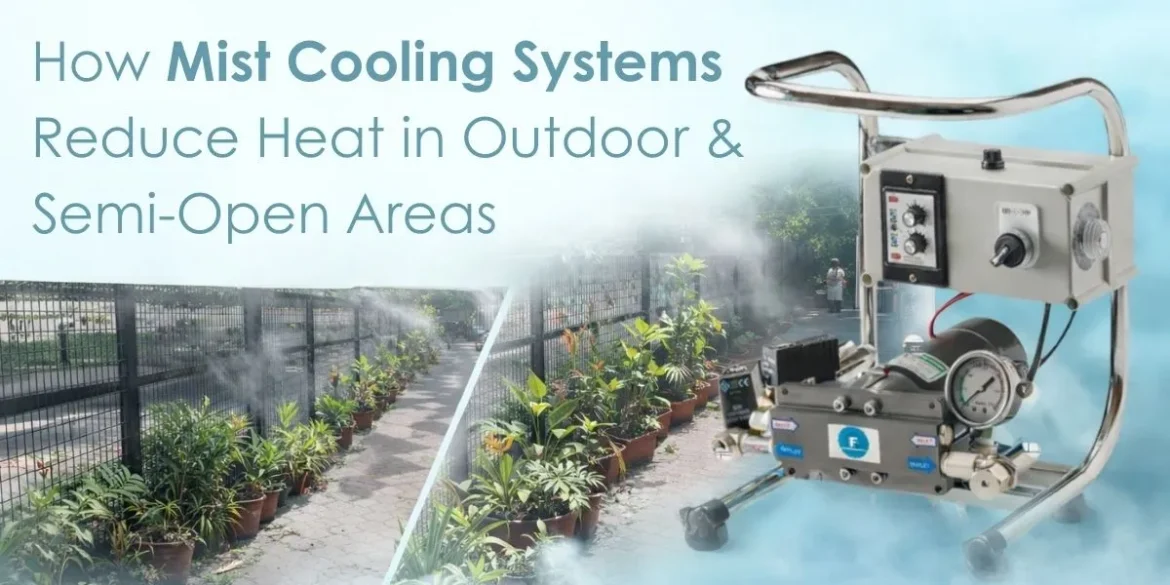
How Mist Cooling Systems Reduce Heat in Outdoor & Semi-Open Areas

by Priyanka Gupta

Rising temperatures, heat waves, and poor ventilation make outdoor and semi-open spaces extremely uncomfortable, especially in industrial and commercial environments. Areas such as factory sheds, warehouses, open restaurants, loading bays, walkways, and event venues face significant challenges in maintaining comfortable temperatures.

Traditional air conditioning is not practical or cost-effective in such open environments. This is where mist cooling systems emerge as a powerful, energy-efficient, and eco-friendly cooling solution.

In this blog, we explain how mist cooling systems work, how they reduce heat, and why they are ideal for outdoor and semi-open areas.

What is a Mist Cooling System?

A mist cooling system is an advanced evaporative cooling solution that sprays ultra-fine water droplets (micro-mist) into the air using high-pressure pumps and special misting nozzles.

When these microscopic droplets come in contact with hot air, they evaporate instantly, absorbing heat energy and lowering the surrounding air temperature naturally.

This cooling principle is the same as sweating in humans; when sweat evaporates, it cools the body.

How Mist Cooling Systems Reduce Heat

1. Evaporative Cooling Principle

Mist cooling systems work on evaporation-based cooling. The fine water mist absorbs heat from the air to evaporate, resulting in:

– Rapid heat absorption
– Significant air temperature reduction
– Instant cooling effect

Depending on climate and humidity, mist cooling systems can reduce ambient temperature by 5°C to 15°C.

2. Ultra-Fine Mist for Faster Cooling

Unlike normal sprinklers or spray systems, high-pressure misting systems produce extremely fine droplets (less than 10 microns). These tiny droplets:

➤ Evaporate before touching surfaces
➤ Prevent wet floors and equipment
➤ Deliver uniform cooling without dampness

This makes mist cooling ideal for industrial sheds, outdoor restaurants, loading bays, and commercial walkways.

3. Reduction of Radiant Heat

In outdoor and semi-open areas, metal roofs, floors, machinery, and concrete surfaces store and radiate heat.

Mist cooling systems:
– Lower surrounding air temperature
– Cool hot surfaces
– Reduce radiant heat load

This dramatically improves overall thermal comfort.

4. Continuous Air Cooling in Open Spaces

Traditional air conditioning systems fail in open environments due to air leakage. Mist cooling systems, however:

➤ Work effectively in open airflow
➤ Maintain consistent cooling
➤ Provide continuous comfort in open & semi-open structures

Where Mist Cooling Systems are most effective

Mist cooling systems are widely used in:

➤ Industrial sheds & factories
➤ Warehouses & logistics centers
➤ Outdoor cafeterias & restaurants
➤ Loading docks & dispatch areas
➤ Commercial walkways & parking zones
➤ Greenhouses & nurseries
➤ Sports arenas & event venues

Benefits of Mist Cooling Systems

1. Highly Energy Efficient: Consumes up to 80–90% less electricity than air conditioning systems.
2. Eco-Friendly Cooling: Uses only water and air – no harmful refrigerants or chemicals.
3. Cost-Effective Solution: Low installation cost and very low running expenses.
4. Improves Productivity & Comfort: Reduces heat stress, fatigue, and dehydration, resulting in higher worker productivity.
5. Dust Suppression & Air Quality Improvement: Helps in controlling dust, odor, and airborne particles, improving air quality in industrial areas.

Why Mist Cooling is Ideal for the Indian Climate

India experiences high temperatures, intense solar radiation, and long summers. Mist cooling systems are perfectly suited for Indian climatic conditions, especially in:

➤ Hot & dry regions
➤ Semi-humid industrial zones
➤ Outdoor commercial environments

Mist cooling provides instant relief from heat, even in peak summer conditions.

Greencon Mist Cooling Systems by Degree Day

Greencon, a brand by Degree Day Pvt. Ltd., offers high-performance mist cooling systems designed for industrial, commercial, and outdoor applications.

Key Advantages of Greencon Mist Cooling Systems:

☉ High-pressure DC motor misting pumps
☉ Precision-engineered fogging nozzles
☉ Energy-efficient & durable design
☉ Custom-built system layouts
☉ Professional installation & service support

With 26 years of HVAC expertise, Degree Day delivers reliable, site-specific cooling solutions that ensure long-term performance and customer satisfaction.

Mist cooling systems are the most practical and economical solution for reducing heat in outdoor and semi-open areas. By using the natural process of evaporation, they deliver powerful cooling, energy efficiency, and environmental sustainability.

If you are looking to improve comfort, reduce heat stress, and enhance productivity in open environments, mist cooling systems from Greencon – A Degree Day Product are the perfect choice.

Need Help Designing a Mist Cooling Solution?

    Frequently Asked Questions

    1. How much cooling does a mist cooling system provide?

    It can reduce the surrounding temperature by 5°C to 15°C, depending on heat, humidity, airflow, and nozzle design. Best results are seen in hot and dry to semi-humid conditions.

    2. Is it safe for electrical equipment?

    Yes. Properly installed systems create micro-mist that evaporates instantly, avoiding moisture buildup near electrical equipment.

    3. Does it work in humid weather?

    Yes, though performance is best in dry or moderately humid climates. It still offers localized cooling in well-ventilated areas.

    4. How much water does it consume?

    Typically 20–50 liters per hour, depending on system size—much lower than traditional cooling methods.

    5. Will it make the area wet?

    No. High-pressure systems produce ultra-fine mist that evaporates quickly, keeping floors, equipment, and furniture dry.

    Get in Touch

    Please share your details below and we’ll get back to you soon.

    21Jan

    What Is an HVAC Turnkey Solution?

    by Priyanka Gupta

    As buildings grow larger and more complex, HVAC systems have become one of the most critical and challenging parts of construction. Managing multiple vendors, coordinating timelines, controlling costs, and ensuring system performance often leads to delays and inefficiencies.

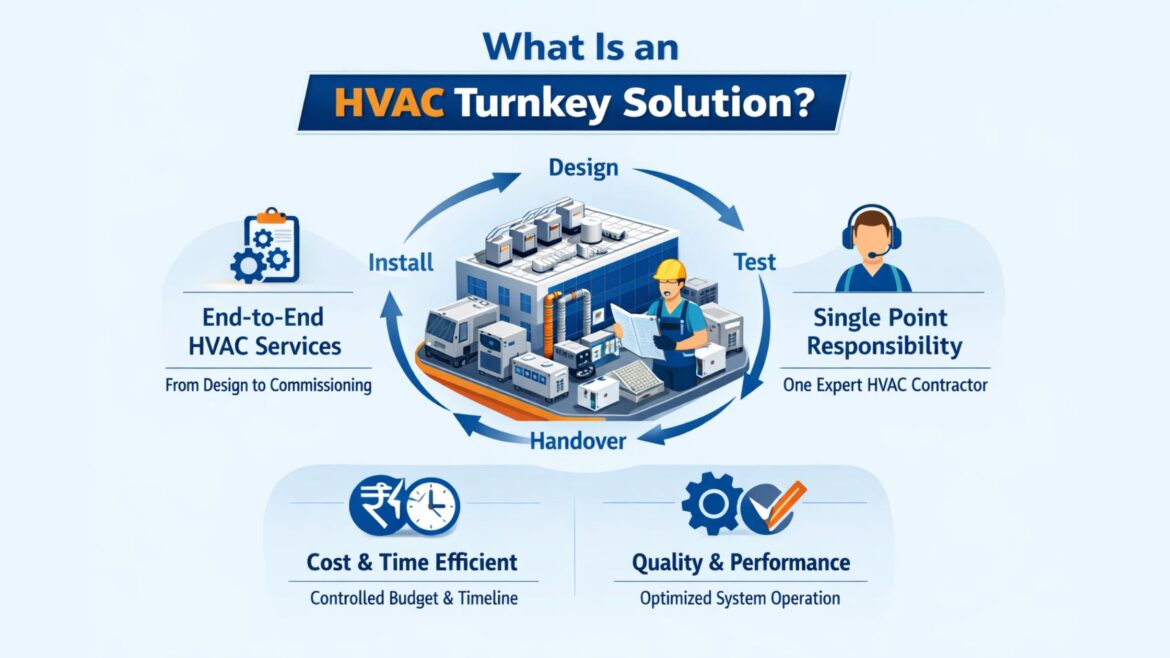
    An HVAC turnkey solution is a comprehensive, end-to-end service where a single HVAC provider takes full responsibility for the entire project lifecycle. Once the project is handed over, the system is fully designed, installed, tested, and ready for operation, hence the term “turnkey.”

    Instead of dealing with multiple contractors for design, equipment supply, installation, and commissioning, the client works with one accountable partner.

    1. What Does an HVAC Turnkey Solution Include?

    A complete HVAC turnkey solution typically covers:

    1. System Design & Engineering

    Heat load calculations
    ➤ HVAC system selection based on building use and climate
    ➤ Energy-efficient and code-compliant design

    2. Equipment Supply

    ➤ Chillers, AHUs, FCUs, evaporative cooling units, air purifiers
    ➤ Ducting, piping, insulation, controls, and accessories

    3. Installation & Execution

    ➤ Ducting and piping installation
    ➤ Electrical and control wiring
    ➤ Mechanical equipment installation

    4. Testing & Commissioning

    ➤ Air balancing and system testing
    ➤ Performance verification
    ➤ Safety and quality checks

    5. Handover & Support

    ➤ As-built drawings
    ➤ Operation and maintenance guidance
    ➤ Warranty and after-sales support

    2. How is an HVAC Turnkey Project Different from Traditional HVAC Contracting?

    Traditional HVAC ApproachHVAC Turnkey Solution
    Multiple vendorsSingle point of responsibility
    Coordination challengesSeamless execution
    Higher risk of delaysControlled timelines
    Cost variationsBetter cost predictability
    Limited accountabilityFull project ownership

    With a turnkey model, responsibility does not shift between parties; one partner is accountable for performance, quality, and delivery.

    3. Key Benefits of an HVAC Turnkey Solution

    1. Single-Point Accountability – Clients communicate with one expert partner, reducing confusion and misalignment.
    2. Faster Project Execution – Integrated planning and execution eliminate delays caused by multiple contractors.
    3. Cost Control & Transparency – Accurate budgeting and reduced chances of hidden or duplicate costs.
    4. Optimized System Performance – Design, equipment selection, and installation are aligned for maximum efficiency.
    5. Energy Efficiency & Compliance – Turnkey solutions ensure adherence to standards such as ASHRAE, ISHRAE, and local building norms.

    4. Who Should Choose an HVAC Turnkey Solution?

    HVAC turnkey solutions are ideal for:

    Commercial buildings & offices
    ➤ Industrial plants & factories
    ➤ Hospitals & healthcare facilities
    ➤ Warehouses & logistics centers
    ➤ Malls, multiplexes, and large retail spaces
    ➤ Educational institutions

    Any project where performance, timelines, and lifecycle cost matter benefits from a turnkey approach.

    5. HVAC Turnkey Execution: Experience from Degree Day Projects

    At Degree Day Pvt. Ltd., HVAC turnkey solutions are executed with a strong focus on performance, energy efficiency, and long-term reliability. Our experience across commercial, industrial, and large-volume air cooling projects has demonstrated the practical advantages of turnkey execution.

    Commercial Building HVAC Projects

    In multiple commercial building projects, Degree Day delivered complete HVAC turnkey solutions from system design and equipment selection to installation and commissioning. By integrating efficient air cooling and ventilation strategies, these projects achieved reduced energy consumption and consistent indoor comfort, even during peak summer conditions.

    Recent Turnkey Projects of Degree Day Pvt. Ltd. in Commercial Buildings

    1. Spectrum Mall: Shopping mall in Indore, Madhya Pradesh
    2. NRK Tower: Commercial buildings by NRK Group in Indore
    3. Yash Technology: Global IT services and outsourcing company in Indore
    4. Bombay International School in Indore

    Industrial & Manufacturing Facilities

    For factories and industrial units, Degree Day has executed turnkey HVAC solutions designed for high heat loads, long operating hours, and dust-prone environments. Centralized evaporative cooling systems and engineered ducting layouts helped improve working conditions while keeping operating costs under control.

    Recent Turnkey Projects of Degree Day Pvt. Ltd. in Industrial & Manufacturing Facilities

    1. AJFPL Neemrana: Leading automotive friction material manufacturer in Neemrana, Rajasthan
    2. Gufic Biosciences Ltd: Manufacture of pharmaceuticals, medicinal chemicals, and botanical products
    3. Techture: A consulting firm delivering solutions for the Architecture, Engineering, and Construction (AEC) industry.
    4. Tirupati Group: Tirupati is a leading Indian contract manufacturer offering end-to-end healthcare and nutraceutical solutions.

    Large-Scale Air Cooling & Ventilation Projects

    Degree Day’s turnkey expertise also extends to warehouses and large enclosed spaces, where conventional air conditioning is often impractical. Climate-appropriate turnkey air cooling solutions were implemented to ensure uniform airflow, lower power consumption, and minimal maintenance requirements.

    Recent Turnkey Projects of Degree Day Pvt. Ltd. in Large-Scale Air Cooling & Ventilation Projects

    1. Millennium Baby Care: Baby Diapers, Adult Diapers, and Sanitary Napkins Manufacturer in Pithampur, Madhya Pradesh.
    2. Dcnpl Hills Vistaa: Premium Township in Bhawrasla, Indore
    3. Kohinoor Elastic: Fabric product manufacturer in Indore, Madhya Pradesh
    4. Remedium Lifesciences: Tablet and capsule pharmaceutical manufacturing unit at Mandideep, Madhya Pradesh.

    Across these projects, a single-point responsibility model enabled:

    ➤ Faster execution timelines
    ➤ Better coordination across trades
    ➤ Consistent quality control
    ➤ Optimized system performance

    6. HVAC Turnkey Solutions in the Indian Climate

    India’s climate presents unique challenges, including high temperatures, humidity, dust, and long operating hours. An HVAC turnkey solution helps address these by:

    ➤ Designing systems specific to hot-dry, composite, or humid zones
    ➤ Selecting energy-efficient solutions like evaporative cooling, where applicable
    ➤ Ensuring durability and lower maintenance in harsh conditions

    A climate-responsive turnkey design results in lower operating costs and longer system life.

    7. Common Challenges Solved by HVAC Turnkey Solutions

    ➤ Poor coordination between contractors
    ➤ Oversized or undersized HVAC systems
    ➤ Unexpected cost escalations
    ➤ Inconsistent installation quality
    ➤ Delays in commissioning

    Turnkey execution eliminates these risks by aligning design, execution, and accountability.

    8. Why HVAC Turnkey Solutions Are the Future

    With rising energy costs, stricter building norms, and increasing demand for indoor comfort, HVAC systems can no longer be treated as standalone components. A turnkey approach ensures integration, efficiency, and reliability, making it the preferred choice for modern infrastructure projects.

    9. Choosing the Right HVAC Turnkey Partner

    When selecting an HVAC turnkey provider, look for:

    ➤ Proven project experience
    ➤ Strong in-house design and engineering team
    ➤ Quality-focused execution standards
    ➤ Energy-efficient solution expertise
    ➤ Reliable post-installation support

    A capable turnkey partner adds value not just during construction, but throughout the system’s lifecycle.

    An HVAC turnkey solution simplifies complexity, reduces risk, and delivers reliable performance, making it a smart investment for any large or performance-driven building project.

    By choosing the right turnkey partner, building owners gain peace of mind, predictable costs, and HVAC systems designed to perform efficiently for years to come.

    Looking for a reliable HVAC turnkey partner for your next project? Degree Day delivers climate-responsive, energy-efficient HVAC turnkey solutions tailored to Indian buildings.

    Frequently Asked Questions

    1: What is an HVAC turnkey solution?

    An HVAC turnkey solution is an end-to-end HVAC service where a single contractor handles system design, equipment supply, installation, testing, commissioning, and handover, ensuring full accountability and seamless execution.

    2: What services are included in an HVAC turnkey project?

    An HVAC turnkey project typically includes HVAC design and engineering, equipment procurement, ducting and piping installation, electrical and control integration, testing, commissioning, and post-installation support.

    3: How is an HVAC turnkey solution different from traditional HVAC contracting?

    Unlike traditional HVAC contracting, where multiple vendors are involved, an HVAC turnkey solution offers single-point responsibility, better coordination, controlled costs, faster execution, and improved system performance.

    4: What are the benefits of choosing an HVAC turnkey contractor?

    The main benefits include reduced project risk, predictable timelines, cost transparency, optimized HVAC system performance, energy efficiency, and compliance with Indian and international HVAC standards.

    5: Can HVAC turnkey solutions include evaporative air cooling systems?

    Yes, HVAC turnkey solutions can include evaporative air cooling systems, especially for factories, warehouses, and large spaces where energy-efficient cooling is required for Indian climate conditions.

    6: What should be checked before hiring an HVAC turnkey contractor in India?

    Before hiring an HVAC turnkey contractor, verify their project experience, in-house design capabilities, quality standards, energy efficiency expertise, compliance with ISHRAE/ASHRAE guidelines, and after-sales support.

    Get in Touch

    Please share your details below and we’ll get back to you soon.