Yes, evaporative cooling is eco-friendly because it doesn’t use a compressor and, hence, there is no chemical refrigerant involved. No Compressor = No refrigerant = Eco-friendly Cooling.
1. Uses Very Little Electricity
Regular air conditioners use a lot of power, around 8 kW per hour, for a 1000 sq. ft. area. But a Greencon E-Series evaporative cooler for the same space uses only 1.1 kW per hour. That’s a 93% energy saving! Over 10 years (assuming 8 hours of use daily, 300 days a year), the difference becomes huge:
In India, every unit (kWh) of electricity causes about 0.82 kg of CO₂ emissions. So, by using an evaporative cooler instead of AC, you save over 111 tonnes of CO₂ in 10 years for just one 1000 sq. ft. space.
3. As Good As Planting Thousands of Trees
A mature tree absorbs about 22 kg of CO₂ per year. So using an evaporative cooler instead of AC for 10 years is equal to planting 6,172 trees!
4. No Harmful Refrigerants
Air conditioners use gases like CFCs and HFCs, which can damage the ozone layer and add to global warming. Evaporative Air Coolers don’t use any refrigerants, just air and water. Simple, safe, and sustainable.
5. Brings in Fresh Air
Evaporative coolers work by pulling in 100% outside air, cooling it with water, and then sending it indoors. This keeps the air fresh and clean, unlike ACs that recycle the same indoor air again and again. Evaporative cooling is Energy-efficient, Non-polluting, Cost-effective, and Climate-friendly. Whether you are cooling a home, office, warehouse, or factory, switching to evaporative cooling is a smart move for your comfort, your budget, and the planet.
Get in Touch
Please share your details below and we’ll get back to you soon.
Frequently Asked Questions (FAQs)
Q. Is evaporative cooling eco-friendly?
Yes. It uses only air and water—no refrigerants, no pollution.
Q. How much electricity does it use?
Up to 95% less power than conventional air conditioners.
Q. Does it work in Indian climates?
Yes. Ideal for hot and dry to moderately humid conditions across India.
Q. Does it provide fresh air?
Yes. It delivers 100% fresh outdoor air, not recycled air.
Q. Is it suitable for large spaces?
Yes. Perfect for homes, offices, factories, and warehouses.
Commercial buildings like malls, office spaces, hospitals, and manufacturing units rely heavily on HVAC (Heating, Ventilation, and Air Conditioning) systems for comfort, efficiency, and safety. Unlike residential setups, these systems are more complex, customizable, and capable of handling larger spaces and diverse zones. In this blog, we will explain how HVAC systems work in commercial buildings, their components, energy efficiency features, and real-world case studies.
What Is a Commercial HVAC System?
A commercial HVAC system regulates indoor air quality, temperature, and humidity in large-scale environments. Its design depends on factors like building size, usage, number of occupants, and industry-specific requirements. These systems ensure a healthy and productive environment by maintaining consistent airflow and temperature control.
Thermostats and Controls: Manage temperature settings and scheduling.
Ventilation Systems: Ensure removal of stale air and replacement with fresh air.
Types of Commercial HVAC Systems
1. Single Split Systems – Ideal for small commercial spaces with individual cooling/heating zones. 2. Multi-Split Systems – Ideal for buildings that require multiple indoor units. 3. VRF/VRV Systems – Variable refrigerant flow/volume systems for energy efficiency in larger buildings. 4. Packaged Systems – All components in one unit, commonly used on rooftops. 5. Ducted vs. Ductless – Depends on the architecture and specific room needs.
How Do Commercial HVAC Systems Work?
These systems operate in cycles:
1. Air Intake – Fresh air is drawn in and filtered. 2. Air Conditioning – The air is cooled or heated through chillers or boilers. 3. Air Distribution – Conditioned air is distributed via ducts or directly through blowers. 4. Ventilation & Exhaust – Stale air is removed and replaced with fresh, filtered air.
Each zone within the building may have independent temperature settings through zoning controls.
Zoning and Smart Controls
Modern commercial HVAC systems use smart thermostats, occupancy sensors, and building automation systems to optimize energy use. Zoning allows different areas (like conference rooms, lobbies, or production areas) to maintain independent temperatures, reducing waste and increasing comfort. Integration with IoT platforms also enables predictive maintenance.
Energy Efficiency in Commercial HVAC
1. High-Efficiency Equipment: Units with higher SEER and EER ratings. 2. Variable Speed Motors: Adjust based on demand rather than operating at full capacity. 3. Economizers: Use outside air when conditions are favorable. 4. Automation & Monitoring: Building management systems (BMS) for energy tracking and optimization.
Maintenance and Troubleshooting
Routine maintenance is essential for optimal performance and longevity:
Timely troubleshooting prevents system downtime and costly repairs.
HVAC System Sizing and Load Calculation
Correct sizing prevents energy waste and equipment stress. Load calculations consider:
1. Square footage 2. Occupancy 3. Equipment and lighting heat output 4. Building orientation and insulation
Specialized HVAC System Solutions for Different Industries
1. Healthcare: Advanced filtration and temperature control to reduce infection risk and maintain sterile environments. 2. Data Centers: Precision cooling to protect servers and maintain optimal equipment performance 24/7. 3. Retail: Zone-based climate control to improve customer comfort and reduce energy costs. 4. Manufacturing: Heavy-duty ventilation to manage fumes, dust, and heat from machinery and processes. 5. Hospitality: Quiet and efficient HVAC systems to ensure guest comfort in rooms, lobbies, and dining areas. 6. Educational Institutions: Consistent, clean airflow to support a healthy and focused learning environment. 7. Commercial Offices: Smart HVAC solutions for energy savings, air quality monitoring, and employee productivity. 8. Warehousing & Logistics: Temperature and humidity control to protect sensitive goods and maintain staff comfort. 9. Pharmaceuticals: Controlled environments with strict humidity and temperature regulation for product integrity. 10. Food & Beverage: Ventilation and cooling to ensure hygienic processing and comfortable working conditions.
Environmental Impact and Sustainability
1. Use of eco-friendly refrigerants (R-32, R-410A) 2. Integration with solar power or geothermal systems 3. BIM (Building Information Modeling) for efficient design 4. Compliance with LEED, ASHRAE, and local codes
Real-World Case Studies: Commercial HVAC Success Stories
At Degree Day, we don’t just design HVAC systems; we deliver real, impactful solutions. Here are a few successful installations that highlight how our smart air cooling systems are transforming commercial spaces across India:
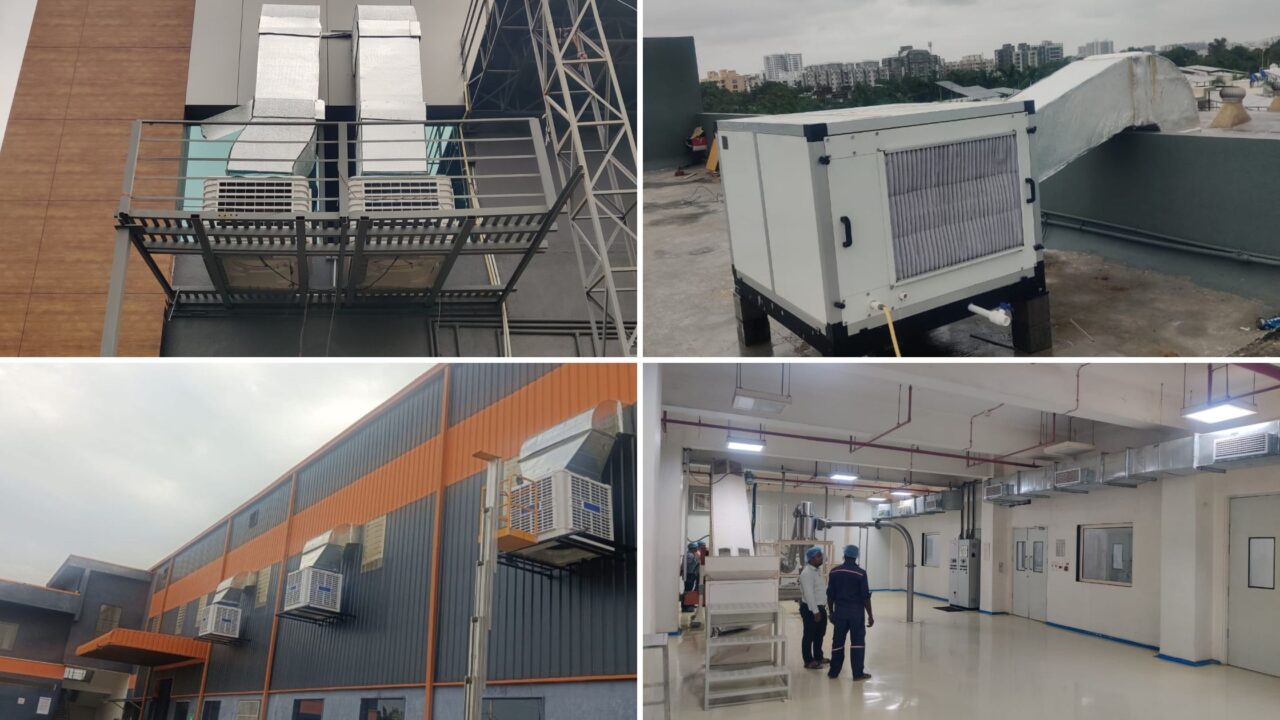
1. Function Hall – Solapur, Maharashtra In Solapur, we equipped a function hall with two high-capacity E-Series Premium Air Coolers, each delivering 18,000 CMH. Spanning 2,000 sq.ft., this setup is built to handle large crowds and continuous usage, ensuring optimal comfort even during high footfall events. The result: efficient cooling without compromising on energy performance.
See the Full Video with Installation Images: Click Here
2. Private School – Vadodara, Gujarat Creating a comfortable learning environment is crucial for maintaining student focus and promoting their well-being. At a private school in Vadodara, we installed a smart cooling system using four M Series Air Coolers — two units with 10,000 CFM and two with 4,000 CFM. This eco-efficient solution provides consistent airflow and delivers clean, cool air throughout classrooms, promoting a healthier and more productive educational environment.
See the Full Video with Installation Images: Click Here
3. Car Showroom – Jhansi, Uttar Pradesh At the Ford showroom in Jhansi, we installed a sustainable and energy-efficient air cooling system tailored to maintain optimal indoor conditions. Designed to keep both customers and staff comfortable, this solution not only enhances the overall showroom experience but also supports energy conservation, a key factor in commercial HVAC planning.
See the Full Video with Installation Images: Click Here
Need a Custom HVAC Solution for Your Commercial Project?
Degree Day Pvt. Ltd. specializes in innovative, energy-efficient HVAC solutions tailored for commercial spaces.
Book a Consultation Today
Contact Us to explore how we can help you build smarter, cooler, and greener.
Get in Touch
Please share your details below and we’ll get back to you soon.
Frequently Asked Questions (FAQs)
Q. What is a commercial HVAC system?
A commercial HVAC system controls temperature, humidity, and air quality in large buildings like offices, malls, hospitals, factories, and schools. These systems are designed to handle bigger spaces, higher occupancy, and multiple zones.
Q. Which commercial HVAC system is best for large buildings?
Systems like VRF/VRV, packaged rooftop units, and centralized chilled water systems are commonly used for large commercial buildings due to their efficiency and scalability.
Q. Why choose Degree Day for commercial HVAC solutions?
Degree Day Pvt. Ltd. offers customized, energy-efficient HVAC solutions backed by real-world project experience across commercial, educational, and retail spaces in India.
Q. Which industries does Degree Day serve?
Degree Day works across commercial, industrial, educational, healthcare, retail, hospitality, warehousing, and manufacturing sectors.
Evaporative Cooling Systems have become a popular and energy-efficient alternative to traditional air conditioning. Despite their growing adoption, several myths still surround these Cooling systems, often causing confusion and hesitation among potential users. Our goal at Degree Day is to clarify myths and educate you on the true advantages of evaporative cooling. Here, we address the most widespread misconceptions regarding evaporative cooling systems and discuss their benefits as a very effective cooling option.
Myth 1: Electricity Use Is High in Evaporative Cooling Systems
One of the most energy-efficient cooling options is an evaporative cooling system, despite what many people think. Because they cool the air through evaporation rather than refrigeration, they use significantly less electricity than traditional air conditioners. This makes them an environmentally friendly option for both homes and businesses, as it results in reduced electricity costs and a smaller carbon footprint.
Myth 2: Evaporative Coolers Are Only for Small Spaces
Many people believe that evaporative coolers are only effective in small spaces. On the other hand, Degree Day provides a selection of evaporative cooling systems that can be tailored to fit residential spaces, factories, warehouses, expansive commercial spaces, and even outdoor areas. We design and build modular systems and prefabricated ducts to meet your unique cooling needs.
Myth 3: Evaporative coolers make a lot of noise
While modern evaporative coolers are built with sophisticated motor and fan technology that runs quietly, older models may have made more noise. The evaporative cooling units from Degree Day guarantee little noise disturbance, which makes them appropriate for offices, homes, and workspaces where silent operation is crucial.
Myth 4: It’s Hard to Maintain Evaporative Coolers
Evaporative cooling system maintenance is simple and easy. Only a clean water supply and routine cooling pad cleaning are needed. Degree Day offers solutions that are simple to maintain and have easily accessible parts, so maintenance won’t become a hassle. Maintaining your system properly also guarantees peak performance and prolongs its lifespan.
Some people are concerned that evaporative coolers can lead to respiratory issues or the spread of bacteria. In actuality, these systems can enhance indoor air quality by circulating fresh air and adding natural humidity. Microbial growth is avoided by using clean water and pads that are maintained on a regular basis.
Myth 6: Evaporative Coolers Require Constant Water Refilling
Even though evaporative coolers require water to function, contemporary models feature sizable reservoirs and water-saving features that lessen the need for frequent refills. Water refills are convenient and affordable thanks to our systems’ intelligent water management, which maximizes efficiency and minimizes waste.
Myth 7: Evaporative Coolers Are Only Useful During Summer
Although they excel in hot weather, evaporative cooling systems provide benefits beyond just summer. They improve ventilation and maintain air freshness year-round, making indoor environments more comfortable in transitional seasons. Additionally, their energy-efficient operation means you can use them more frequently without high operational costs.
Myth 8: Evaporative Cooling Systems Are Not Durable
Many people are hesitant because they are worried about durability. However, the premium materials used in Degree Day’s evaporative cooling systems ensure long-lasting performance, even in demanding industrial settings. These systems provide dependable cooling for many years when properly maintained, making them an affordable investment.
The adaptability of our systems is what makes us unique. One of Degree Day’s special features is that our GREENCON Evaporative Coolers can also run in exhaust mode. This improves the comfort and air quality of your space by efficiently removing smoke, unpleasant odors, and undesired scents.
Browse our range of evaporative cooling systems at degreeday.in to enjoy more efficient cooling than ever before.
Get in Touch
Please share your details below and we’ll get back to you soon.
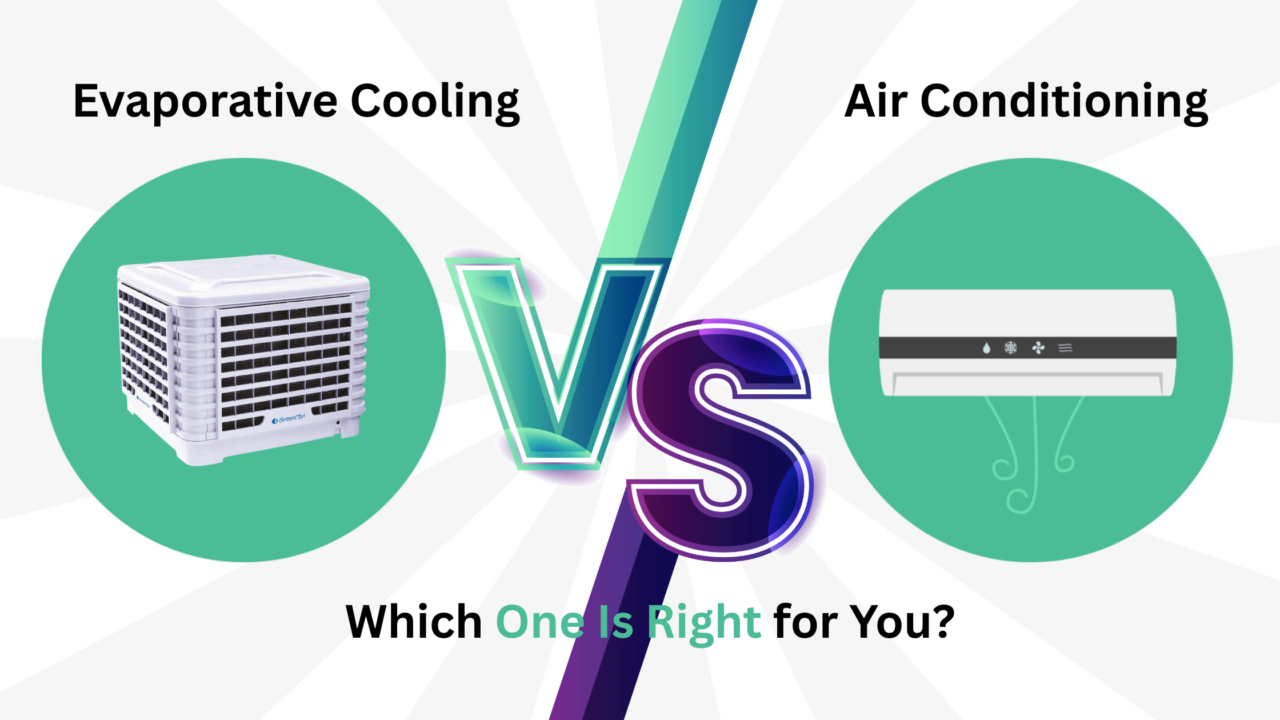
As temperatures rise, finding the right cooling system becomes essential—whether you are managing a large industrial facility or simply trying to keep your home comfortable. Two popular solutions dominate the market: evaporative cooling and air conditioning (AC). While both are designed to beat the heat, they work very differently and suit different environments.
So how do you choose the right system for your needs? Let’s explore how each one works, compare their benefits, and help you make an informed decision.
What is Evaporative Cooling?
Evaporative cooling uses the natural process of water evaporation to cool the air. It draws warm outside air through water-saturated pads. The water absorbs the heat and evaporates as the air moves through, bringing cold, humid air into the room. Evaporative air coolers consume 80-85% less electricity than any air conditioning.
Want to explore high-performance evaporative coolers for your facility or home? Check out our evaporative cooling solutions designed for both industrial and residential use.
Key Features:
➧ Best suited for dry, hot climates ➧ Low energy consumption ➧ Provides continuous fresh air flow ➧ Ideal for large open areas like warehouses, workshops, and rooftops
In industrial settings, evaporative coolers (also known as swamp coolers) are especially useful in spaces with large volumes and natural ventilation. In residential use, they are common in areas with low humidity where traditional ACs may be overkill or expensive to run.
What is Air Conditioning (Refrigerated Cooling)?
Air conditioning systems use a refrigeration cycle. It absorbs and expels heat from interior air by circulating a chemical refrigerant, and then the system cools and dehumidifies the air before circulating it again.
Key Features:
➧ Works in all climate types, especially humid regions ➧ Precise temperature and humidity control ➧ Sealed, closed-loop operation ➧ Common in homes, offices, hospitals, and commercial setups
For residential users, AC systems offer comfort with consistent cooling, while in industrial sectors, ducted and central AC systems are used for controlled environments such as clean rooms, laboratories, and IT/server rooms.
Evaporative Cooling vs. Air Conditioning
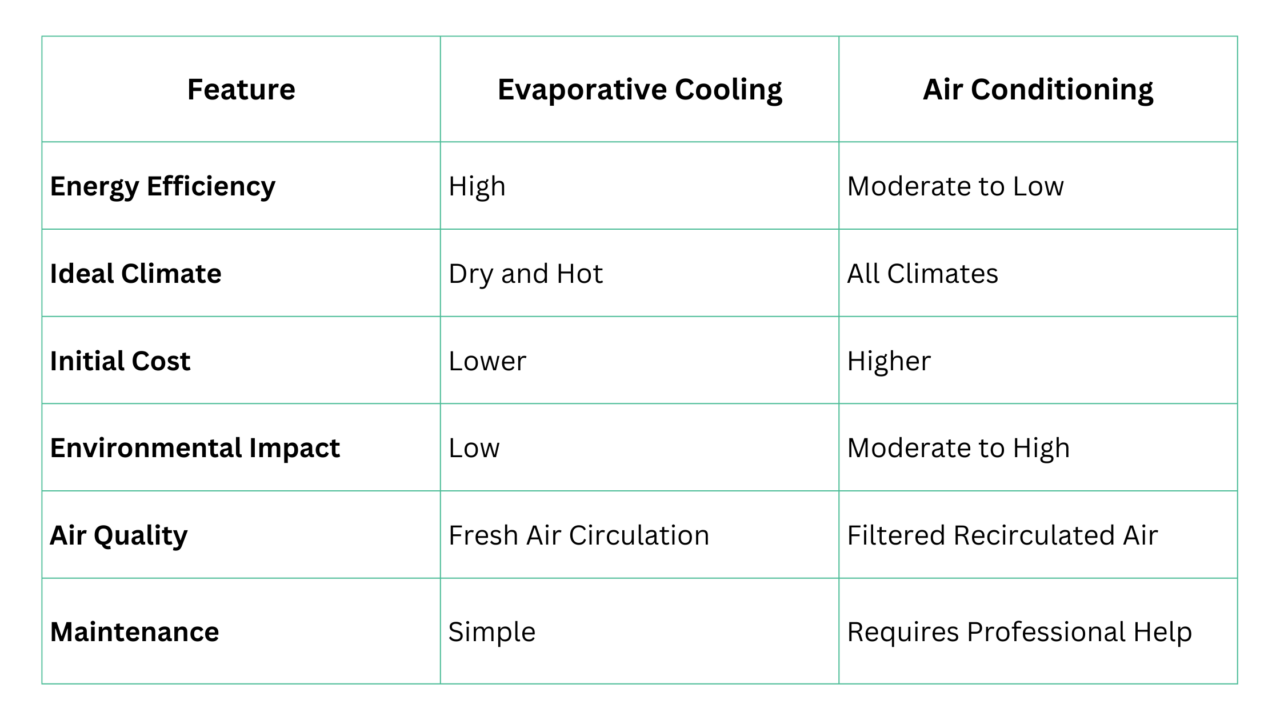
1. Cooling Efficiency & Performance
Evaporative Cooling: Best in hot, dry areas. Less effective in humid conditions.
Air Conditioning: Performs well in all climates, including coastal or tropical zones.
2. Energy Consumption & Operating Costs
Evaporative Cooling: Consumes less electricity than AC; great for reducing operating expenses in large spaces..
Air Conditioning: Higher energy usage; electricity bills can rise significantly with continuous use.
3. Environmental Impact
Evaporative Cooling: Eco-friendly, no refrigerants used. Requires water.
Air Conditioning: Uses refrigerants that may have a carbon footprint; high power demand can strain the grid.
4. Installation & Maintenance
Evaporative Cooling: Simple setup; lower installation cost. Needs regular water and pad checks.
Air Conditioning: More complex and expensive installation. Requires periodic servicing of refrigerant lines and filters.
5. Air Quality & Health
Evaporative Cooling: Introduces fresh air constantly; helps remove stale air and odors.
Air Conditioning: Recirculates indoor air—great for filtration, but can dry out the air and trap indoor pollutants if not maintained.
Pros and Cons at a Glance
Which One is Right for You?
Choosing the right system is not just about the unit—it is about how well it’s designed for your space. Our team provides custom HVAC design services to ensure optimal performance and energy efficiency tailored to your environment.
The right cooling solution depends on several key factors:
For Industrial Spaces:
➧ If you operate in a dry, hot region (e.g., central or western India), evaporative cooling offers a cost-effective, low-maintenance solution, especially for factories, warehouses, and workshops. ➧ For controlled environments like laboratories, pharmaceuticals, or tech spaces, where humidity must be controlled, air conditioning is the better fit.
For Residential Homes:
➧ In dry climates, evaporative coolers can provide effective relief at a fraction of the cost. ➧ In humid or coastal areas, or when you need precise temperature control (e.g., for babies, the elderly), air conditioning ensures comfort and reliability.
Both evaporative cooling and air conditioning have unique advantages. Your decision should be guided by your climate, budget, space requirements, and energy efficiency goals.
At Degree Day Pvt. Ltd., we offer expert consultation and tailor-made HVAC solutions for both industrial and residential users. Whether you are building a new facility or upgrading your home, we help you choose the system that’s just right for your needs.
Still unsure? Contact us today to schedule a site visit or consultation with our HVAC experts.
Get in Touch
Please share your details below and we’ll get back to you soon.
Sustainable decarbonisation is the process of reducing or completely removing carbon dioxide (CO2) emissions from different sectors, especially in energy, transport, and manufacturing. Decarbonisation refers to the shift from carbon-intensive practices towards more sustainable, low-carbon alternatives. What is decarbonisation?In simple terms means moving away from burning coal, oil, natural gas, and chemical refrigerants and instead using clean energy sources like wind, water, and solar power. It also focuses on making technologies and methods more efficient.
At Degree Day Private Limited, we are committed to supporting businesses and industries in their decarbonisation strategy by offering sustainable energy solutions and helping reduce their carbon footprint. By leveraging renewable energy sources and improving energy efficiency, companies can reduce energy consumption and contribute to a greener planet.
Decarbonisation aims to lower carbon emissions, helping to prevent the harmful effects of climate change, such as rising sea levels, unpredictable weather, and environmental damage.
Why is Decarbonisation the Need of the Hour?
1. Climate Change: The Crisis Is Real
Our planet is facing more extreme weather than ever—floods, wildfires, hurricanes, and droughts are happening more frequently and intensely. These are direct results of rising temperatures caused by human-made carbon emissions. If we don’t act fast to reduce these emissions, the challenges will only grow, putting ecosystems, biodiversity, agriculture, and human life at risk. Understanding Decarbonisation meaning is crucial in this context. Degree Day is actively working to help businesses and individuals reduce their energy consumption by adopting sustainable practices of achieving thermal comfort. The evaporative air cooling technology offered by Greencon Coolers uses plain Water as a cooling agent in place of harmful refrigerants used by conventional air conditioners.
These chemical refrigerants release HFCs (hydrofluorocarbons) in the atmosphere, which further deplete the Ozone layer and become a major reason for global warming.
2. Health Benefits
Decarbonisation doesn’t just help with climate change; it also improves our health. The burning of fossil fuels for energy and transportation causes air pollution, leading to breathing and heart problems. By switching to cleaner energy, we can reduce harmful pollution and improve health, especially in cities. HEPaire is another such magical product by Degree Day Pvt Ltd, which filters the air around us with 99.99% efficiency, thus improving the Indoor Air Quality substantially.
3. Reduced Energy Consumption
Degree Day Pvt Ltd works tirelessly to adapt renewable sources like solar and water, which are local and cost-effective, offering a reliable, sustainable future for thermal comfort. Greencon products are widely accepted by businesses and organizations for integrating renewable energy systems that enhance energy savings and reduce electricity bills, all while maintaining thermal comfort.
How Can We Achieve Decarbonisation?
Achieving decarbonisation will require teamwork at every level—government, business, and individuals. Here are some key actions we can take:
1. Switch to Refrigerant-Free Evaporative Air Cooling
Degree Day has been the leading manufacturer of such sustainable systems under the brand name of Greencon. Degree Day Consultancy team guides and designs entire HVAC systems for their valued clients, and after completely satisfying them, our Greencon Air Coolers are installed with end-to-end project solutions. This helps businesses and individuals transition smoothly to sustainable energy systems in the most hassle-free way.
2. Boost Energy Efficiency
Making homes, businesses, and industries more energy-efficient is a crucial step in Decarbonisation. This includes better insulation in buildings, using energy-saving appliances, and optimizing industrial processes to use less energy. Degree Day Private Limited offers best HVAC Consultancy solutions to enhance energy efficiency, helping clients lower their carbon footprints.
3. Sustainable Design and Execution
The biggest reasons of uncontrolled energy consumption and skyrocketing electricity bills are increased use of Air conditioners and faulty HVAC designs. Understanding Decarbonisation meaning is essential to addressing these issues. The Degree Day team has mastered the art of sustainable HVAC designing over the years for every kind of application. Degree Day supports sustainable land use practices and promotes environmentally friendly solutions for industries to reduce their carbon impact.
4. Policy and Regulation
Governments must take charge by creating policies that promote clean energy, support eco-friendly technologies, and reduce reliance on chemical refrigerant-dependent systems. Key actions should also include standardizing air cooling concepts to replace the current rule-of-thumb design methods. The MD of Degree Day Pvt Ltd, Mr. Nishant Gupta, is working closely with the government standards agency “BIS(Bureau of Indian Standards)” to establish standards for air cooling and ensure compliance with emerging policies and regulations.
Get in Touch
Please share your details below and we’ll get back to you soon.