
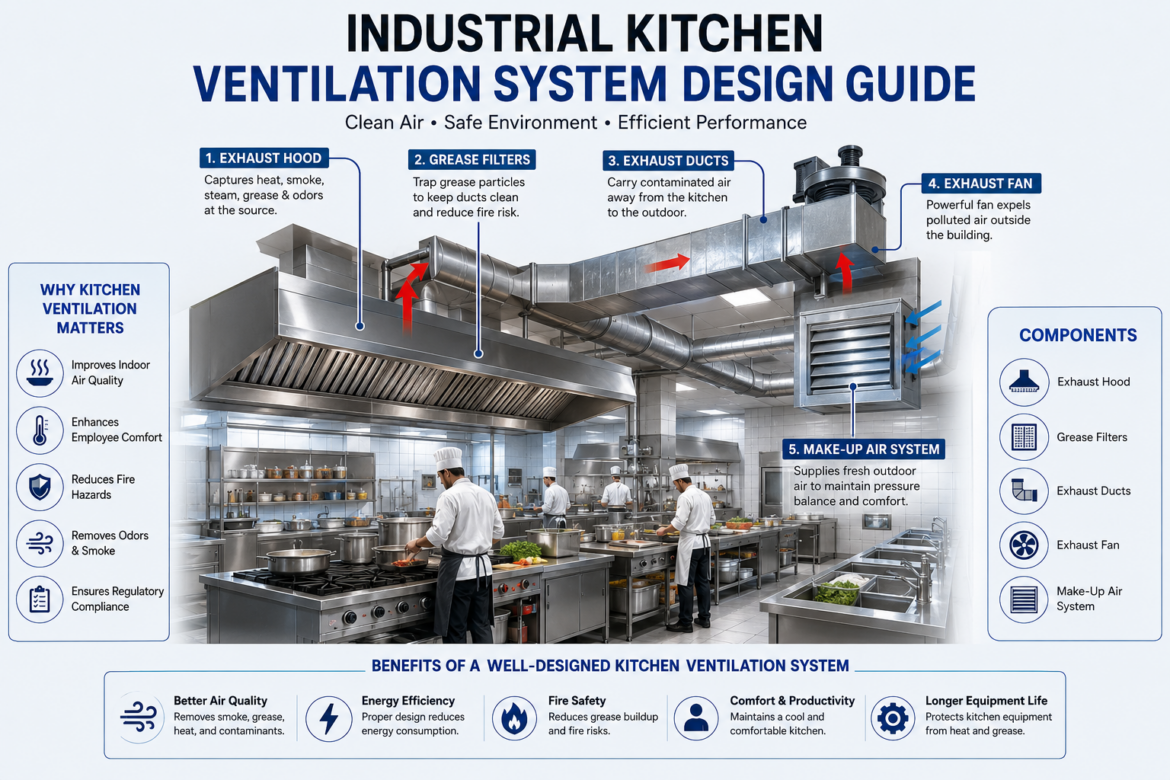
Commercial and industrial kitchens generate large amounts of heat, smoke, grease, steam, and odors every day. Without a properly designed ventilation system, these pollutants can reduce employee comfort, increase fire risks, and violate health and safety regulations.
An efficient industrial kitchen ventilation system removes contaminated air, supplies fresh air, maintains comfortable temperatures, and creates a safer working environment.
In this guide, we’ll explain how industrial kitchen ventilation systems work, their components, design considerations, and best practices for maximum efficiency.
What is an Industrial Kitchen Ventilation System?
An industrial kitchen ventilation system is an HVAC solution designed to remove:
- Heat
- Smoke
- Grease particles
- Cooking fumes
- Moisture
- Odors
- Harmful airborne contaminants
The system simultaneously introduces fresh air to maintain proper indoor air quality.
It is commonly used in:
- Hotels
- Restaurants
- Food Courts
- Central Kitchens
- Food Processing Plants
- Institutional Kitchens
- Hospitals
- Industrial Canteens
- Cloud Kitchens
Why Kitchen Ventilation is Important
A well-designed ventilation system provides numerous benefits.
1. Improves Indoor Air Quality
Cooking releases airborne grease, smoke, and combustion gases. Proper ventilation removes these contaminants before they spread throughout the building.
2. Enhances Employee Comfort
Industrial kitchens become extremely hot.
Proper ventilation helps maintain:
- Comfortable temperatures
- Reduced humidity
- Better airflow
- Improved productivity
3. Fire Safety
Grease accumulation inside ductwork is one of the leading causes of commercial kitchen fires.
Proper exhaust systems reduce grease buildup and improve fire safety.
4. Removes Odors
Kitchen odors can spread into dining areas or nearby offices.
Ventilation captures odors at the source.
5. Regulatory Compliance
Most commercial kitchens must comply with ventilation standards established by local building codes and fire safety authorities.
Major Components of an Industrial Kitchen Ventilation System
1. Kitchen Exhaust Hood
The exhaust hood captures:
- Smoke
- Heat
- Steam
- Grease vapors
- Cooking gases
Common Types:
Type I Hood
Designed for grease-producing equipment such as:
- Fryers
- Grills
- Charbroilers
- Woks
Type II Hood
Used above equipment producing:
- Steam
- Heat
- Moisture
Examples:
- Dishwashers
- Ovens
- Steam kettles
2. Grease Filters
Grease filters trap grease particles before they enter ductwork.
Benefits include:
- Reduced duct contamination
- Lower maintenance
- Better fire protection
3. Exhaust Ducts
The duct system transports contaminated air from the hood to the outside environment.
Proper duct design should minimize:
- Air leakage
- Pressure loss
- Grease accumulation
4. Exhaust Fan
The exhaust fan creates negative pressure that pulls polluted air out of the kitchen.
Proper fan selection depends on:
- Airflow (CFM)
- Static pressure
- Kitchen size
- Cooking load
5. Fresh Air Supply (Make-Up Air System)
As exhaust fans remove air, fresh outdoor air must replace it.
Without make-up air:
- Doors become difficult to open
- Kitchen pressure becomes negative
- Exhaust performance decreases
- Air conditioning efficiency drops
How Industrial Kitchen Ventilation Works
The process is simple:
- Cooking equipment generates heat and smoke.
- Exhaust hood captures pollutants.
- Grease filters trap oil particles.
- Exhaust ducts transport contaminated air.
- Exhaust fan expels air outdoors.
- Fresh air system supplies clean replacement air.
- Kitchen pressure remains balanced.
Key Design Factors
Kitchen Size
Larger kitchens require greater airflow.
Type of Cooking Equipment
Different appliances generate different heat loads.
Examples:
High Heat Equipment
- Charbroilers
- Fryers
- Tandoors
- Woks
Moderate Heat
- Ovens
- Steamers
Low Heat
- Dishwashers
- Preparation counters
Airflow Requirements
Airflow is generally measured in:
CFM (Cubic Feet per Minute)
Higher cooking intensity requires higher airflow.
Hood Placement
Proper hood placement ensures maximum smoke capture.
Incorrect positioning causes smoke leakage into the kitchen.
Duct Layout
A good duct system should have:
- Short routing
- Minimal bends
- Easy cleaning access
- Fire-rated construction
Static Pressure
Fan selection must consider total static pressure caused by:
- Filters
- Ducts
- Dampers
- Hood resistance
Common Types of Kitchen Ventilation Systems
Wall Canopy Hood
Ideal for equipment placed against walls.
Best for:
- Hotels
- Restaurants
- Cafeterias
Island Hood
Installed above centrally located cooking equipment.
Common in:
- Large commercial kitchens
Proximity Hood
Installed close to cooking equipment.
Advantages:
- Lower airflow
- Better smoke capture
- Energy savings
Ventilated Ceiling
Suitable for very large kitchens with multiple cooking stations.
Fresh Air Supply Design
Fresh air should generally replace 80–90% of exhausted air.
Benefits:
- Pressure balance
- Comfortable working conditions
- Improved exhaust efficiency
- Lower HVAC operating costs
Common Design Mistakes
Avoid these mistakes:
❌ Undersized exhaust fan
❌ Poor hood placement
❌ Insufficient make-up air
❌ Long duct runs
❌ Excessive bends
❌ Lack of grease cleaning access
❌ Wrong fan selection
Energy Saving Tips
Modern ventilation systems can significantly reduce operating costs.
Recommended practices include:
- Variable Frequency Drives (VFD)
- EC fans
- High-efficiency motors
- Demand-controlled kitchen ventilation
- Regular filter cleaning
- Preventive maintenance
- Proper duct insulation
Maintenance Checklist
Routine maintenance should include:
- Clean grease filters weekly
- Inspect ducts monthly
- Clean exhaust hood
- Check fan belts
- Lubricate bearings
- Inspect motor condition
- Verify airflow
- Check vibration
- Remove grease deposits
- Inspect electrical connections
Industries That Need Industrial Kitchen Ventilation
An industrial kitchen ventilation system is essential for:
- Hotels
- Restaurants
- Resorts
- Hospitals
- Schools
- Colleges
- Food Courts
- Industrial Canteens
- Cloud Kitchens
- Food Manufacturing Plants
- Catering Kitchens
- Corporate Cafeterias
Why Choose Degree Day for Industrial Kitchen Ventilation Solutions?
At Degree Day Pvt. Ltd., we design and install customized industrial ventilation systems that deliver:
- Efficient smoke extraction
- High-performance exhaust systems
- Fresh air ventilation
- Energy-efficient HVAC solutions
- Durable ducting systems
- Professional installation
- Reliable after-sales support
Whether you operate a restaurant, hotel, hospital, or industrial kitchen, our team can provide a complete ventilation solution tailored to your facility.
Frequently Asked Questions (FAQs)
1. What is the purpose of an industrial kitchen ventilation system?
It removes heat, smoke, grease, moisture, and cooking odors while supplying fresh air for a safe and comfortable kitchen environment.
2. What is make-up air in kitchen ventilation?
Make-up air is fresh outdoor air introduced into the kitchen to replace the air exhausted by ventilation fans, helping maintain balanced air pressure.
3. Why are grease filters important?
Grease filters capture oil particles before they enter the ductwork, reducing fire risks and making the system easier to maintain.
4. How often should an industrial kitchen ventilation system be cleaned?
Grease filters should be cleaned weekly, while ducts, hoods, and fans should be inspected and serviced regularly based on kitchen usage and local safety regulations.
5. Can an efficient kitchen ventilation system reduce energy costs?
Yes. Features like VFDs, high-efficiency motors, proper airflow balancing, and regular maintenance can significantly lower HVAC energy consumption.
Conclusion
An efficient industrial kitchen ventilation system is more than just an exhaust fan—it is a complete solution for improving air quality, enhancing worker comfort, reducing fire hazards, and ensuring regulatory compliance. By investing in a well-designed ventilation system and maintaining it regularly, businesses can create a safer, healthier, and more energy-efficient kitchen environment.
Whether you’re planning a new commercial kitchen or upgrading an existing one, choosing the right ventilation design is a critical step toward long-term operational success.