
Introduction
Indoor air quality plays a vital role in maintaining a healthy, comfortable, and productive environment. In commercial buildings, factories, hospitals, offices, and warehouses, relying only on recirculated air can lead to poor ventilation, increased carbon dioxide (CO₂) levels, unpleasant odors, and the accumulation of airborne pollutants. This is where a Fresh Air Intake System becomes essential.
A Fresh Air Intake System supplies clean outdoor air into a building while removing stale indoor air. It ensures proper ventilation, maintains oxygen levels, improves employee comfort, and supports HVAC systems in delivering better indoor air quality.
In this guide, we’ll explore what a Fresh Air Intake System is, how it works, its design considerations, benefits, applications, and maintenance tips.
What is a Fresh Air Intake System?
A Fresh Air Intake System is a ventilation system designed to bring filtered outdoor air into an indoor space. Unlike traditional air conditioning systems that mainly recirculate indoor air, fresh air systems continuously introduce new air to maintain healthy indoor conditions.
The system generally works alongside HVAC equipment such as Air Handling Units (AHUs), evaporative cooling systems, ducting, and exhaust ventilation systems.
Why is Fresh Air Important?
Indoor air can become contaminated due to:
- Carbon dioxide (CO₂) buildup
- Dust particles
- Chemical fumes
- VOCs (Volatile Organic Compounds)
- Smoke
- Moisture
- Bacteria and viruses
- Industrial process emissions
Without adequate fresh air ventilation, occupants may experience:
- Headaches
- Fatigue
- Poor concentration
- Eye irritation
- Respiratory discomfort
- Reduced productivity
Proper fresh air ventilation helps maintain healthier indoor environments.
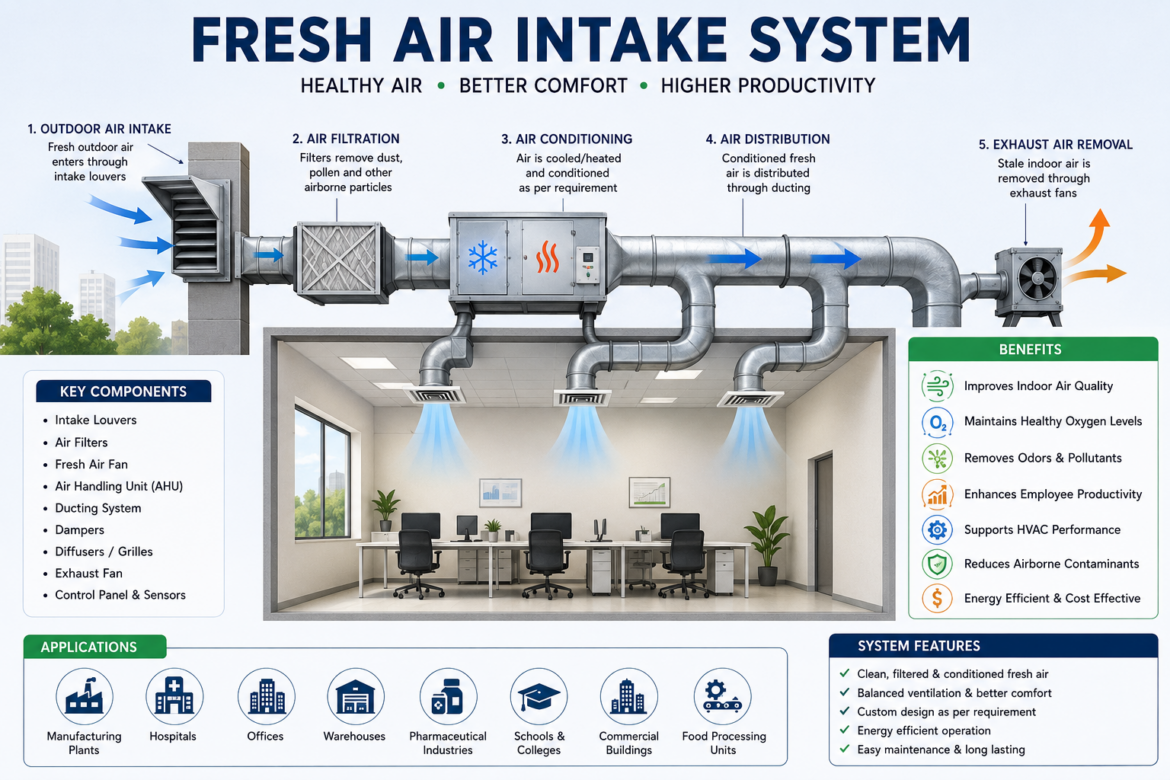
How Does a Fresh Air Intake System Work?
The working process is simple:
1. Outdoor Air Intake
Fresh outdoor air enters through intake louvers designed to prevent rainwater, insects, and debris from entering.
2. Air Filtration
The incoming air passes through filters that remove:
- Dust
- Pollen
- Dirt
- Fine particles
- Airborne contaminants
High-efficiency systems may also include HEPA or activated carbon filters.
3. Air Conditioning (Optional)
Depending on project requirements, the incoming air may be:
- Cooled
- Heated
- Humidified
- Dehumidified
before entering occupied spaces.
4. Air Distribution
Conditioned fresh air is distributed through ductwork to different rooms or workspaces.
5. Exhaust Air Removal
Simultaneously, stale indoor air is removed through exhaust fans or dedicated exhaust ducts to maintain proper air balance.
Main Components of a Fresh Air Intake System
A standard system includes:
- Fresh Air Intake Louvers
- Air Filters
- Fresh Air Fan
- Ducting System
- Dampers
- Air Handling Unit (AHU)
- Diffusers and Grilles
- Exhaust Fan
- Control System
- Sensors for CO₂, Temperature, and Humidity (optional)
Fresh Air Intake System Design Considerations
Designing an efficient system requires careful planning.
Airflow Requirements
The required airflow depends on:
- Number of occupants
- Building size
- Industrial process
- Equipment heat load
- Indoor air quality standards
Air Changes Per Hour (ACH)
ACH determines how frequently indoor air is replaced with fresh air every hour.
Higher occupancy generally requires higher ACH.
Duct Design
Proper duct sizing minimizes:
- Pressure losses
- Noise
- Energy consumption
Filter Selection
Choose filters based on:
- Outdoor pollution level
- Industry requirements
- Indoor air quality expectations
Fan Selection
The fan must overcome system static pressure while delivering the required airflow efficiently.
Energy Efficiency
Energy-efficient motors, variable speed drives (VFDs), and energy recovery systems can significantly reduce operating costs.
Benefits of a Fresh Air Intake System
Improves Indoor Air Quality
Fresh outdoor air dilutes indoor pollutants and maintains healthier breathing conditions.
Better Employee Productivity
Clean air helps improve concentration, comfort, and overall workplace productivity.
Controls Carbon Dioxide Levels
Continuous ventilation prevents CO₂ accumulation in occupied spaces.
Removes Odors
Fresh air helps eliminate odors from manufacturing, kitchens, washrooms, and warehouses.
Supports HVAC Performance
Fresh air systems help maintain balanced air pressure and improve HVAC efficiency.
Reduces Airborne Contaminants
Proper filtration removes dust, allergens, and airborne particles before air enters the building.
Maintains Comfortable Environment
Balanced ventilation prevents stuffiness and improves thermal comfort.
Applications of Fresh Air Intake Systems
Fresh Air Intake Systems are widely used in:
- Manufacturing Plants
- Pharmaceutical Industries
- Hospitals
- Food Processing Units
- Hotels
- Shopping Malls
- Educational Institutions
- Commercial Buildings
- Warehouses
- Laboratories
- Data Centers
- Clean Rooms
Fresh Air Intake System vs Exhaust Ventilation
| Fresh Air Intake System | Exhaust Ventilation |
|---|---|
| Supplies outdoor air | Removes indoor air |
| Improves oxygen levels | Removes contaminants |
| Maintains positive pressure | Maintains negative pressure |
| Supports HVAC ventilation | Supports air extraction |
| Improves indoor comfort | Eliminates heat, smoke, and fumes |
Both systems work together to achieve balanced ventilation.
Common Design Challenges
Some common issues include:
- Incorrect airflow calculations
- Undersized ducts
- High static pressure
- Poor filter maintenance
- Air leakage in ducts
- Improper balancing
- Excessive energy consumption
Proper HVAC design and periodic maintenance can help avoid these problems.
Maintenance Tips
To ensure long-term performance:
- Clean or replace air filters regularly.
- Inspect intake louvers for dust and blockages.
- Check fan performance and motor condition.
- Inspect ducts for leakage or damage.
- Clean diffusers and grilles.
- Monitor airflow and static pressure.
- Test dampers and control systems.
- Schedule preventive maintenance every 3–6 months.
Conclusion
A Fresh Air Intake System is a crucial part of any modern HVAC solution. It enhances indoor air quality, improves occupant comfort, reduces pollutants, and supports efficient HVAC operation. Whether it’s a factory, warehouse, office, hospital, or commercial building, installing a properly designed fresh air intake system ensures healthier, safer, and more energy-efficient indoor environments.
For businesses looking to improve ventilation while reducing operational costs, investing in a well-designed Fresh Air Intake System is a smart and sustainable solution.
FAQs
1. What is the purpose of a Fresh Air Intake System?
It supplies clean outdoor air into a building to improve ventilation, maintain healthy indoor air quality, and reduce the concentration of indoor pollutants.
2. Is a Fresh Air Intake System necessary if I already have air conditioning?
Yes. Most air conditioning systems primarily recirculate indoor air. A Fresh Air Intake System introduces outdoor air, ensuring proper ventilation and healthier indoor conditions.
3. Where are Fresh Air Intake Systems commonly used?
They are widely used in factories, warehouses, offices, hospitals, pharmaceutical facilities, commercial buildings, educational institutions, and food processing plants.
4. How often should air filters be replaced?
Filter replacement depends on usage and environmental conditions, but generally every 3–6 months. In dusty industrial environments, more frequent inspection and cleaning may be required.
5. Can a Fresh Air Intake System improve energy efficiency?
Yes. When properly designed with energy-efficient fans, variable frequency drives (VFDs), and optimized airflow, it can improve HVAC performance while reducing overall energy consumption.