
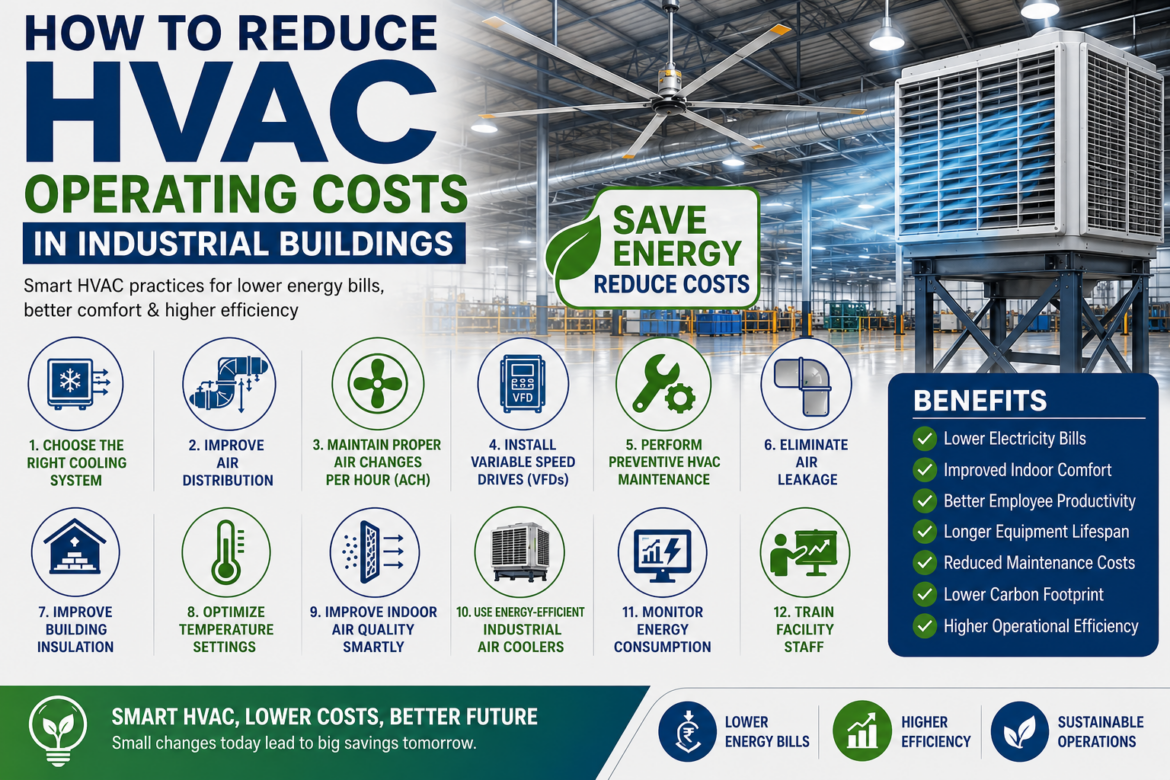
In industrial facilities, HVAC systems often account for 40%–60% of the total electricity consumption. Rising energy prices have made operating costs one of the biggest concerns for factory owners, warehouse managers, and facility engineers.
The good news is that reducing HVAC operating costs doesn’t always require replacing your existing system. By optimizing airflow, improving maintenance practices, and selecting the right cooling technology, industries can significantly lower energy bills while maintaining employee comfort and productivity.
In this guide, we’ll discuss the most effective ways to reduce HVAC operating costs in industrial buildings.
Why HVAC Operating Costs Are So High
Several factors increase HVAC energy consumption:
- Oversized or undersized equipment
- Poor ventilation design
- Dirty air filters
- Air leakage through ducts
- Improper temperature settings
- Lack of preventive maintenance
- Old inefficient cooling equipment
- High heat generated by machinery
Ignoring these issues leads to higher electricity bills and reduced equipment life.
1. Choose the Right Cooling System
Many industries continue using traditional air conditioning even when it isn’t the most economical option.
For large open spaces such as:
- Manufacturing plants
- Warehouses
- Assembly units
- Textile factories
- Logistics centers
Industrial evaporative air coolers can consume up to 80% less electricity than conventional air conditioning, depending on climate conditions.
Selecting the right HVAC technology based on the building’s application is the first step toward reducing operating costs.
2. Improve Air Distribution
Even an efficient HVAC system wastes energy if air distribution is poor.
Proper duct design should ensure:
- Balanced airflow
- Minimum pressure loss
- Uniform temperature
- Reduced fan power consumption
Well-designed duct systems allow HVAC equipment to operate more efficiently.
3. Maintain Proper Air Changes Per Hour (ACH)
Many industrial buildings either over-ventilate or under-ventilate.
Excessive ventilation increases:
- Fan energy
- Cooling load
- Operating costs
Calculate the required Air Changes Per Hour (ACH) based on:
- Building size
- Occupancy
- Heat load
- Industry standards
Correct ventilation saves significant energy without compromising indoor air quality.
4. Install Variable Speed Drives (VFDs)
Most HVAC equipment operates at full speed even when maximum cooling isn’t required.
Variable Frequency Drives help by adjusting:
- Fan speed
- Pump speed
- Motor speed
Benefits include:
- Lower electricity usage
- Reduced motor wear
- Longer equipment life
- Better temperature control
5. Perform Preventive HVAC Maintenance
A neglected HVAC system consumes more electricity.
A regular maintenance schedule should include:
- Cleaning air filters
- Inspecting motors
- Lubricating bearings
- Checking belts
- Cleaning cooling pads
- Inspecting pumps
- Checking electrical connections
- Measuring airflow
- Verifying refrigerant levels (if applicable)
Preventive maintenance improves efficiency and reduces unexpected breakdowns.
6. Eliminate Air Leakage
Air leakage in ductwork is one of the most common causes of energy loss.
Seal:
- Duct joints
- Air outlets
- Flexible connections
- Damaged duct sections
Reducing leakage helps maintain consistent airflow while lowering fan energy.
7. Improve Building Insulation
Heat entering the building increases cooling demand.
Consider improving:
- Roof insulation
- Wall insulation
- Window shading
- Reflective roof coatings
- Insulated doors
Reducing heat gain lowers HVAC operating hours and electricity consumption.
8. Optimize Temperature Settings
Lower thermostat settings don’t always improve comfort—they often increase energy use.
Maintain recommended indoor temperatures based on your facility type and process requirements.
Even increasing the temperature setpoint by 1–2°C can result in noticeable energy savings over time.
9. Improve Indoor Air Quality Without Increasing Energy Use
Poor indoor air quality often leads facility managers to increase ventilation unnecessarily.
Instead:
- Install proper filtration
- Use fresh air strategically
- Maintain balanced airflow
- Control dust at the source
This approach improves air quality while minimizing energy consumption.
10. Use Energy-Efficient Industrial Air Coolers
Modern industrial air coolers provide high airflow with significantly lower power consumption compared to many conventional cooling systems.
Benefits include:
- Lower operating cost
- Fresh air circulation
- Reduced maintenance
- Eco-friendly operation
- Lower carbon emissions
These systems are especially effective in hot and dry climates.
11. Monitor Energy Consumption Regularly
Install energy monitoring systems to track:
- Power consumption
- Fan efficiency
- Motor performance
- Runtime hours
- Peak energy demand
Regular monitoring helps identify inefficiencies before they become expensive problems.
12. Train Facility Staff
Simple operational mistakes can increase HVAC costs.
Train staff on:
- Correct thermostat settings
- Maintenance schedules
- Cleaning procedures
- Equipment shutdown during non-working hours
- Reporting unusual noises or performance issues
Well-trained operators contribute to long-term energy savings.
Common Mistakes That Increase HVAC Costs
Avoid these common issues:
- Running equipment 24/7 unnecessarily
- Ignoring dirty filters
- Delaying maintenance
- Poor duct design
- Incorrect equipment sizing
- Blocked air inlets or outlets
- Air leakage
- Lack of energy monitoring
Correcting these mistakes can significantly reduce operating expenses.
Benefits of Reducing HVAC Operating Costs
An optimized HVAC system offers several advantages:
- Lower electricity bills
- Improved indoor comfort
- Better employee productivity
- Longer equipment lifespan
- Reduced maintenance expenses
- Lower carbon footprint
- Higher operational efficiency
Conclusion
Reducing HVAC operating costs in industrial buildings is a combination of selecting the right cooling technology, improving system design, performing regular maintenance, and optimizing daily operations.
Whether you manage a manufacturing plant, warehouse, commercial facility, or industrial workshop, investing in energy-efficient HVAC practices can deliver substantial long-term savings while creating a healthier and more productive indoor environment.
If you’re planning an HVAC upgrade, consult experienced professionals to assess your facility’s cooling requirements and recommend the most cost-effective solution.
FAQs
1. What consumes the most energy in an industrial HVAC system?
Fans, compressors, pumps, and ventilation equipment are typically the largest contributors to HVAC energy consumption.
2. How often should industrial HVAC systems be serviced?
Preventive maintenance should generally be performed every 3–6 months, depending on operating conditions and equipment usage.
3. Can industrial air coolers reduce operating costs?
Yes. In suitable climates, industrial evaporative air coolers can use significantly less electricity than conventional air conditioning while providing effective cooling for large spaces.
4. How does duct leakage affect HVAC costs?
Leaking ducts reduce airflow efficiency, forcing fans and cooling equipment to work harder and consume more energy.
5. What is the easiest way to lower HVAC electricity bills?
Regular maintenance, clean filters, optimized thermostat settings, proper ventilation, and energy-efficient equipment are among the simplest and most effective ways to reduce HVAC operating costs.