
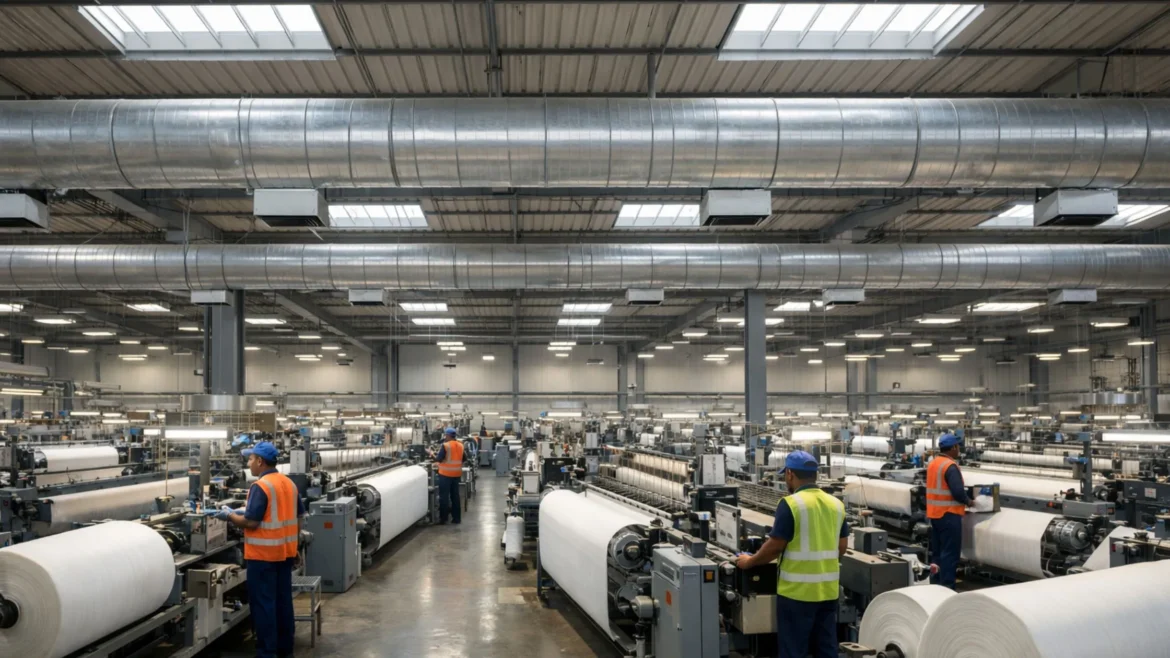
The best cooling solution for the textile industry in India depends on factors such as plant size, machine heat load, humidity requirements, and energy costs. However, most modern textile mills prefer evaporative cooling with proper ventilation and humidity control because it is energy-efficient, cost-effective, and suitable for large factory spaces.
Below are the most effective cooling solutions used in textile factories.
1. Industrial Evaporative Air Cooling (Most Popular)
This is the most widely used cooling system in textile factories because textile plants are large and require fresh air circulation.
How it works: Hot outside air passes through water-soaked cooling pads, which cool the air before it enters the factory through ducts.
Benefits
➠ Reduces temperature by 5–12°C in large facilities
➠ Up to 80% lower energy consumption compared to conventional AC
➠ Provides 100% fresh air ventilation
➠ Helps maintain humidity levels important for yarn quality
➠ Ideal for spinning, weaving, and garment units
Best for
➠ Spinning mills
➠ Weaving units
➠ Garment manufacturing floors
➠ Large textile production halls
2. Indirect-Direct Evaporative Cooling (IDEC)
A more advanced version of evaporative cooling is used in modern textile plants.
Key advantages
➠ 40–50% energy savings vs traditional cooling systems
➠ Cool air without excessive humidity
➠ More stable temperature control
Best for
➠ Automated textile plants
➠ Sensitive yarn processing environments
➠ High-efficiency factories
3. Humidification + Cooling Systems
Textile production requires controlled humidity, not just cooling.
Why humidity matters
Correct humidity:
➠ Reduces yarn breakage
➠ Prevents static electricity
➠ Improves weaving efficiency
Typical systems:
➠ Air washer systems
➠ Humidification plants
➠ Mist cooling systems
4. Industrial Mist Cooling Systems
Used in specific zones, such as dyeing or high-heat areas.
Benefits
➠ Reduces heat near machines
➠ Controls dust and lint
➠ Improves worker comfort and productivity
5. Central HVAC
Traditional chilled-water HVAC is rarely used for full textile factories because:
➠ Very high energy consumption
➠ Expensive installation and maintenance
➠ Better suited for cleanrooms or small textile labs
Recommended Cooling Setup for a Textile Factory
Most efficient configuration: Industrial Evaporative Coolers + Ducting + Exhaust Ventilation
Typical system design:
✱ Roof-mounted air coolers
✱ Prefabricated duct network
✱ Fresh air supply
✱ Exhaust fans for hot air removal
This setup:
✱ Maintains 28–32°C working temperature
✱ Improves worker productivity
✱ Reduces electricity costs.
FAQ – Textile Industry Cooling Solutions
The most effective cooling solution for textile factories is industrial evaporative air cooling combined with proper ventilation and humidity control. This system is energy-efficient, provides fresh air circulation, and works well in large textile production areas such as spinning, weaving, and garment manufacturing units.
Evaporative cooling is preferred because it:
✧ Consumes up to 80% less energy than traditional air conditioning
✧ Provides 100% fresh air ventilation
✧ Works efficiently in large open factory spaces
✧ Helps maintain optimal humidity levels for yarn quality
Most textile factories aim to maintain a working temperature between 28°C and 32°C. This range helps improve worker comfort while maintaining stable yarn and fabric production conditions.
Textile factories typically use industrial air coolers with airflow ranging from 10,000 to 40,000 CFM, depending on the size of the production hall and the heat generated by machines.
Direct evaporative cooling cools air by passing it through water-soaked cooling pads, while Indirect-Direct Evaporative Cooling (IDEC) first cools air indirectly before adding evaporative cooling. IDEC systems provide better temperature control and lower humidity levels.
Yes, mist cooling systems can be used in specific zones of textile factories, especially near high-heat machines or dyeing sections. They help reduce localized heat and improve worker comfort.