LOADING...

Category "HVAC Ducts"

19Mar

Cooling Solutions for the Textile Industry

by Priyanka Gupta

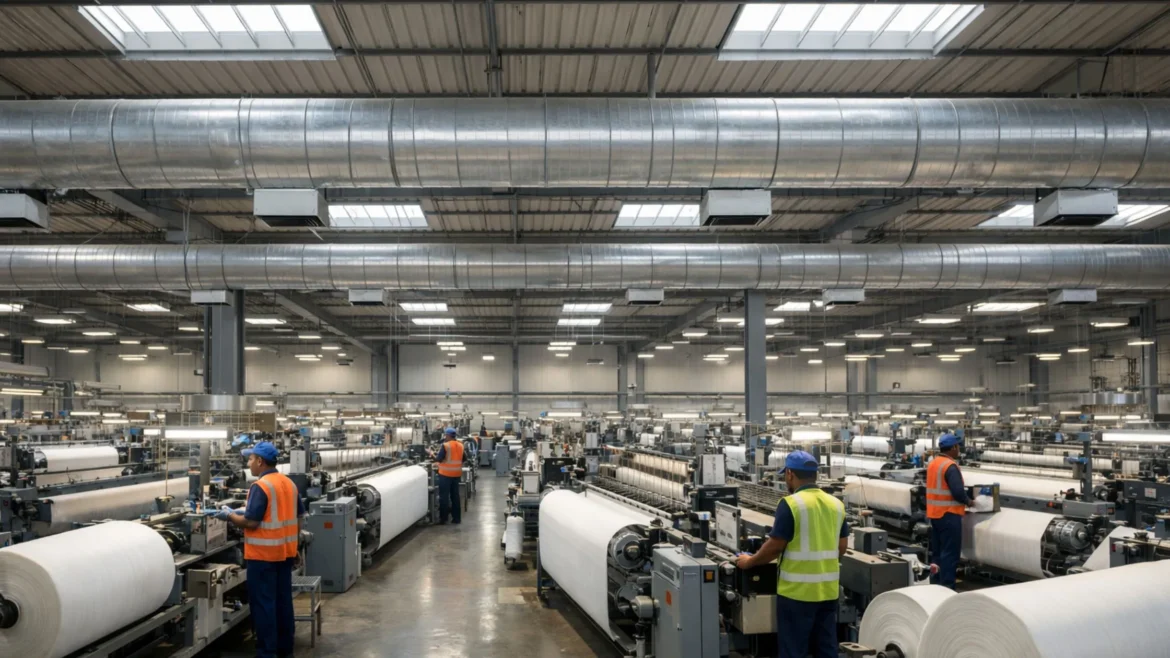
The best cooling solution for the textile industry in India depends on factors such as plant size, machine heat load, humidity requirements, and energy costs. However, most modern textile mills prefer evaporative cooling with proper ventilation and humidity control because it is energy-efficient, cost-effective, and suitable for large factory spaces.

Below are the most effective cooling solutions used in textile factories.

1. Industrial Evaporative Air Cooling (Most Popular)

This is the most widely used cooling system in textile factories because textile plants are large and require fresh air circulation.

How it works: Hot outside air passes through water-soaked cooling pads, which cool the air before it enters the factory through ducts.

Benefits

➠ Reduces temperature by 5–12°C in large facilities
➠ Up to 80% lower energy consumption compared to conventional AC
➠ Provides 100% fresh air ventilation
➠ Helps maintain humidity levels important for yarn quality
➠ Ideal for spinning, weaving, and garment units

Best for

➠ Spinning mills
➠ Weaving units
➠ Garment manufacturing floors
➠ Large textile production halls

2. Indirect-Direct Evaporative Cooling (IDEC)

A more advanced version of evaporative cooling is used in modern textile plants.

Key advantages

➠ 40–50% energy savings vs traditional cooling systems
➠ Cool air without excessive humidity
➠ More stable temperature control

Best for

➠ Automated textile plants
➠ Sensitive yarn processing environments
➠ High-efficiency factories

3. Humidification + Cooling Systems

Textile production requires controlled humidity, not just cooling.

Why humidity matters

Correct humidity:

➠ Reduces yarn breakage
➠ Prevents static electricity
➠ Improves weaving efficiency

Typical systems:

Air washer systems
➠ Humidification plants
➠ Mist cooling systems

4. Industrial Mist Cooling Systems

Used in specific zones, such as dyeing or high-heat areas.

Benefits

➠ Reduces heat near machines
➠ Controls dust and lint
➠ Improves worker comfort and productivity

5. Central HVAC

Traditional chilled-water HVAC is rarely used for full textile factories because:

➠ Very high energy consumption
➠ Expensive installation and maintenance
➠ Better suited for cleanrooms or small textile labs

Recommended Cooling Setup for a Textile Factory

Most efficient configuration: Industrial Evaporative Coolers + Ducting + Exhaust Ventilation

Typical system design:

✱ Roof-mounted air coolers
Prefabricated duct network
✱ Fresh air supply
Exhaust fans for hot air removal

This setup:

✱ Maintains 28–32°C working temperature
✱ Improves worker productivity
✱ Reduces electricity costs.

FAQ – Textile Industry Cooling Solutions

1. What is the best cooling solution for textile factories in India?

The most effective cooling solution for textile factories is industrial evaporative air cooling combined with proper ventilation and humidity control. This system is energy-efficient, provides fresh air circulation, and works well in large textile production areas such as spinning, weaving, and garment manufacturing units.

2. Why is evaporative cooling preferred in textile mills?

Evaporative cooling is preferred because it:
✧ Consumes up to 80% less energy than traditional air conditioning
✧ Provides 100% fresh air ventilation
✧ Works efficiently in large open factory spaces
✧ Helps maintain optimal humidity levels for yarn quality

3. What temperature should be maintained inside a textile factory?

Most textile factories aim to maintain a working temperature between 28°C and 32°C. This range helps improve worker comfort while maintaining stable yarn and fabric production conditions.

4. What airflow capacity is required for textile factory cooling?

Textile factories typically use industrial air coolers with airflow ranging from 10,000 to 40,000 CFM, depending on the size of the production hall and the heat generated by machines.

5. What is the difference between direct evaporative cooling and IDEC cooling?

Direct evaporative cooling cools air by passing it through water-soaked cooling pads, while Indirect-Direct Evaporative Cooling (IDEC) first cools air indirectly before adding evaporative cooling. IDEC systems provide better temperature control and lower humidity levels.

6. Can mist cooling systems be used in textile plants?

Yes, mist cooling systems can be used in specific zones of textile factories, especially near high-heat machines or dyeing sections. They help reduce localized heat and improve worker comfort.
Get a Free Cooling Solution Consultation

    9Mar

    HVAC Ductwork for Clean Rooms & Pharma Plants

    by Priyanka Gupta

    Design, Materials, Compliance & Contamination Control

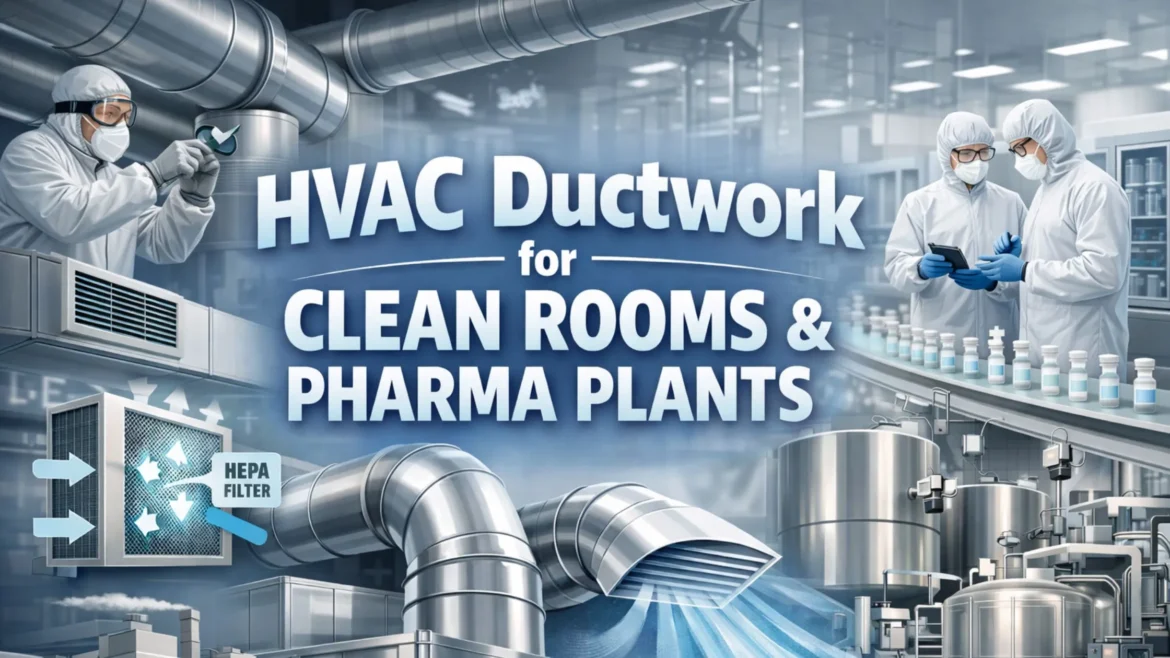
    In pharmaceutical manufacturing and cleanroom environments, HVAC ductwork is more than just an air distribution system; it is a critical contamination-control component. Unlike conventional HVAC systems designed for comfort, cleanroom ductwork is engineered to maintain air purity, pressure differentials, and regulatory compliance in accordance with ISO 14644 and GMP guidelines.

    This guide explains how HVAC ductwork in clean rooms and pharma plants differs, what materials are used, and how proper design ensures product safety.

    1. Why HVAC Ductwork is Critical in Pharma Plants

    In pharmaceutical facilities, air is part of the manufacturing process. Improper duct design can lead to:

    1. Cross-contamination
    2. Pressure imbalance
    3. Particle accumulation
    4. Regulatory non-compliance
    5. Failed validation audits

    Therefore, ductwork must support:

    1. Controlled airflow patterns
    2. HEPA-filtered air distribution
    3. Strict leakage standards
    4. Pressure cascade systems
    5. Easy cleaning and maintenance

    2. Key Design Considerations for Cleanroom Ductwork

    1. Low Leakage Construction

    Cleanroom ducts are fabricated to high sealing classes, often aligned with guidelines from SMACNA. Even minor air leakage can disturb pressure differentials between critical zones.

    ✔ Continuous sealing of joints
    ✔ Minimal flange connections
    ✔ Proper gasket selection
    ✔ Leak testing before commissioning

    2. Air Changes Per Hour (ACH)

    Cleanrooms require specific ACH depending on ISO classification:

    ✔ Grade A / ISO 5 → Very high ACH
    ✔ Grade B, C, D → Moderate to high ACH

    Proper duct sizing ensures uniform airflow without turbulence.

    3. Pressure Cascade Control

    Pharmaceutical HVAC systems maintain controlled pressure differences:

    ✔ Positive pressure → Sterile manufacturing areas
    ✔ Negative pressure → Containment and hazardous zones

    Ducting layout must support these cascades without imbalance.

    3. Material Selection for Pharma HVAC Ductwork

    Stainless Steel (SS 304 / SS 316)

    Used in critical and sterile zones due to:

    ✔ Corrosion resistance
    ✔ Smooth internal surface
    ✔ Compatibility with chemical cleaning

    SS 316 is preferred where aggressive disinfectants are used.

    High-Seal Galvanized Iron (GI)

    ✔ Used in non-critical areas when:
    ✔ Proper sealing is ensured
    ✔ Internal insulation is avoided
    ✔ Surface finish is smooth and cleanable

    Pre-Insulated Duct Panels (PIR/PUF)

    ✔ Lightweight and energy efficient
    ✔ Reduced condensation risk
    ✔ Faster installation

    Must be closed-cell and fiber-free inside the air stream.

    4. Filtration Integration

    Cleanroom HVAC ductwork works in coordination with:

    1. Pre-filters
    2. Fine filters
    3. HEPA filters (99.97% efficiency at 0.3 micron)
    4. ULPA filters (ultra-critical areas)

    Terminal HEPA housing systems are airtight and gasket-sealed to prevent bypass leakage.

    5. Airflow Patterns & Contamination Control

    Two main airflow types are used:

    Unidirectional (Laminar) Airflow

    ✔ Used in sterile zones (Grade A)
    ✔ Sweeps particles away from critical processes

    Non-Unidirectional Airflow

    ✔ Used in Grade B, C, and D areas
    ✔ Maintains dilution-based contamination control

    CFD analysis is often conducted to validate airflow performance before installation.

    6. Compliance & Validation Requirements

    Pharma ductwork systems must support:

    1. Leakage testing
    2. Air velocity measurement
    3. Particle count validation
    4. Differential pressure monitoring
    5. IQ/OQ/PQ documentation

    Regulatory bodies such as the WHO, EU GMP, and the US FDA expect documented HVAC validation during audits.

    7. Common Mistakes to Avoid

    1. Using internal fibrous insulation
    2. Ignoring pressure balance during duct routing
    3. Poorly sealed access doors
    4. Improper return air placement
    5. Skipping pre-commissioning leak testing

    These errors can compromise contamination control.

    8. Benefits of Properly Designed Cleanroom Ductwork

    ✔ Enhanced product safety
    ✔ Stable pressure control
    ✔ Reduced contamination risk
    ✔ Lower audit risk
    ✔ Improved energy efficiency
    ✔ Long-term operational reliability

    HVAC ductwork for clean rooms and pharmaceutical plants is a precision-engineered system designed to control airflow, contamination, and compliance, not just temperature.

    By selecting the right materials, maintaining low leakage standards, integrating HEPA filtration, and validating airflow performance, pharma facilities can ensure regulatory compliance and product integrity.

    Looking for Expert Cleanroom HVAC Duct Solutions?

    If you are planning a pharmaceutical plant, sterile facility, or ISO-classified cleanroom, consult an experienced HVAC duct manufacturer who understands GMP compliance, airflow design, and contamination control.

    Proper ductwork isn’t just infrastructure; it’s quality assurance in motion.

    Frequently Asked Questions (FAQs)

    Q. What makes HVAC ductwork in clean rooms different from normal HVAC ducting?

    Cleanroom HVAC ductwork is designed for contamination control, pressure regulation, and regulatory compliance, not just temperature control. It must meet standards such as ISO 14644 and follow GMP guidelines. These ducts have stricter leakage control, smoother internal surfaces, and integration with HEPA filtration systems.

    Q. Which material is best for HVAC ductwork in pharmaceutical plants?

    For critical sterile areas, Stainless Steel (SS 304 or SS 316) is preferred due to corrosion resistance and cleanability. In non-critical zones, high-seal Galvanized Iron (GI) ducts may be used if fabricated according to guidelines from SMACNA and properly sealed.

    Q. Why is leakage control important in cleanroom duct systems?

    Even minor air leakage can disturb pressure differentials between rooms, leading to cross-contamination. Cleanroom ducts are fabricated to high sealing classes and undergo leakage testing to maintain proper pressure cascades and ISO classification.

    Q. How many air changes per hour (ACH) are required in pharmaceutical cleanrooms?

    ACH requirements depend on the cleanroom grade:
    + ISO 5 / Grade A → Very high ACH
    + Grade B, C, D → Moderate to high ACH
    Proper ACH ensures particle dilution and contamination control while maintaining compliance.

    Q. Do pharmaceutical HVAC duct systems require validation?

    Yes. Pharma HVAC systems must undergo testing and documentation, including leakage tests, airflow balancing, particle count verification, and IQ/OQ/PQ validation. Regulatory authorities such as the WHO, EU GMP, and the US FDA require documented HVAC performance during audits.

    Get in Touch

    Please share your details below and we’ll get back to you soon.

    24Jan

    Stainless Steel vs Mild Steel Ducts

    by Priyanka Gupta

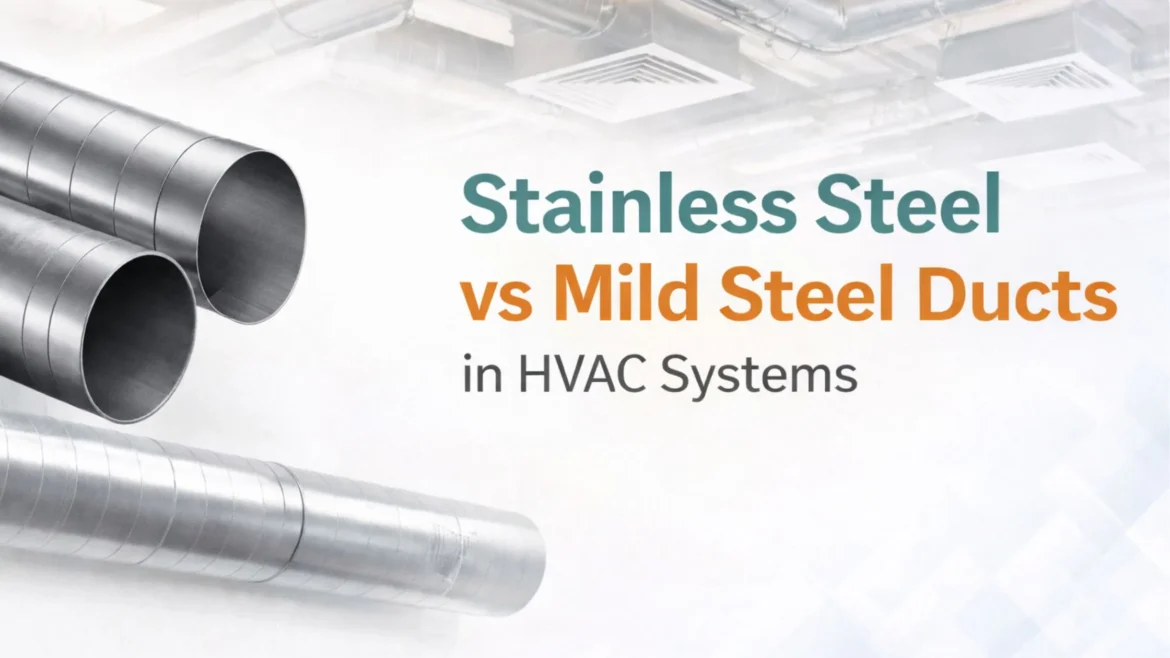
    When designing an HVAC system or buying a new HVAC system, one of the most critical decisions is choosing the right duct material. The two most common options are Stainless Steel (SS) and Mild Steel (MS) ducts. Each comes with its own set of advantages, costs, and ideal applications. Understanding their differences can help you make a more informed choice for efficiency, durability, and long-term performance.

    1. Corrosion Resistance

    Stainless Steel is naturally resistant to rust and corrosion, making it ideal for humid, coastal, or industrial environments. Mild Steel, on the other hand, is prone to rust and typically requires galvanization or painting for protection.

    If your system operates in a corrosive environment, SS is the safer choice.

    2. Strength and Durability

    SS ducts are extremely strong and maintain structural integrity over long periods, even under heavy stress. MS ducts are durable too but may warp or weaken over time in harsh conditions.

    3. Weight and Handling

    Mild Steel is lighter and easier to handle during transportation and installation. Stainless Steel is slightly heavier, which can make installation more labor-intensive but adds to long-term durability.

    4. Cost Considerations

    SS ducts come with a higher upfront cost due to the material itself and fabrication requirements. MS ducts are more budget-friendly, making them suitable for cost-conscious projects in non-corrosive environments.

    5. Hygiene and Maintenance

    Stainless Steel is easy to clean and maintain, making it ideal for hospitals, kitchens, and food-processing areas where hygiene is critical. Mild Steel requires more upkeep to prevent rust and contamination.

    6. Ideal Applications

    ➤ Stainless Steel Ducts: Hospitals, laboratories, coastal areas, industrial environments with corrosive air.
    ➤ Mild Steel Ducts: Commercial buildings, offices, residential complexes, and non-corrosive areas.

    With Degree Day, India’s largest manufacturer of Stainless Steel and Mild Steel ducts, you get high-quality, fully customized HVAC duct solutions designed to last decades. Our ducts are engineered to deliver optimal airflow, superior hygiene, and maximum energy efficiency, making them ideal for a wide range of applications from residential and commercial buildings to hospitals, labs, and industrial facilities.

    We combine state-of-the-art manufacturing technology with rigorous quality checks, ensuring every duct meets international standards. Our Stainless Steel ducts are perfect for corrosive, humid, or hygienically sensitive environments, while our Mild Steel ducts provide cost-effective, reliable solutions for non-corrosive spaces.

    Read Our Duct Related Blogs

    For more insights on HVAC ducts, materials, and systems, check out these informative blogs from Degree Day Pvt. Ltd.:

    Galvanized Iron (GI) vs Stainless Steel Ducts: Which Performs Better?
    Which HVAC System Suits Your Industry? A Complete Guide for Every Sector
    Best HVAC Solutions for Warehouses & Factories
    Prefabricated vs Handmade Ducts: Which Is Right?
    How to Choose the Right Duct Material
    Types of HVAC Ducts and Their Applications
    What Is CFM in HVAC and Why Does It Matter for Your Factory?
    Why HVAC System Is the Backbone of Modern Industrial Infrastructure
    How Does HVAC System Work in Commercial Buildings?
    Top HVAC Trends in 2025

    Explore these blogs to learn more about choosing the right ducts, improving system efficiency, and staying updated with the latest HVAC trends.

    Frequently Asked Question

    Q. Which is better for industrial HVAC systems: SS or MS ducts?

    For industrial environments, Stainless Steel ducts are preferred due to their corrosion resistance, strength, and low maintenance. Mild Steel can be used in dry, non-corrosive industrial areas where budget is a priority.

    Q. Are Stainless Steel ducts more expensive than Mild Steel ducts?

    Yes. Stainless Steel ducts have a higher upfront cost due to material quality and fabrication requirements, but they offer long-term durability and lower maintenance costs. Mild Steel ducts are more budget-friendly but may require regular upkeep.

    Q. Can Mild Steel ducts be used in coastal or humid areas?

    Mild Steel ducts are not ideal for humid or coastal areas unless they are properly galvanized or painted, as they are prone to rust. Stainless Steel is a safer choice for such environments.

    Q. What sizes and customizations are available for SS and MS ducts?

    Degree Day Pvt. Ltd., India’s largest manufacturer of Stainless Steel and Mild Steel ducts, provides fully customized solutions for any project, including different shapes, sizes, finishes, and fabrication types to fit residential, commercial, or industrial HVAC systems.

    Q. Why choose Degree Day Pvt. Ltd. for HVAC ducts?

    Degree Day is India’s largest manufacturer of Stainless Steel and Mild Steel ducts, offering high-quality, durable, and customized duct solutions. They combine expert design, precision fabrication, and rigorous quality checks to ensure optimal airflow, hygiene, and efficiency for all types of HVAC systems.

    19Dec

    Importance of Proper Ventilation in Commercial Kitchens

    by Priyanka Gupta

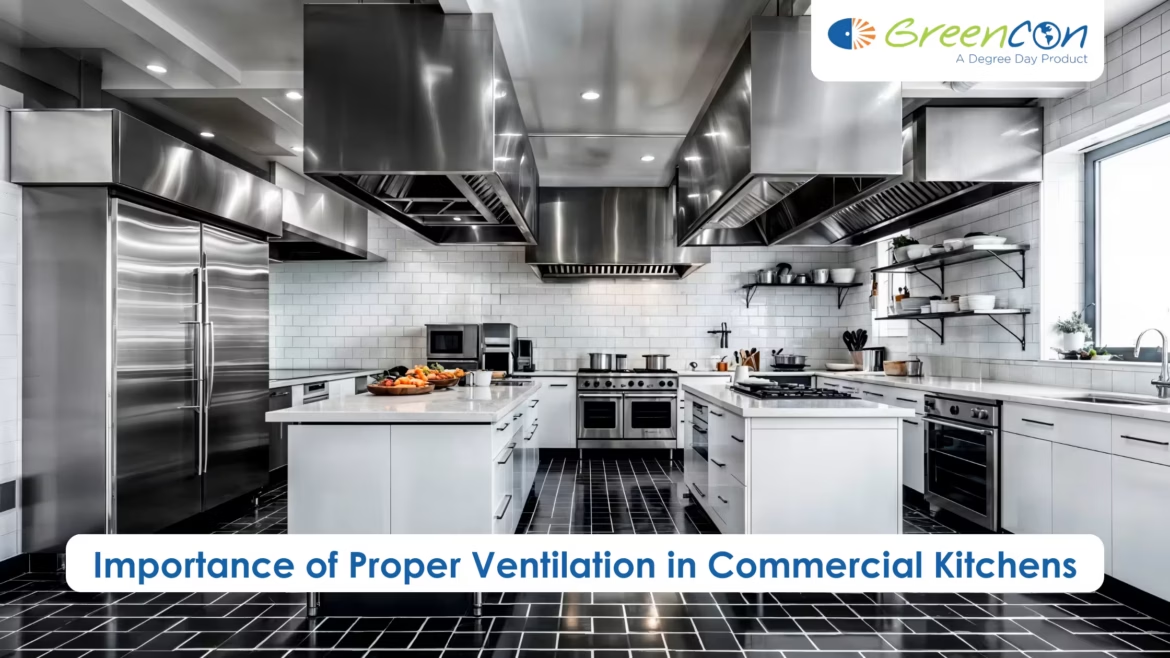
    Proper ventilation is one of the most critical yet often overlooked elements of a commercial kitchen. Whether it is a restaurant, hotel kitchen, cloud kitchen, industrial canteen, or food court, an efficient ventilation system directly impacts safety, hygiene, energy efficiency, staff productivity, and regulatory compliance.

    In this blog, we explain why proper ventilation is essential in commercial kitchens, how it affects daily operations, and what businesses should consider while designing a compliant system.

    Read – Best HVAC Solutions for Warehouses and Factories

    What is Commercial Kitchen Ventilation?

    Commercial kitchen ventilation refers to a system of exhaust hoods, ducting, exhaust fans, and fresh air supply designed to remove:

    Excess heat
    Smoke and steam
    Grease-laden vapors
    Odors and harmful gases

    A well-designed ventilation system ensures clean air inside the kitchen while maintaining pressure balance with surrounding spaces.

    1. Fire Safety and Risk Reduction

    Commercial cooking produces highly flammable grease vapors. Without proper ventilation, grease accumulates inside hoods and ducts, significantly increasing the risk of kitchen fires.

    Proper ventilation:

    ✓ Captures grease at the source using baffle filters
    ✓ Reduces grease buildup in ducts
    ✓ Supports integration of fire suppression systems

    This is why fire authorities mandate fire-rated ducting and mechanical exhaust systems for commercial kitchens.

    2. Heat Control and Staff Comfort

    Kitchens generate intense heat from cooking equipment like fryers, ranges, ovens, and tandoors. Poor ventilation leads to uncomfortable working conditions, fatigue, and reduced productivity.

    An effective ventilation system:

    ✓ Removes excess heat
    ✓ Maintains manageable kitchen temperatures
    ✓ Improves working conditions for chefs and kitchen staff

    Comfortable staff work more efficiently and make fewer errors during peak hours.

    3. Indoor Air Quality and Health

    Cooking releases pollutants such as carbon monoxide, nitrogen dioxide, and fine particulate matter. Continuous exposure to these pollutants can affect staff health.

    Proper ventilation helps:

    ✓ Remove harmful gases
    ✓ Reduce respiratory discomfort
    ✓ Maintain healthy indoor air quality

    This is especially important in cloud kitchens and enclosed commercial spaces.

    4. Hygiene and Food Safety Compliance

    As per FSSAI Schedule 4, kitchens must have adequate ventilation to prevent smoke, condensation, and grease droplets from contaminating food.

    A compliant ventilation system:

    ✓ Prevents oil and water from dripping onto food preparation areas
    ✓ Reduces odor buildup
    ✓ Supports hygienic cooking conditions

    Poor ventilation is a common reason for FSSAI non-compliance and inspection failures.

    5. Odor Control and Customer Experience

    Uncontrolled cooking odors can travel to dining areas, corridors, or neighboring properties, negatively impacting customer experience and brand image.

    Proper ventilation:

    ✓ Contains odors within the kitchen
    ✓ Protects dining and public spaces
    ✓ Is essential for restaurants, hotels, and mixed-use buildings

    6. Energy Efficiency and Cost Savings

    When ventilation is poorly designed, kitchens lose conditioned air, leading to higher energy consumption.

    A well-planned system:

    ✓ Balances exhaust and fresh air
    ✓ Reduces unnecessary load on air cooling systems
    ✓ Lowers long-term energy and maintenance costs

    7. Regulatory Compliance (NBC, FSSAI & Fire Norms)

    In India, commercial kitchen ventilation must comply with:
    ✓ National Building Code (NBC)
    ✓ FSSAI food safety regulations
    ✓ Local fire authority norms

    Proper ventilation ensures:

    ✓ Faster approvals
    ✓ Smooth fire NOC and license renewals
    ✓ Safe and legally compliant operations

    How Degree Day Provides End-to-End Ventilation Solutions for Commercial Kitchens

    Degree Day Pvt. Ltd. provides comprehensive ventilation solutions for commercial kitchens, enabling restaurants, hotels, cloud kitchens, and industrial canteens to maintain a safe and comfortable working environment. Proper kitchen ventilation is essential for removing heat, smoke, grease, and odors. We design systems that do exactly that efficiently and reliably.

    With over 26 years of experience and ISO 9001:2015 certification, we handle everything from ventilation system design to installation and execution. In our commercial kitchen ventilation systems, we use high-quality MS ducts that can withstand high cooking temperatures and improve fire safety, and we also install powerful exhaust systems that capture smoke and grease at the source, keeping the kitchen air clean and fresh.

    By reducing heat buildup, improving indoor air quality, and supporting safety compliance, Degree Day’s kitchen ventilation solutions help commercial kitchens operate smoothly, safely, and efficiently every day.

    Frequently Asked Questions

    1. Why is proper ventilation important in commercial kitchens?

    Proper ventilation removes heat, smoke, grease, and harmful gases, ensuring fire safety, hygiene, staff comfort, energy efficiency, and regulatory compliance.

    2. What are the risks of poor kitchen ventilation?

    Poor ventilation can lead to fire hazards, health issues for staff, odor spread, reduced productivity, equipment damage, and non-compliance with FSSAI and fire safety regulations.

    3. How does kitchen ventilation affect FSSAI compliance?

    FSSAI mandates that kitchens must have adequate ventilation to prevent smoke, grease, and condensation from contaminating food. A compliant system helps pass inspections and maintain hygiene standards.

    4. What components make up a commercial kitchen ventilation system?

    A standard system includes exhaust hoods, ducting, exhaust fans, fresh air supply, grease filters, and sometimes fire suppression systems, all designed to maintain air quality and safety.

    5. How can businesses ensure their kitchen ventilation is compliant with Indian norms?

    Ensure the system aligns with NBC air changes per hour, FSSAI hygiene requirements, and local fire safety norms, including proper ducting, exhaust capacity, hood coverage, and fresh air supply.

    11Nov

    Best HVAC Company in Lucknow

    by Priyanka Gupta

    Lucknow has always been a city of balance, a blend of tradition and progress, of history and innovation. As the skyline continues to rise and new businesses establish themselves across the city, one thing has become clear: comfort and air quality are no longer luxuries, but essentials.

    That’s where Degree Day steps in. With over 25 years of experience and ISO 9001:2015 certification, Degree Day has established itself as a trusted name in the world of HVAC design, manufacturing, and turnkey solutions across North India. Whether it’s a hospital requiring precision air control or a commercial complex demanding energy efficiency, the company has earned a reputation for delivering results that last.

    Need Advice?Want Product Catalogues?


    More Than Just Air Conditioning: A Complete HVAC Experience

    When people hear “HVAC,” they often think of cooling or heating systems. But true comfort goes beyond temperature. It’s about air quality, circulation, humidity, and even energy management.

    Degree Day specializes in turnkey HVAC solutions, which means we handle every aspect of your project from the first consultation to the final commissioning. You don’t have to coordinate with multiple vendors or stress about technical details. Our experts take care of everything:

    1. Site Evaluation: Understanding Your Space, Requirements, and Energy Needs.
    2. System Design: Creating tailored solutions that perfectly fit your environment.
    3. Installation: Flawless execution with safety and efficiency in mind.
    4. Maintenance & Support: Routine inspections and reliable after-sales service to keep systems performing at their best.

    It’s a smooth, worry-free experience, the way professional climate control should be.

    Why Businesses Across Lucknow Trust Degree Day

    Over the years, Degree Day has earned a reputation for precision, reliability, and genuine trust. Our journey has taken us across a wide range of industries, from advanced cleanrooms and large-scale manufacturing facilities to hospitals, retail spaces, and modern corporate offices.

    In Lucknow and throughout Uttar Pradesh, we offer comprehensive HVAC solutions tailored to every type of space, including basement ventilation, cleanroom environments, hospitality setups, showrooms, residential complexes, commercial buildings, and full-scale industrial projects. Whatever the need, our focus remains the same: delivering comfort, efficiency, and performance that lasts.

    Here’s what sets them apart:

    1. Decades of Experience: With 25+ years in the HVAC industry, their team understands every technical and environmental challenge Lucknow presents.
    2. Quality Without Compromise: All projects adhere to global standards, including ISHRAE and ASHRAE guidelines.
    3. Energy Efficiency First: Their systems are designed to reduce energy costs while maintaining superior performance.
    4. Customized Designs: Every project is unique, and so is every Degree Day solution.
    5. Transparent Pricing: No hidden costs, no surprises, just honest, value-driven service.

    From design to execution, Degree Day ensures that every system not only performs but also endures.

    Trusted by India’s Leading Brands

    Degree Day’s portfolio in Lucknow speaks volumes. Some of the region’s most respected names rely on our HVAC systems for efficient and reliable operations, a true mark of trust and capability.

    Our Clients in Lucknow Include:
    Kanpur Plastic, Viraj Constructions, Birla Dharamshala (Ayodhya), Lete Hue Hanuman Mandir, Safety Shoes Manufacturing Unit, Ex-CM Residence, Delhivery Warehouse (Lucknow), Ford Car Showroom, and many more.

    Smart, Sustainable, and Ready for the Future

    In today’s world, efficiency and sustainability go hand in hand. Degree Day integrates smart automation and eco-friendly HVAC technologies to help clients cut energy use without compromising comfort.

    Our products & Services include centralized air conditioning, UVGI-based air purification, prefabricated ducts, Mist Cooling System, Bladeless Fans, Exhaust Fans, Basement Ventilation, HVAC Design, HVAC Projects, Clean Room Solution, HEPA Air Purifiers, Air Washer, Air Handling Units, Single, Dual and Hybrid Evaporative Cooling System, and smart energy control, all engineered to ensure clean, safe, and sustainable indoor environments.

    Whether it’s a high-end commercial space or an industrial setup, Degree Day’s team ensures the perfect balance between technology, performance, and environmental responsibility.

    Why Local Expertise Matters

    Lucknow’s climate can be unpredictable sweltering summers, humid monsoons, and chilly winters. Generic systems simply don’t cut it here. Our deep understanding of local weather patterns and building needs means their solutions are built for real conditions, not assumptions.

    We don’t just install machines; we design environments where people can work, heal, and live comfortably all year round.

    Building Better Air, Together

    Comfort isn’t just about cooling a room; it’s about creating spaces that help people feel better, work smarter, and breathe easier. That philosophy drives everything Degree Day does.

    Whether you’re planning a new project or upgrading an existing system, Degree Day is ready to design, deliver, and maintain an HVAC solution that aligns with your vision and budget.

    Quick Highlights

    ● 25+ years of HVAC expertise
    ● ISO 9001:2015 Certified
    ● Turnkey project design & execution
    ● Energy-efficient and eco-friendly systems
    ● Trusted by India’s leading brands

    Frequently Asked Questions

    1. What makes Degree Day the best HVAC company in Lucknow?

    With 25+ years of experience and ISO 9001:2015 certification, Degree Day delivers reliable, high-performance HVAC systems. From design to maintenance, every project is tailored for efficiency, durability, and Lucknow’s unique climate.

    2. What types of HVAC solutions does Degree Day offer?

    They offer complete HVAC solutions – centralized AC, air purification (UVGI + HEPA), prefabricated ducts, air washers, evaporative air coolers, air purifiers, cleanroom systems, ventilation setups, and hybrid cooling for homes, offices, and industries.

    3. Does Degree Day handle end-to-end HVAC projects?

    Yes. Degree Day manages turnkey projects from site evaluation and design to installation, commissioning, and maintenance—ensuring a smooth, worry-free process.

    4. Why is local HVAC expertise important for Lucknow projects?

    Lucknow’s hot, humid climate needs specialized systems. Degree Day’s local experience ensures efficient, weather-optimized solutions that perform year-round.

    5. Which leading clients trust Degree Day’s HVAC solutions in Lucknow?

    Trusted by brands like Kanpur Plastic, Viraj Constructions, Birla Dharamshala (Ayodhya), Lete Hue Hanuman Mandir, and Ford Showroom, among others.

    Get in Touch

    Please share your details below and we’ll get back to you soon.