
LOADING...

Category "Air Purifiers"

17Jul

How Does HVAC System Work in Commercial Buildings?

by Priyanka Gupta

Commercial buildings like malls, office spaces, hospitals, and manufacturing units rely heavily on HVAC (Heating, Ventilation, and Air Conditioning) systems for comfort, efficiency, and safety. Unlike residential setups, these systems are more complex, customizable, and capable of handling larger spaces and diverse zones. In this blog, we will explain how HVAC systems work in commercial buildings, their components, energy efficiency features, and real-world case studies.

What Is a Commercial HVAC System?

A commercial HVAC system regulates indoor air quality, temperature, and humidity in large-scale environments. Its design depends on factors like building size, usage, number of occupants, and industry-specific requirements. These systems ensure a healthy and productive environment by maintaining consistent airflow and temperature control.

Key Components of Commercial HVAC Systems

  1. Air Handling Units (AHUs): Circulate and condition air through heating or cooling coils.
  2. Chillers and Boilers: Chillers provide cold water for cooling; boilers provide hot water or steam for heating.
  3. Ductwork and Diffusers: Deliver conditioned air to various zones.
  4. Thermostats and Controls: Manage temperature settings and scheduling.
  5. Ventilation Systems: Ensure removal of stale air and replacement with fresh air.

Types of Commercial HVAC Systems

1. Single Split Systems – Ideal for small commercial spaces with individual cooling/heating zones.
2. Multi-Split Systems – Ideal for buildings that require multiple indoor units.
3. VRF/VRV Systems – Variable refrigerant flow/volume systems for energy efficiency in larger buildings.
4. Packaged Systems – All components in one unit, commonly used on rooftops.
5. Ducted vs. Ductless – Depends on the architecture and specific room needs.

    How Do Commercial HVAC Systems Work?

    These systems operate in cycles:

    1. Air Intake – Fresh air is drawn in and filtered.
    2. Air Conditioning – The air is cooled or heated through chillers or boilers.
    3. Air Distribution – Conditioned air is distributed via ducts or directly through blowers.
    4. Ventilation & Exhaust – Stale air is removed and replaced with fresh, filtered air.

      Each zone within the building may have independent temperature settings through zoning controls.

      Zoning and Smart Controls

      Modern commercial HVAC systems use smart thermostats, occupancy sensors, and building automation systems to optimize energy use. Zoning allows different areas (like conference rooms, lobbies, or production areas) to maintain independent temperatures, reducing waste and increasing comfort. Integration with IoT platforms also enables predictive maintenance.

      Energy Efficiency in Commercial HVAC

      1. High-Efficiency Equipment: Units with higher SEER and EER ratings.
      2. Variable Speed Motors: Adjust based on demand rather than operating at full capacity.
      3. Economizers: Use outside air when conditions are favorable.
      4. Automation & Monitoring: Building management systems (BMS) for energy tracking and optimization.

        Maintenance and Troubleshooting

        Routine maintenance is essential for optimal performance and longevity:

        1. Regular filter changes
        2. Coil cleaning
        3. Checking refrigerant levels
        4. Inspecting electrical components
        5. Addressing thermostat issues

          Timely troubleshooting prevents system downtime and costly repairs.

          HVAC System Sizing and Load Calculation

          Correct sizing prevents energy waste and equipment stress. Load calculations consider:

          1. Square footage
          2. Occupancy
          3. Equipment and lighting heat output
          4. Building orientation and insulation

            Specialized HVAC System Solutions for Different Industries

            1. Healthcare: Advanced filtration and temperature control to reduce infection risk and maintain sterile environments.
            2. Data Centers: Precision cooling to protect servers and maintain optimal equipment performance 24/7.
            3. Retail: Zone-based climate control to improve customer comfort and reduce energy costs.
            4. Manufacturing: Heavy-duty ventilation to manage fumes, dust, and heat from machinery and processes.
            5. Hospitality: Quiet and efficient HVAC systems to ensure guest comfort in rooms, lobbies, and dining areas.
            6. Educational Institutions: Consistent, clean airflow to support a healthy and focused learning environment.
            7. Commercial Offices: Smart HVAC solutions for energy savings, air quality monitoring, and employee productivity.
            8. Warehousing & Logistics: Temperature and humidity control to protect sensitive goods and maintain staff comfort.
            9. Pharmaceuticals: Controlled environments with strict humidity and temperature regulation for product integrity.
            10. Food & Beverage: Ventilation and cooling to ensure hygienic processing and comfortable working conditions.

              Environmental Impact and Sustainability

              1. Use of eco-friendly refrigerants (R-32, R-410A)
              2. Integration with solar power or geothermal systems
              3. BIM (Building Information Modeling) for efficient design
              4. Compliance with LEED, ASHRAE, and local codes

                Real-World Case Studies: Commercial HVAC Success Stories

                At Degree Day, we don’t just design HVAC systems; we deliver real, impactful solutions. Here are a few successful installations that highlight how our smart air cooling systems are transforming commercial spaces across India:
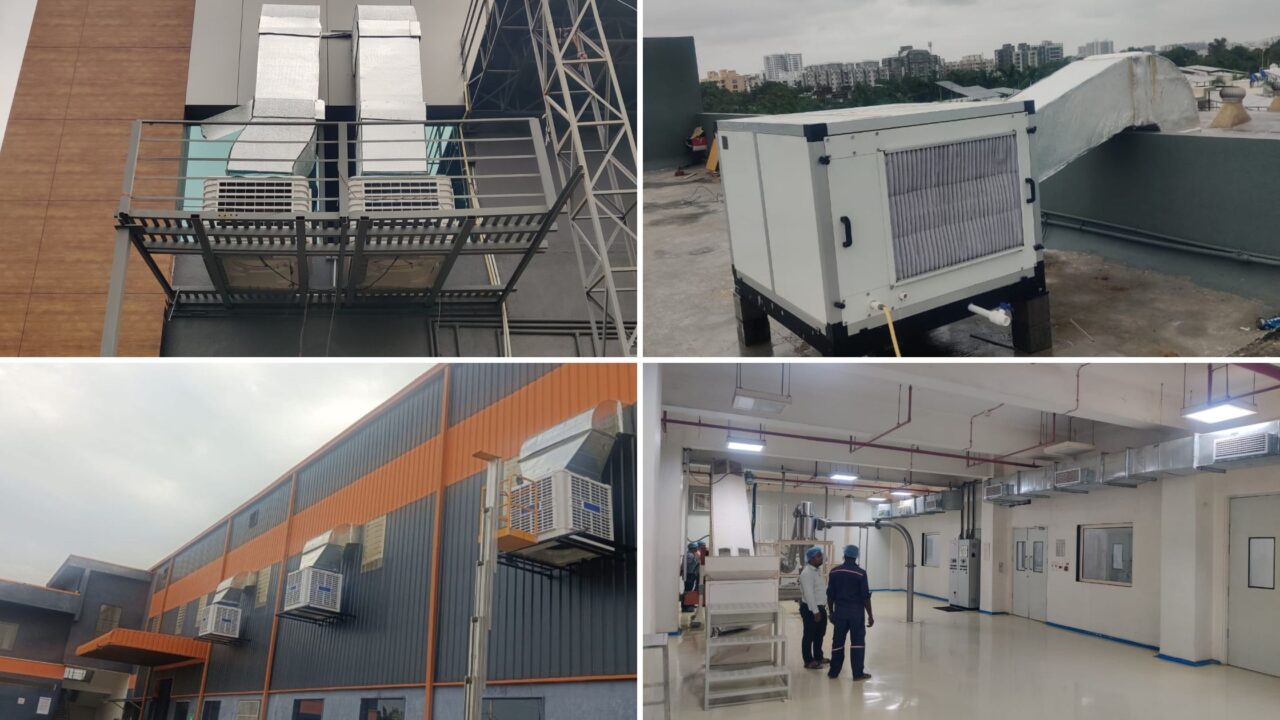
                1. Function Hall – Solapur, Maharashtra
                In Solapur, we equipped a function hall with two high-capacity E-Series Premium Air Coolers, each delivering 18,000 CMH. Spanning 2,000 sq.ft., this setup is built to handle large crowds and continuous usage, ensuring optimal comfort even during high footfall events. The result: efficient cooling without compromising on energy performance.

                See the Full Video with Installation Images: Click Here

                2. Private School – Vadodara, Gujarat
                Creating a comfortable learning environment is crucial for maintaining student focus and promoting their well-being. At a private school in Vadodara, we installed a smart cooling system using four M Series Air Coolers — two units with 10,000 CFM and two with 4,000 CFM. This eco-efficient solution provides consistent airflow and delivers clean, cool air throughout classrooms, promoting a healthier and more productive educational environment.

                See the Full Video with Installation Images: Click Here

                3. Car Showroom – Jhansi, Uttar Pradesh
                At the Ford showroom in Jhansi, we installed a sustainable and energy-efficient air cooling system tailored to maintain optimal indoor conditions. Designed to keep both customers and staff comfortable, this solution not only enhances the overall showroom experience but also supports energy conservation, a key factor in commercial HVAC planning.

                See the Full Video with Installation Images: Click Here

                Need a Custom HVAC Solution for Your Commercial Project?

                Degree Day Pvt. Ltd. specializes in innovative, energy-efficient HVAC solutions tailored for commercial spaces.

                Book a Consultation Today

                Contact Us to explore how we can help you build smarter, cooler, and greener.

                Get in Touch

                Please share your details below and we’ll get back to you soon.

                Frequently Asked Questions (FAQs)

                Q. What is a commercial HVAC system?

                A commercial HVAC system controls temperature, humidity, and air quality in large buildings like offices, malls, hospitals, factories, and schools. These systems are designed to handle bigger spaces, higher occupancy, and multiple zones.

                Q. Which commercial HVAC system is best for large buildings?

                Systems like VRF/VRV, packaged rooftop units, and centralized chilled water systems are commonly used for large commercial buildings due to their efficiency and scalability.

                Q. Why choose Degree Day for commercial HVAC solutions?

                Degree Day Pvt. Ltd. offers customized, energy-efficient HVAC solutions backed by real-world project experience across commercial, educational, and retail spaces in India.

                Q. Which industries does Degree Day serve?

                Degree Day works across commercial, industrial, educational, healthcare, retail, hospitality, warehousing, and manufacturing sectors.

                21Jan

                Effective Ways to Improve Indoor Air Quality with Air Purifiers – Transform Your Space

                by Priyanka Gupta
                1 comments

                Why Indoor Air Quality Matters

                Indoor air quality (IAQ) is a critical factor in creating a healthy living environment. Poor indoor air quality can lead to a range of health problems, from respiratory issues to allergies, headaches, and fatigue. COVID-19 was another lesson for mankind, wherein airborne diseases were brought to attention. In fact, indoor air is often more polluted than outdoor air, primarily due to factors like dust, chemicals, mold, and pet dander that accumulate in our homes. Fortunately, there are several effective ways to improve indoor air quality, ensuring that you and your family can breathe clean air at home.

                Before diving into solutions, it’s important to understand why indoor air quality matters so much. Studies have shown that air pollutants like volatile organic compounds (VOCs), particulate matter (PM), and mold can trigger symptoms such as coughing, sneezing, eye irritation, and even long-term health conditions like asthma and heart disease. Therefore, improving indoor air quality is not just about comfort—it’s about safeguarding your health.

                Ways to Improve Indoor Air Quality

                1. Invest in an Air Purifier like HEPAire

                One of the most effective ways to improve indoor air quality is by using a medical-grade air purifier like HEPaire by Degree Day Pvt Ltd. Air purifiers are designed to remove pollutants, allergens, and dust particles from the air, making the indoor environment much cleaner and healthier. They work by trapping particles such as pet dander, pollen, and dust mites, as well as chemicals and smoke.

                When choosing an air purifier, it’s essential to look for one with a HEPA filter, as these filters are highly effective in trapping even the smallest particles. Degree Day Private Limited offers a range of air purification systems that can be customized to meet the needs of your home or office, ensuring that you have the best technology to clean the air and reduce harmful pollutants. Their range of air purifiers is available in different sizes and specifications, depending on the CADR required. Various models like HEPaire AURA & TRIPURE are aesthetically beautiful and designed for smaller areas, while HEPaire PURA & ASTRIA cater to large spaces.

                2. Increase Ventilation

                Proper ventilation is crucial for maintaining good indoor air quality. Opening windows when the weather permits allows fresh air to circulate and helps to expel stale indoor air. In homes that are tightly sealed for energy efficiency, it’s essential to have mechanical ventilation systems in place, such as exhaust fans and air exchange systems, to keep air moving and prevent the buildup of moisture and pollutants.

                Incorporating ventilation strategies ensures that indoor air is regularly replaced with fresh outdoor air, reducing the concentration of indoor pollutants. Degree Day Pvt Ltd offers various air cooling and ventilation systems under their brand Greencon for all kinds of applications. Their cooling systems have found application in numerous industries, commercial spaces, large residences, hospital general wards, places of worship, and similar applications.

                3. Control Humidity Levels

                High humidity can lead to the growth of mold, mildew, and dust mites, common allergens that contribute to poor indoor air quality. On the other hand, low humidity can cause dryness in the air, irritating the respiratory system and skin. Maintaining balanced humidity levels can significantly improve IAQ. The evaporative cooling systems offered by Greencon are capable of maintaining the desired humidity, and the LED touch controller displays all parameters for the user’s ready reference. The automation of their systems is another icing on the cake, as it reduces human interference to a large extent.

                4. Regular Cleaning and Dusting

                A clean home is a healthy home. Regular cleaning helps to reduce the buildup of dust, pet dander, and allergens that can negatively impact your indoor air quality. Vacuuming carpets and rugs can remove dust mites, dirt, and other particles. Don’t forget to clean air vents and replace filters regularly to ensure that air circulation systems are not circulating pollutants back into the environment.

                In addition to cleaning, using an air purifier can greatly enhance the quality of the air you breathe. An air purifier equipped with a HEPA filter helps to capture fine particles, pollens, and dust that may not be easily removed through regular cleaning alone. Using HEPaire Air purifiers will ensure your home remains as free of allergens and pollutants as possible.

                Opting for eco-friendly alternatives not only keeps your home safe and healthy but also complements the efforts of your air purifier to keep your indoor environment cleaner and fresher.

                5. Use Houseplants to Purify the Air

                Plants are a natural and aesthetically pleasing way to improve indoor air quality. Certain houseplants, such as peace lilies, snake plants, and spider plants, absorb toxins and purify the air. In addition, they help remove harmful substances like formaldehyde, benzene, and trichloroethylene, while also adding a touch of nature to your indoor space. Furthermore, Hepaire TRIPURE is another aesthetically beautiful, floor-mounted air purifier that also serves as a bladeless fan.

                6. Minimize the Use of Cheap purifiers without certified filters

                Post-COVID, the air purifier market has bloomed, leading to an influx of cheaply priced, compact air purifiers with uncertified HEPA filters. Buyer needs to be aware of what to buy before considering the cost alone. HEPaire Purifier, manufactured by Degree Day Pvt Ltd, is an indigenous company manufacturing Air Purifiers with Certified HEPA Filters and Pre-filters. These air purifiers are among the very few that work with 99.99% efficiency. HEPaire machines are available in 3 size variants depending upon the CADR required. Their plug-and-play design makes them even easier to use.

                7. Maintain Your HVAC System

                Your HVAC (heating, ventilation, and air conditioning) system plays a significant role in your home’s air quality. Ensure that your HVAC system is regularly serviced and that air filters are cleaned or changed as required. Dirty filters can accumulate dust, dirt, and allergens, circulating them throughout your home. By maintaining your HVAC system, you can improve airflow and prevent contamination of the air in your living spaces. Greencon evaporative Air coolers come with a unique feature of de-dusting air filters every time the machine is switched off. This causes the accumulated dust to be forced outside and enhances the filter life of the machine.

                8. Eliminate Sources of Indoor Pollution

                Indoor pollution often comes from sources like smoking, candles, and certain household products (like air fresheners and pesticides). Limiting the use of these products can help reduce the introduction of harmful chemicals into your home’s air. Greencon offers automated exhaust units as well to take care of all smoke, smell, VOC-generated aroma, etc., and are applicable for commercial kitchens and other such applications.


                Breathing clean air is essential for a healthy lifestyle, and improving indoor air quality is crucial for keeping your home safe and comfortable. By investing in an air purifier like Hepaire, improving ventilation, controlling humidity, and maintaining cleanliness, you can create a healthier environment for your loved ones. Degree Day Private Limited provides advanced solutions that improve IAQ, offering air purifiers and energy-efficient systems designed to make your indoor air cleaner and fresher.

                Take action today to enhance your indoor air quality and enjoy the benefits of breathing easy at home. With the right tools and strategies, you can significantly reduce indoor pollutants. As a result, you can create a healthier living space for everyone.

                Get in Touch

                Please share your details below and we’ll get back to you soon.