
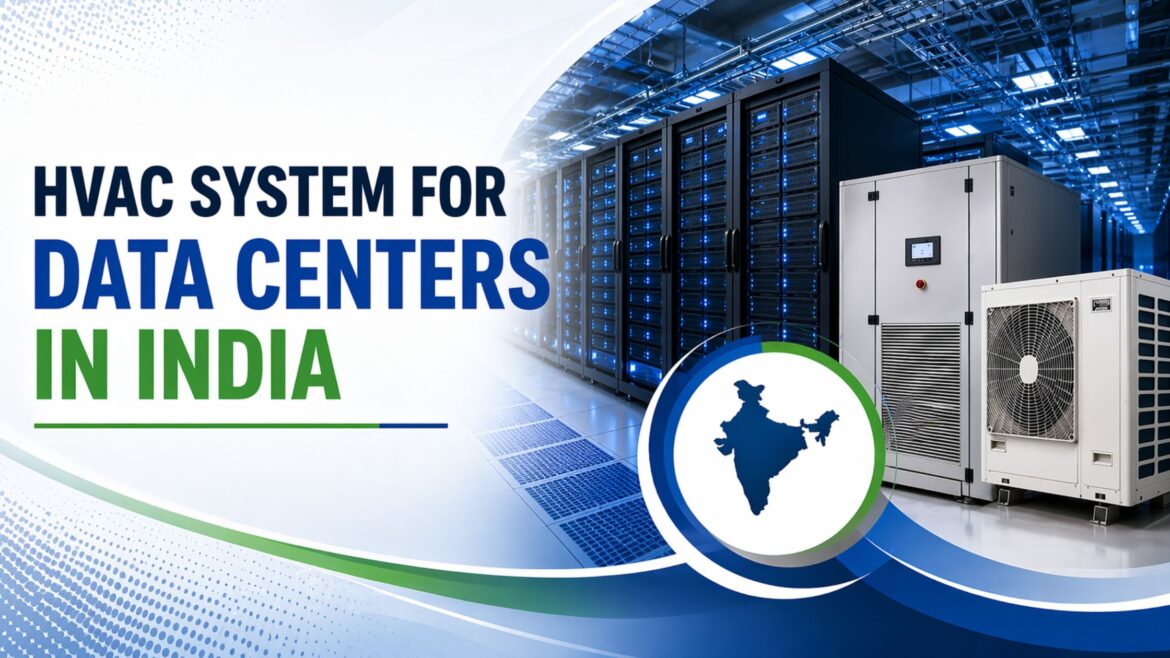
With India rapidly expanding its digital infrastructure, data centers have become the backbone of modern business operations. From cloud computing to AI workloads, these facilities generate extreme heat loads and require highly specialized HVAC systems.
Unlike commercial buildings, data centers demand precision cooling, 24×7 reliability, and energy efficiency, especially in India’s challenging climate conditions.
Why HVAC is Critical for Data Centers
In a data center, HVAC is not just about comfort—it’s about uptime and performance.
Improper cooling can lead to:
- Server overheating
- System failures
- Data loss
- Increased operational costs
According to ASHRAE, maintaining optimal environmental conditions is essential for reliable data center operations.
1. Temperature Requirements
In Indian conditions, where ambient temperatures can be extremely high, maintaining a stable internal environment becomes even more critical. Even slight temperature fluctuations can lead to thermal stress on servers, reducing efficiency and increasing the risk of unexpected failures. This is why modern data centers rely on precision cooling systems rather than conventional HVAC solutions.
Data centers typically generate 5–30 kW of heat per rack, making precision cooling essential.
2. Humidity Control
In India, especially in coastal and monsoon-prone regions, humidity levels can fluctuate significantly. Without proper control, excess moisture can damage sensitive electronic components, while dry conditions can lead to electrostatic discharge. Advanced HVAC systems with built-in humidification and dehumidification ensure consistent environmental stability.
Maintaining balanced humidity ensures safe and stable operations.
3. 24×7 Continuous Operation
Since there is no “off time” in data centers, HVAC systems must be designed for uninterrupted performance. This includes redundancy planning, predictive maintenance, and real-time monitoring. A well-designed system ensures that even during maintenance or failure of one unit, backup systems instantly take over without affecting operations.
Even a short cooling failure can result in critical downtime.
4. High Sensible Heat Load
Unlike commercial spaces where both temperature and humidity loads vary, data centers primarily deal with constant heat generated by IT equipment. This makes it essential to use systems specifically engineered for high sensible heat ratios, ensuring efficient heat removal without unnecessary energy consumption.
5. Airflow Management (Key to Efficiency)
Poor airflow management can waste a significant portion of cooling energy. By implementing structured airflow strategies like containment systems, data centers can ensure that cool air reaches servers effectively while hot air is efficiently removed, leading to better performance and lower operational costs.
6. Cooling Technologies Used in India
The choice of cooling technology depends on factors like data center size, load density, and location. In India, chilled water systems are widely preferred for large facilities due to their efficiency, while smaller setups may rely on DX-based CRAC units. Emerging technologies like liquid cooling are becoming popular for AI-driven, high-density environments.
7. Redundancy & Reliability Standards
Redundancy is a core design principle in data center HVAC systems. By incorporating additional capacity beyond actual demand, facilities can handle unexpected failures without downtime. This approach is especially important in mission-critical applications such as banking, healthcare, and cloud services.
8. Air Filtration & Cleanliness
In Indian environments where dust levels can be high, effective air filtration becomes even more important. Accumulated dust can block airflow, reduce heat dissipation, and damage internal components, making high-efficiency filtration systems a necessity rather than an option.
9. Energy Efficiency & PUE Optimization
With rising energy costs in India, improving efficiency is a top priority for data center operators. Lowering PUE (Power Usage Effectiveness) not only reduces electricity bills but also supports sustainability goals. Advanced automation and smart controls play a key role in achieving optimal energy performance.
10. Challenges in Indian Conditions
India presents unique challenges for data center cooling, from extreme heat to water scarcity in certain regions. Designing HVAC systems that can adapt to these conditions while maintaining efficiency and reliability is critical for long-term performance and sustainability.
Designing HVAC systems for data centers in India requires a precision-driven approach. From temperature and humidity control to airflow optimization and redundancy, every factor plays a critical role in ensuring uptime and efficiency.
Key Takeaways:
– Precision cooling is essential
– 24×7 reliability is non-negotiable
– Airflow design impacts efficiency
– Energy optimization reduces costs
Looking for Data Center Cooling Solutions?
If you’re planning or upgrading a data center, choosing the right HVAC partner is critical.
At Greencon (Degree Day Pvt. Ltd.), we specialize in:
1. Precision industrial and commercial air cooling solutions
2. Energy-efficient HVAC systems (Air Washers Manufacturer, Air Handling Units, Ventilation Solution, Clean Room Solution)
3. Custom pre-fabricated duct solution (Rectangular, Round, Oval, and Spiral Ducts Manufacturer) & airflow design
👉 Contact us today to build a future-ready, high-performance data center.