
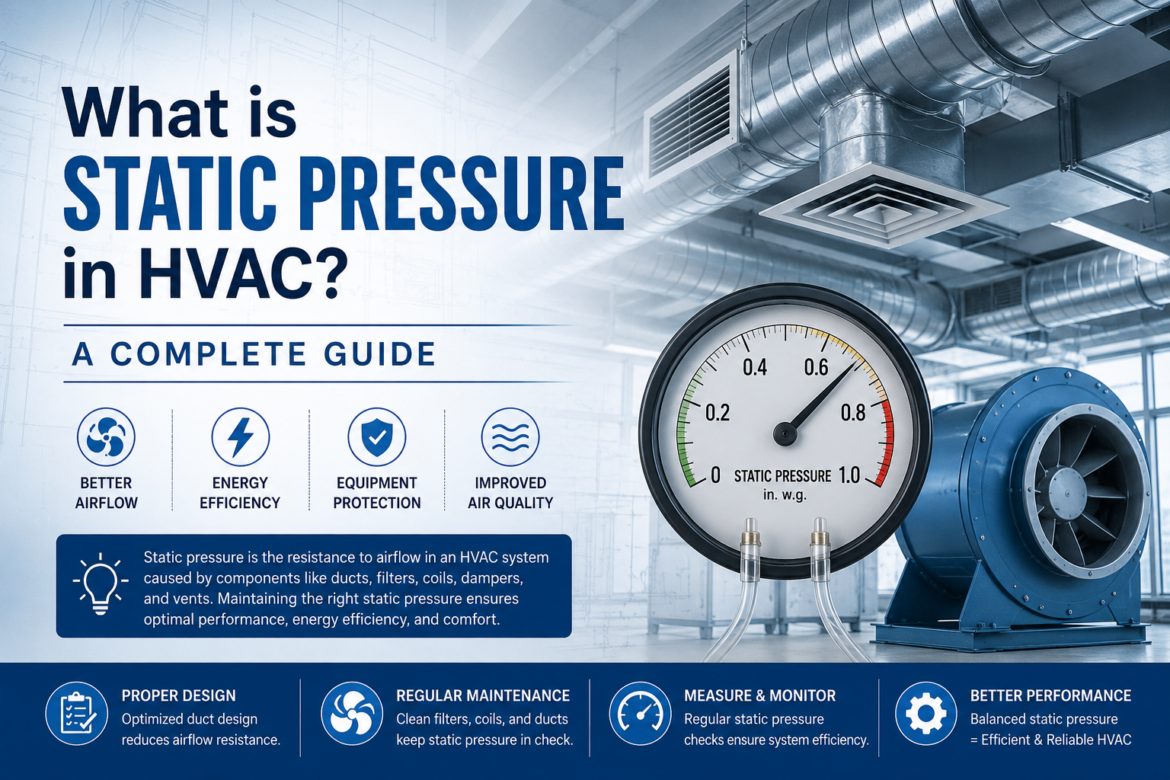
What is Static Pressure in HVAC? A Complete Guide
Introduction
When designing or maintaining an HVAC system, one of the most important yet often overlooked factors is static pressure. Whether it’s an air conditioning system, ventilation setup, air handling unit (AHU), ductwork, or an industrial evaporative cooling system, maintaining the correct static pressure is essential for achieving efficient airflow and optimal system performance.
Excessive or insufficient static pressure can reduce cooling efficiency, increase electricity consumption, create uncomfortable indoor conditions, and even shorten the lifespan of HVAC equipment.
In this guide, you’ll learn what static pressure is, why it matters, what causes high static pressure, how it is measured, and practical ways to maintain it for maximum HVAC efficiency.
What is Static Pressure in HVAC?
Static pressure is the resistance to airflow inside an HVAC system. As air moves through ducts, filters, cooling coils, dampers, diffusers, and grilles, these components create resistance. The fan must generate enough pressure to overcome this resistance and deliver the required airflow.
Think of static pressure like water flowing through a pipe. If the pipe becomes narrow or blocked, the water pressure increases. Similarly, when airflow faces restrictions inside an HVAC system, static pressure rises.
It is generally measured in Inches of Water Gauge (in. w.g.), Pascal (Pa), or Millimeters of Water Column (mmWC).
Why is Static Pressure Important?
Maintaining proper static pressure offers several benefits:
1. Better Cooling Performance
Correct static pressure allows the HVAC system to deliver the required airflow to every area, resulting in uniform cooling.
2. Improved Energy Efficiency
When airflow is unrestricted, fans consume less energy and the system operates more efficiently.
3. Longer Equipment Life
Reduced strain on fans, motors, compressors, and blowers increases equipment lifespan.
4. Better Indoor Air Quality
Proper airflow helps distribute fresh air effectively while improving filtration performance.
5. Reduced Noise
High static pressure often causes excessive noise from ducts, vents, and blowers. Maintaining recommended pressure levels minimizes this problem.
Types of Static Pressure
Positive Static Pressure
Positive static pressure is the pressure generated on the discharge side of the fan as it pushes air through the duct system.
Applications include:
- Supply air ducts
- Air handling units
- Air coolers
- Ventilation systems
Negative Static Pressure
Negative static pressure exists on the suction side of the fan where air is drawn into the system.
Common examples include:
- Return air ducts
- Exhaust ventilation systems
- Dust collection systems
Total External Static Pressure (TESP)
Total External Static Pressure is the combined resistance that the HVAC fan experiences from all external components such as:
- Air filters
- Cooling coils
- Ductwork
- Dampers
- Diffusers
- Grilles
TESP is one of the most important values used by HVAC engineers while selecting fans and blowers.
What Causes High Static Pressure?
Several factors can increase static pressure in an HVAC system.
Dirty Air Filters
Clogged filters block airflow, forcing the fan to work harder.
Undersized Ductwork
Small ducts restrict airflow and increase pressure losses.
Blocked Air Vents
Furniture, equipment, or closed dampers can obstruct airflow.
Dirty Cooling Coils
Dust accumulation on coils creates additional airflow resistance.
Long or Complex Duct Runs
Multiple bends, elbows, and long duct lengths increase friction losses.
Incorrect Fan Selection
Using a fan with inadequate pressure capability results in poor airflow performance.
Symptoms of High Static Pressure
High static pressure can be identified through several warning signs:
- Weak airflow from supply vents
- Uneven cooling throughout the building
- Increased electricity bills
- Noisy ducts or blower
- Overheating fan motors
- Frequent HVAC breakdowns
- Reduced cooling capacity
- Poor indoor air quality
Ignoring these symptoms may lead to expensive repairs over time.
How is Static Pressure Measured?
HVAC professionals use a digital manometer or Magnehelic gauge to measure static pressure.
The basic process includes:
- Drill small test ports before and after the blower.
- Insert pressure probes into the duct.
- Measure supply-side pressure.
- Measure return-side pressure.
- Calculate the Total External Static Pressure (TESP).
Regular pressure testing helps detect airflow problems before they become major issues.
Ideal Static Pressure Range
The recommended static pressure depends on the HVAC system design.
Typical values include:
| HVAC System | Recommended Static Pressure |
|---|---|
| Residential HVAC | 0.3–0.5 in. w.g. |
| Commercial HVAC | 0.5–1.0 in. w.g. |
| Industrial Ventilation | As per system design |
| AHU Systems | Design-specific |
Always refer to the equipment manufacturer’s specifications for the correct operating range.
How to Reduce High Static Pressure
Improving static pressure doesn’t always require replacing equipment. In many cases, simple maintenance can solve the issue.
Replace Dirty Filters
Clean or replace air filters at recommended intervals.
Clean Cooling Coils
Regular coil cleaning reduces airflow resistance.
Optimize Duct Design
Use properly sized ducts with minimal bends and smooth airflow paths.
Keep Air Vents Open
Avoid blocking supply and return vents with furniture or equipment.
Perform Regular Maintenance
Routine HVAC inspections help identify airflow restrictions early.
Select the Right Fan
Choose a fan capable of delivering the required airflow at the designed static pressure.
Static Pressure in Industrial HVAC Systems
Industrial facilities often require larger airflow volumes than residential buildings. Therefore, maintaining proper static pressure becomes even more critical.
Industries where static pressure plays a vital role include:
- Manufacturing plants
- Warehouses
- Pharmaceutical facilities
- Food processing industries
- Textile factories
- Commercial kitchens
- Automotive workshops
- Data centers
Proper static pressure ensures consistent ventilation, efficient cooling, and better indoor air quality in these demanding environments.
Best Practices for Maintaining Proper Static Pressure
To keep your HVAC system operating efficiently:
- Inspect air filters regularly.
- Schedule preventive HVAC maintenance.
- Measure static pressure during servicing.
- Keep ducts clean and leak-free.
- Balance airflow across all zones.
- Ensure fans and blowers operate within their design limits.
- Upgrade duct systems if airflow demand increases.
Following these practices can significantly improve system performance and reduce operating costs.
Conclusion
Static pressure is one of the most important parameters in HVAC system performance. It directly affects airflow, energy efficiency, cooling capacity, equipment reliability, and indoor air quality. By understanding how static pressure works and maintaining it within the recommended range, businesses can reduce energy costs, improve occupant comfort, and extend the life of their HVAC equipment.
Whether you’re managing a commercial building, industrial plant, warehouse, or ventilation system, monitoring static pressure should be an essential part of your HVAC maintenance strategy.